

Key Takeaways
- A pound of muscle and a pound of fat weigh the same - muscle is simply denser and more compact.
- Spot reduction of fat in specific body areas through targeted exercise is not supported by science.
- Muscle does not turn into fat when you stop training - they are entirely different tissue types.
- Strength training is beneficial for women and does not cause bulky physiques without specific hormonal conditions.
- Body weight alone is a poor indicator of metabolic health or body composition progress.
Why Body Composition Myths Are So Persistent
Misconceptions about muscle and fat are everywhere - in gym locker rooms, wellness blogs, and even well-meaning advice from friends. Many of these beliefs originated from oversimplified fitness marketing or anecdotal observations, and they have proven remarkably sticky despite decades of contrary evidence.
The stakes matter. Acting on bad information can lead people to pursue ineffective training strategies, misinterpret their progress on the scale, or avoid resistance exercise entirely. Getting the science right is the foundation for making decisions that actually support long-term health and physical function. As a complement to understanding the basics, exploring what body composition really means provides helpful context for the myths below.
The Most Common Myths - Corrected
The following myth-and-fact pairs address the most widespread misconceptions about how muscle and fat work in the body, grounded in established exercise physiology and nutrition science.
Myth
Muscle weighs more than fat.
Fact
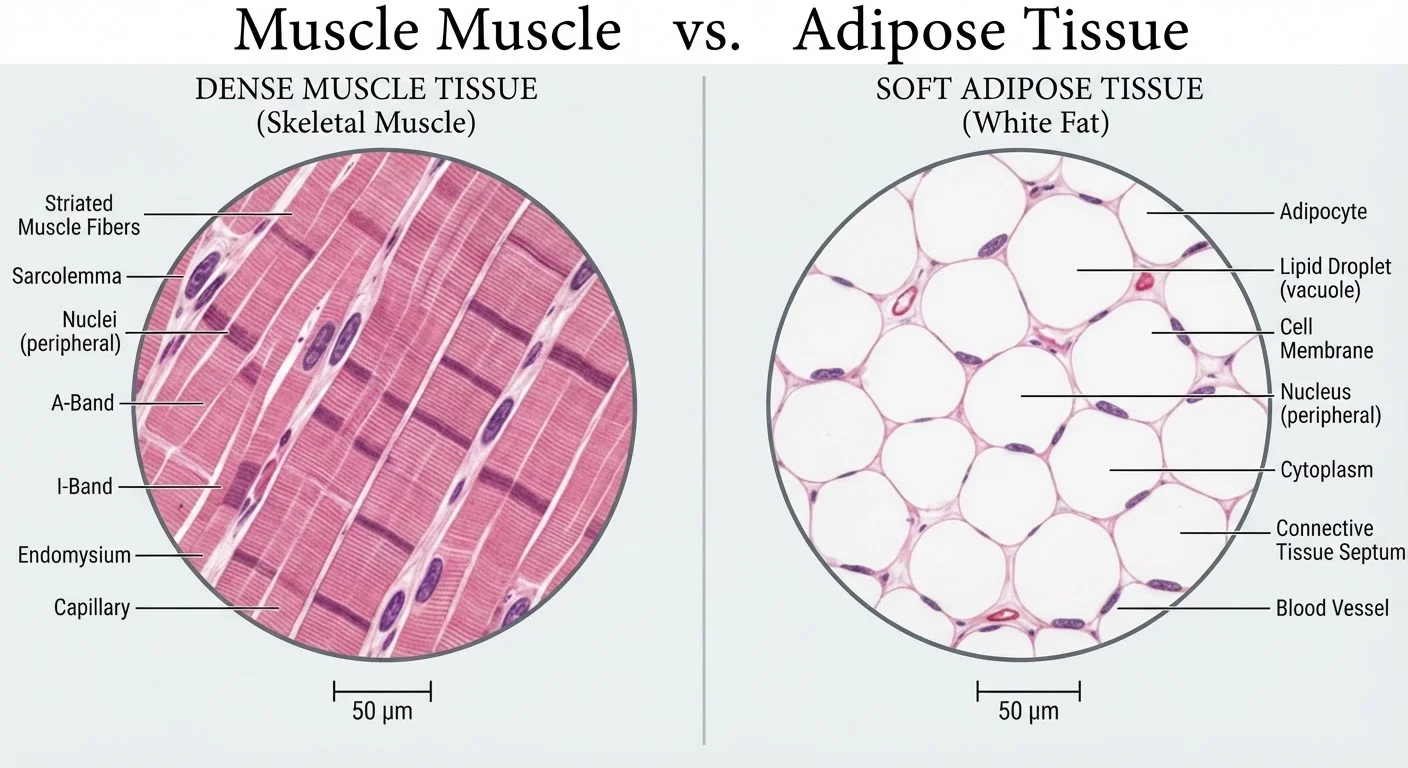
A pound of muscle and a pound of fat weigh exactly the same. Muscle is denser, meaning it takes up less space per unit of weight.
This myth likely persists because people notice they can gain weight while visually looking leaner after starting a strength program. What's actually happening is a shift in tissue composition: muscle occupies roughly 18% less volume than the same mass of fat. So the scale can rise even as your clothing fits better. This is one of the clearest examples of why body weight alone tells an incomplete story about health and physical progress.
Myth
You can target fat loss in specific body parts by exercising those areas.
Fact
Spot reduction - losing fat from a specific region by training that area - is not supported by the evidence. Fat loss occurs systemically across the body.
Multiple controlled studies have found that exercising a particular muscle group does not preferentially reduce the fat overlying it. When you create an energy deficit and the body mobilizes stored fat for fuel, it draws from fat stores throughout the body based on genetics and hormonal factors, not on which muscles are working hardest. Targeted exercises build and strengthen the underlying muscle, which can improve the appearance of an area over time - but the fat reduction itself is a whole-body process.
Myth
If you stop lifting weights, your muscle will turn into fat.
Fact
Muscle and fat are biologically distinct tissue types. One cannot convert into the other under any physiological circumstance.
When resistance training stops, muscle tissue gradually decreases in size and strength through a process called atrophy - the muscle fibers themselves shrink or are broken down. Meanwhile, if caloric intake remains the same but activity decreases, body fat may increase separately. These two changes often happen simultaneously, which creates the visual impression of muscle "becoming" fat. In reality, two independent processes are occurring in parallel, not a transformation of one tissue into another.
Myth
Strength training will make women look bulky.
Fact
Women generally do not build large muscle mass from standard resistance training due to significantly lower testosterone levels compared to men.
Testosterone is a primary driver of muscle hypertrophy (growth in size). Women produce roughly 10-20 times less testosterone than men on average, which means that even with consistent, progressive resistance training, the outcome for most women is increased strength, improved muscle tone, and better metabolic function - not substantial increases in muscle size. The physiques sometimes cited as evidence for this myth typically reflect years of highly specific, high-volume training combined with specific dietary and sometimes hormonal conditions that differ markedly from general fitness programs.
Myth
The scale is the best way to track body composition progress.
Fact
Body weight reflects total mass including water, bone, organs, muscle, and fat - it cannot distinguish between tissue types without additional measurements.
Someone who begins a training program may simultaneously lose fat and gain lean tissue, resulting in little net change on the scale - while experiencing meaningful improvements in strength, metabolic health, and physical function. Conversely, the scale can drop rapidly due to water loss or muscle loss without any reduction in body fat. More informative indicators include changes in strength performance, how clothing fits, waist circumference, and where available, body composition assessments such as DEXA scans or validated skinfold measurements interpreted by a qualified professional.
For a deeper look at how these two tissues interact with your metabolism day to day, see how muscle mass, body fat, and metabolic rate are connected.
What the Evidence Actually Supports
Once the myths are cleared away, a clearer picture of body composition emerges. Resistance training - whether with bodyweight or free weights - preserves and builds lean tissue at virtually any age. Fat loss is a whole-body process driven primarily by a sustained caloric deficit over time, not by any single exercise or food avoidance strategy.
Not all fat is equal, either. Where fat is stored in the body carries distinct health implications - visceral fat and subcutaneous fat behave very differently in terms of metabolic risk. And the dietary fat you eat is not the same as stored body fat - a nuance the science of dietary fat clarifies well.
Progress in body composition is best tracked through multiple indicators - how clothes fit, strength improvements, energy levels, and where appropriate, body composition assessments - rather than body weight alone. For more on separating evidence-based fitness principles from popular lore, common exercise beliefs the science doesn't support is worth reviewing.
This article is for general informational and educational purposes only and does not constitute medical advice. Consult a qualified healthcare professional before making changes to your exercise or nutrition routine, especially if you have an existing health condition.