

Key Takeaways
- Visceral fat surrounds internal organs and is more metabolically active than subcutaneous fat.
- Excess visceral fat is associated with higher risk of cardiovascular disease, type 2 diabetes, and chronic inflammation.
- Subcutaneous fat, while visible, carries comparatively lower health risk when not present in extreme excess.
- Waist circumference is a practical proxy for estimating visceral fat accumulation.
- Both fat types respond to consistent physical activity and balanced nutrition over time.
- No single number on a scale distinguishes between visceral and subcutaneous fat - body composition assessments are more informative.
Option A
Visceral Fat
The metabolically active fat stored deep within the abdominal cavity.
Best for: Understanding metabolic and cardiovascular risk, since visceral fat surrounds vital organs and is strongly linked to systemic inflammation.
Option B
Subcutaneous Fat
The familiar, pinchable fat layer just beneath the skin's surface.
Best for: Understanding the fat type most people can see and feel, which plays a role in energy storage and insulation with generally lower metabolic risk.
If you want to understand which fat type poses the greater health risk
Visceral Fat
Visceral fat is far more metabolically disruptive, releasing inflammatory compounds directly into the portal bloodstream and is more strongly linked to chronic disease outcomes.
If you are evaluating visible body fat changes from lifestyle habits
Subcutaneous Fat
Subcutaneous fat is the type most people observe changing with exercise and diet, and tracking it is often the first sign that overall fat mass is shifting.
If you are concerned about metabolic health markers like blood sugar or triglycerides
Visceral Fat
Visceral fat accumulation is more directly tied to insulin resistance and dyslipidemia, making it the priority target when metabolic markers are elevated.
If you are using waist measurements to monitor health progress
Visceral Fat
Reductions in waist circumference reliably reflect decreases in visceral fat, making this a practical and evidence-supported tracking method.
What Each Type of Fat Actually Is
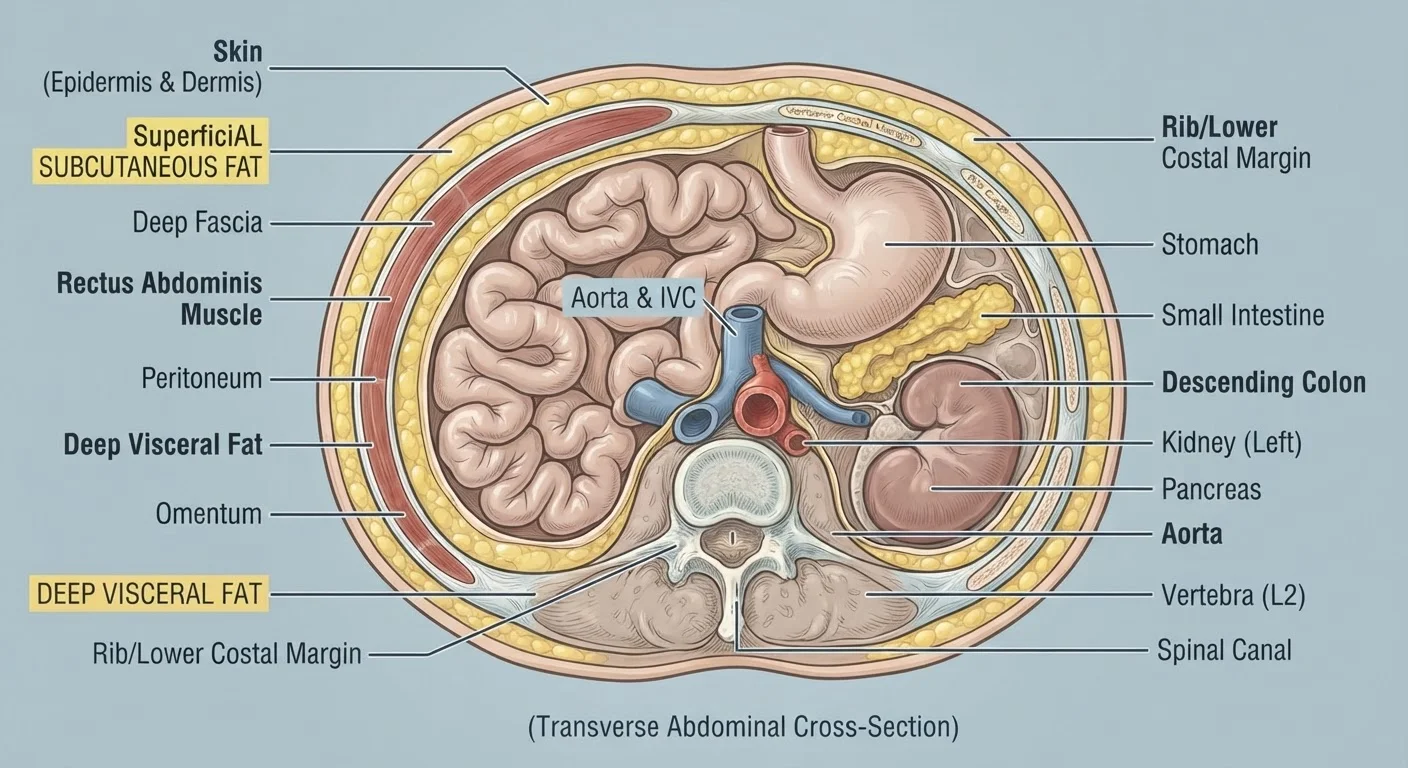
Body fat is not a single, uniform tissue. It differs by location, structure, and biological behavior - two distinctions that matter most are visceral fat and subcutaneous fat.
Subcutaneous fat is the layer stored just beneath the skin. It is the fat you can pinch on your abdomen, thighs, or upper arms. It serves real physiological purposes: cushioning and protecting underlying structures, insulating against temperature changes, and storing energy reserves the body can draw on during periods of lower food intake.
Visceral fat, by contrast, is stored deeper inside the abdominal cavity, surrounding and interspersed between organs such as the liver, pancreas, and intestines. It is not visible or easily felt from the outside, which is why two people with a similar outward appearance can carry very different amounts of it. As the body composition overview explains, weight alone is a poor guide to what is actually happening inside the body.
| Criterion | Visceral Fat | Subcutaneous Fat |
|---|---|---|
| Location | Deep inside abdominal cavity, around organs | Beneath the skin, throughout the body |
| Visibility | Not visible or pinchable from outside | Visible and pinchable |
| Metabolic Activity | Highly active; releases fatty acids and cytokines | Less metabolically disruptive in moderate amounts |
| Health Risk (excess) | Strongly linked to cardiovascular disease and diabetes | Lower risk unless in extreme excess |
| Primary Function | Metabolic activity; not primarily protective | Insulation, energy storage, cushioning |
| Measurability | Requires imaging or waist circumference proxy | Visible; estimated by skinfold or DEXA |
| Response to Exercise | Responds well to aerobic and resistance training | Also reduces with consistent exercise over time |
Why Visceral Fat Carries Greater Metabolic Risk
The biological activity of visceral fat is what sets it apart. Unlike subcutaneous fat, visceral fat is highly metabolically active - it releases fatty acids, hormones, and inflammatory signaling molecules directly into the portal vein, which feeds the liver. This proximity to the liver means those compounds have an outsized effect on glucose regulation, cholesterol processing, and systemic inflammation.
Research consistently links elevated visceral fat to increased risk for type 2 diabetes, cardiovascular disease, and certain metabolic disorders. It is also associated with higher circulating levels of cytokines - proteins that promote low-grade, chronic inflammation throughout the body. This inflammatory environment, sustained over time, is one pathway through which excess visceral fat contributes to long-term health complications.
Subcutaneous fat, in moderate amounts, is far less disruptive. Some researchers suggest that certain subcutaneous fat depots - particularly in the lower body - may even have a mildly protective metabolic role, though this remains an active area of study. The key point is that location changes function significantly. For a deeper look at how different metrics capture these distinctions, see our comparison of body fat percentage and BMI.
Measuring and Tracking Each Fat Type
One practical challenge with visceral fat is that it is invisible. Standard bathroom scales and even BMI calculations cannot distinguish it from subcutaneous fat or lean mass. The most accurate measurements come from imaging techniques such as MRI or CT scans, which are typically used in clinical research rather than everyday healthcare.
For most people, waist circumference serves as a reasonable, low-cost proxy. Measurements above roughly 35 inches for women and 40 inches for men are generally flagged as associated with elevated visceral fat risk, though thresholds can vary by body frame and population. Waist-to-hip ratio is another widely used indicator.
Dual-energy X-ray absorptiometry (DEXA) scans, increasingly available through sports medicine and longevity clinics, offer more granular body composition data including regional fat distribution estimates. For context on what these numbers mean beyond the scale, the article on common body composition misconceptions is a useful reference.
This article is for general informational purposes only and does not constitute medical advice. Consult a qualified healthcare professional for personalized guidance on body composition, metabolic health, or any health concerns.