

Key Takeaways
- BMI uses only height and weight, making it fast but blind to what your body is actually made of.
- Body fat percentage directly measures the proportion of fat to lean mass, offering greater physiological detail.
- Both metrics have meaningful limitations; neither alone is sufficient to evaluate overall health.
- Excess body fat - especially visceral fat - is more predictive of metabolic risk than weight alone.
- A qualified healthcare provider can help you interpret either metric in the context of your full health picture.
Option A
BMI (Body Mass Index)
The fast, population-level screening tool.
Best for: Quick, cost-free initial screening in clinical and public-health settings where precision isn't essential.
Option B
Body Fat Percentage
The more precise, composition-aware measure.
Best for: Individuals who want a clearer picture of how much of their body is fat versus lean mass.
If you want a quick, no-cost health screen at a clinic or checkup
BMI (Body Mass Index)
BMI requires no special equipment and provides an instant, population-level reference point that clinicians can act on quickly.
If you want to understand your actual body composition and metabolic risk
Body Fat Percentage
Body fat percentage distinguishes muscle from fat, giving a more accurate picture of health risk, especially for active individuals.
If you're tracking changes from an exercise or nutrition program over time
Body Fat Percentage
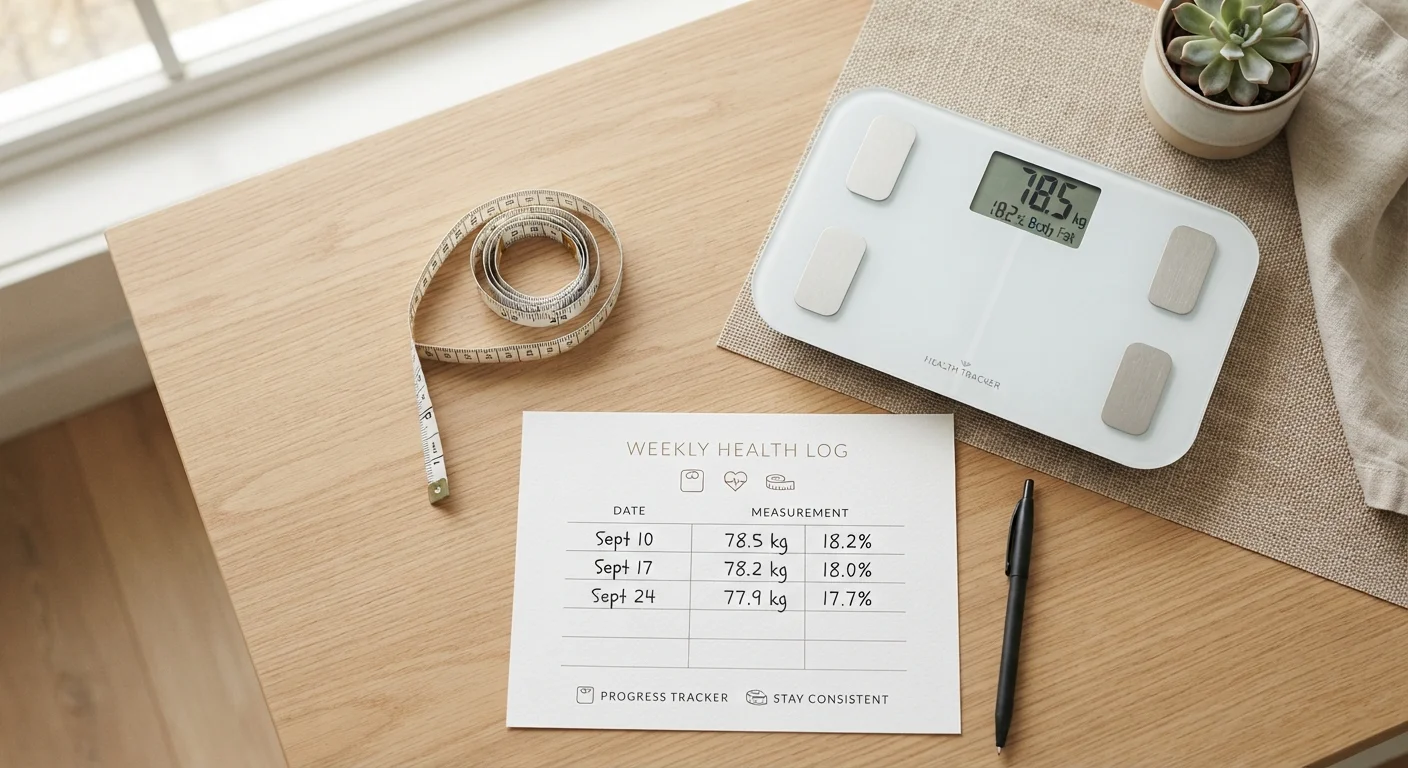
As muscle increases and fat decreases, BMI may stay flat while body fat percentage will reflect meaningful progress.
If you belong to a population where BMI is known to be less accurate
Body Fat Percentage
BMI systematically misclassifies risk in some ethnic groups and older adults; direct fat measurement reduces that error.
What Each Metric Actually Measures
BMI is calculated by dividing a person's weight in kilograms by the square of their height in meters. That's it. The formula captures no information about what that weight consists of - bone, muscle, fat, or fluid. The result places a person into one of four broad categories: underweight, normal weight, overweight, or obese. It was originally designed as a population-level statistical tool, not an individual diagnostic instrument.
Body fat percentage, by contrast, measures the proportion of your total body mass that is adipose (fat) tissue versus lean mass - which includes muscle, bone, organs, and water. Methods range from simple skinfold calipers to air displacement plethysmography (a lab technique using a sealed chamber) to DEXA scans, which are currently considered a gold standard. Each method varies in cost, accessibility, and accuracy. For a full breakdown of available approaches, see our guide to measuring body composition.
Where BMI Falls Short
BMI's core weakness is that it cannot differentiate between fat mass and lean mass. A strength-trained individual with substantial muscle may register as "overweight" or even "obese" by BMI while carrying very little body fat. Conversely, a sedentary person with low muscle mass - sometimes called "skinny fat" or, more clinically, having normal-weight obesity - can fall in the "normal" BMI range while carrying metabolically problematic levels of fat.
Research has also shown that BMI's accuracy varies by sex, age, and ethnicity. Older adults lose muscle with age (a process called sarcopenia), meaning their BMI often underestimates their actual fat proportion. Studies suggest BMI tends to underestimate obesity risk in people of Asian descent and overestimate it in people of African descent, compared with direct fat measurements. These are not minor edge cases - they represent a substantial share of the U.S. population.
| Criterion | BMI | Body Fat Percentage |
|---|---|---|
| What it measures | Weight relative to height | Fat as proportion of total body mass |
| Equipment needed | Scale and height measurement | Calipers, scale, or imaging device |
| Cost | Free / minimal | Low to high, depending on method |
| Accounts for muscle mass | No | Yes |
| Identifies fat location | No | No (most methods) |
| Accuracy across populations | Varies significantly by ethnicity and age | Varies by measurement method |
| Primary use case | Population-level screening | Individual body composition tracking |
Where Body Fat Percentage Has Its Own Limits
Body fat percentage is more informative than BMI, but it isn't a perfect metric either. The accuracy of any given measurement depends heavily on the method used. Consumer-grade bioelectrical impedance scales - common in gyms and pharmacies - can produce readings that swing several percentage points based on hydration status, recent food intake, and even the time of day. That variability can make single readings misleading if context is ignored.
Healthy ranges also shift by sex and age. General reference ranges suggest that for adult men, body fat levels between roughly 10-20% are associated with good health, while women typically carry more essential fat - with ranges around 18-28% considered healthy - though these figures vary by source and individual factors. Importantly, body fat percentage tells you how much fat you have but not necessarily where it's stored. Fat location matters enormously for health risk, as explored in our piece on visceral fat vs. subcutaneous fat.
Using Both Metrics Together - and in Context
The most useful approach isn't choosing one metric over the other - it's understanding what each contributes and where each breaks down. BMI remains a practical first-pass tool in clinical settings precisely because it costs nothing and takes seconds. Body fat percentage adds compositional depth that BMI cannot provide, making it especially valuable when monitoring changes from training or understanding metabolic health risk more precisely.
Neither number, however, captures the full picture of health. Cardiorespiratory fitness, blood pressure, fasting glucose, lipid profiles, sleep quality, and inflammatory markers all contribute to a far richer picture of longevity and vitality. Body composition is one important dimension - and understanding how muscle and fat interact with your metabolism is explored further in our article on muscle mass, body fat, and metabolic rate.
If you're uncertain which metric is most relevant to your situation, or how your numbers compare to healthy reference ranges, a primary care physician or registered dietitian can help you interpret both within your broader clinical context.
This article is for general informational and educational purposes only and does not constitute medical advice. Always consult a qualified healthcare professional for guidance tailored to your individual health needs.