

Key Takeaways
- Body weight and body composition are not the same measurement - one is total mass, the other is what that mass consists of.
- Muscle is denser than fat, meaning two people at the same weight can have very different health profiles.
- Higher lean muscle mass is associated with better metabolic health, strength, and long-term physical resilience.
- Body fat is not uniformly harmful - some fat is essential for hormone production, organ protection, and energy storage.
- Improving body composition doesn't always show up on the scale, which is why tracking weight alone can be misleading.
- Always consult a healthcare professional before making significant changes to your diet or exercise routine based on composition data.
Body Composition
Body composition refers to the proportions of fat mass, muscle mass, bone, and water that together make up your total body weight. Unlike the number on a scale, which only measures how much you weigh in total, body composition tells you what that weight is actually made of. Two people can weigh exactly the same amount and look, feel, and function very differently depending on their individual composition.
In clinical and research settings, body composition is typically described as a two-compartment model (fat mass vs. fat-free mass) or a more detailed multi-compartment model that separates muscle, bone mineral, and total body water.
What the Scale Is Actually Measuring
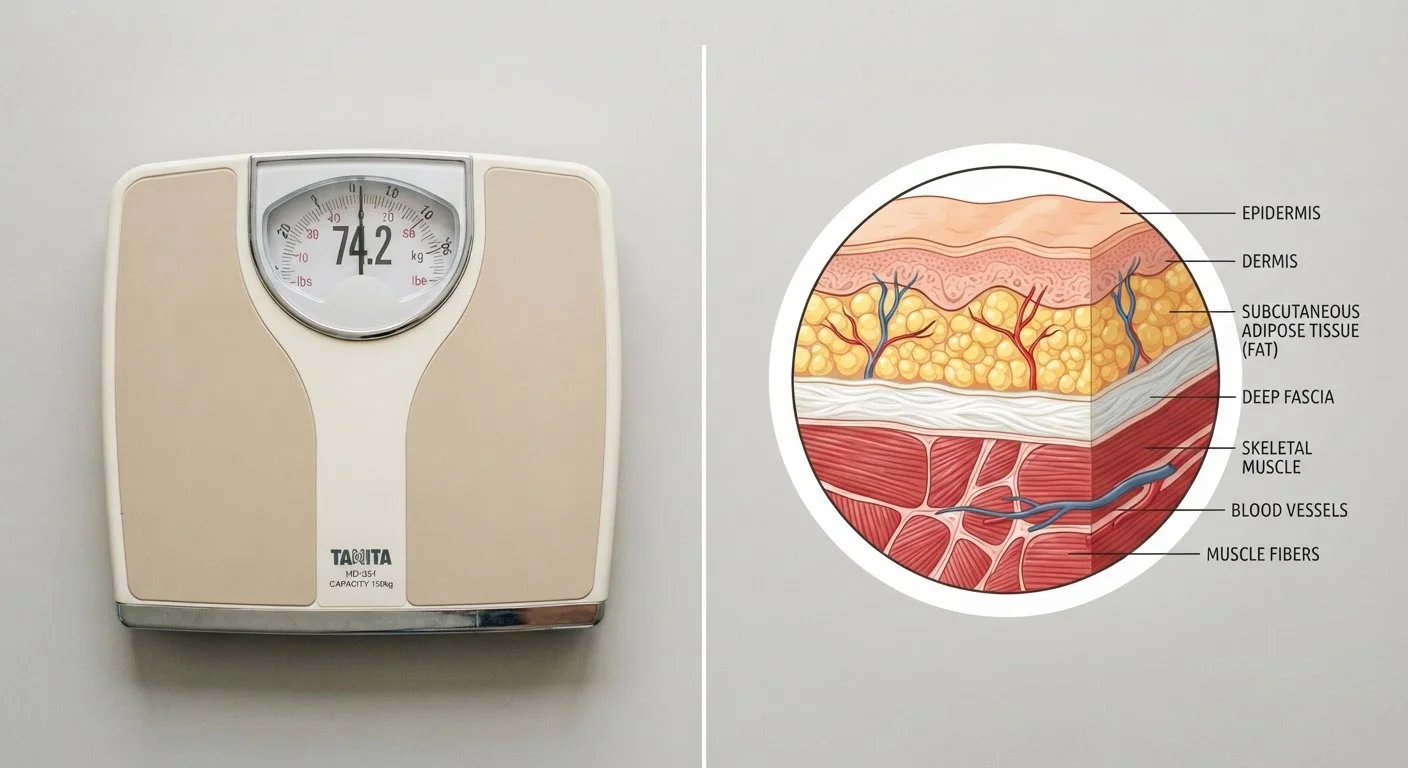
Step on a bathroom scale and it reports one number: your total body weight. That figure includes every pound of muscle, fat, bone, organ tissue, blood, and water in your body at that moment. It cannot tell you how those pounds are distributed - and that distribution matters enormously for how you feel, how your body functions, and your long-term health trajectory.
This is why two people who weigh the same can have radically different fitness levels, energy, and metabolic health. A 160-pound person carrying 35% body fat has a fundamentally different physiological profile than a 160-pound person with 18% body fat and significantly more lean muscle - even though their scales would show identical readings.
For a deeper look at how muscle and fat interact with your metabolism, see how muscle mass, body fat, and metabolic rate are connected.
The Main Components of Body Composition
Body composition is typically broken into four primary components:
- Fat mass: All stored fat, including essential fat (necessary for hormone regulation, brain function, and organ protection) and storage fat (excess energy reserves).
- Skeletal muscle mass: The muscle tissue attached to your bones, responsible for movement, strength, and a significant portion of your resting metabolic rate.
- Bone mineral mass: The density and mass of your skeletal structure, which influences both weight and overall physical resilience.
- Total body water: Fluids within and around cells, which can fluctuate significantly day to day and affect scale readings.
Understanding these components reframes the goal of many fitness and health efforts. The aim is rarely to simply weigh less - it's to support more lean tissue and maintain body fat within a range that supports good health.
Why Fat Distribution Matters as Much as Fat Percentage
Not all body fat carries equal health implications. Research in metabolic health consistently distinguishes between subcutaneous fat - stored just beneath the skin - and visceral fat, which accumulates around internal organs in the abdominal cavity. Elevated visceral fat is more strongly associated with increased cardiometabolic risk than subcutaneous fat at the same total volume.
This is one reason why waist circumference and waist-to-hip ratio are sometimes used alongside body fat percentage in clinical assessments. Someone with a relatively normal scale weight can still carry a concerning level of visceral fat, a phenomenon sometimes described as being "metabolically obese at normal weight."
Essential Fat Is Not the Enemy
Not all body fat is excess or harmful. Essential fat - stored in the brain, bone marrow, nerves, and around organs - is necessary for normal physiological function, including hormone regulation and vitamin absorption. The health concerns associated with excess body fat relate primarily to storage fat, particularly visceral fat, not the essential fat your body requires to function.
Body fat percentage and BMI capture different things entirely. To understand the gap between these two metrics, read our comparison of body fat percentage vs. BMI.
Improving Body Composition: What the Evidence Supports
The most consistently supported strategies for improving body composition involve resistance training and adequate dietary protein - not extreme restriction or rapid weight loss, which tends to reduce muscle alongside fat. Preserving or building lean muscle while reducing excess fat is a slower process than crash dieting, but one with more durable benefits for metabolic health and physical function.
Whether you prefer bodyweight training or free weights, both can support muscle development when programmed with appropriate intensity and progressive challenge. The most important factor is consistency over time, not the specific method.
Common myths - like the idea that muscle literally weighs more than fat, or that you can target fat loss in specific areas - are worth dispelling early. Clearing up common misconceptions about muscle and fat can help you set realistic, evidence-grounded expectations.
This article is for general informational purposes only and is not a substitute for personalized medical advice. Consult a qualified healthcare professional before making significant changes to your health or fitness routine.