

Key Takeaways
- Puberty causes a real, measurable shift in the circadian clock that pushes sleep timing later by one to two hours.
- This phase delay is biological and universal — it occurs across cultures and even in other mammals.
- Teenagers need 8–10 hours of sleep per night, yet school start times often conflict directly with their shifted biology.
- Chronic sleep restriction during adolescence is linked to impaired learning, mood dysregulation, and metabolic health risks.
- The phase delay gradually reverses through late adolescence and into early adulthood.
- Light exposure — especially from screens at night — can amplify the natural delay and worsen sleep timing further.
Adolescent Circadian Phase Delay
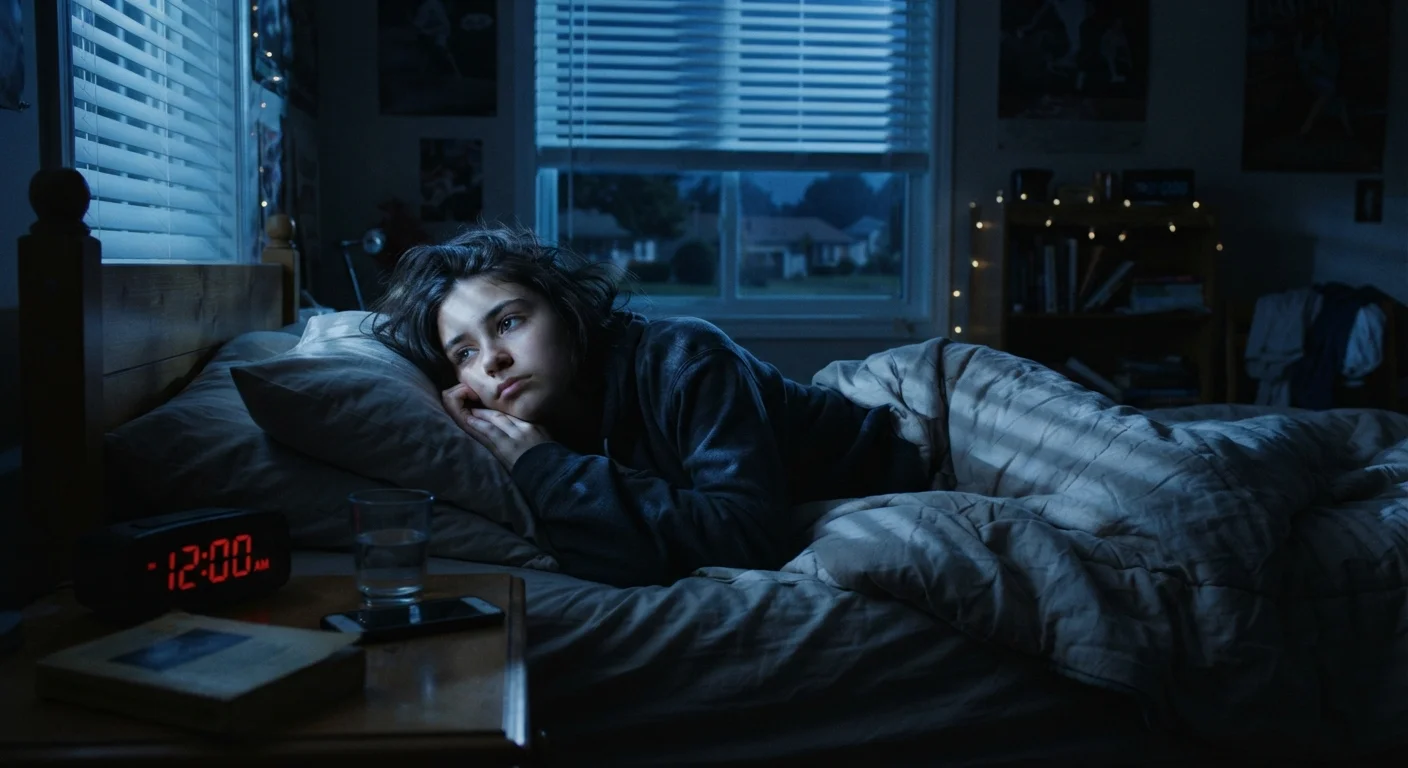
During puberty, the brain's internal clock shifts to release sleep-promoting hormones significantly later in the evening than it did in childhood. This biological change — not willpower or laziness — causes teenagers to feel genuinely alert later at night and have difficulty waking early in the morning. The shift is a normal, universal feature of adolescent development observed across cultures and species.
The phase delay is driven in part by changes in melatonin secretion timing and altered sensitivity to light signals in the suprachiasmatic nucleus (SCN), the brain's master circadian pacemaker.
It's Not Attitude — It's the Clock
Parents and teachers have long interpreted the teenager who can't fall asleep before midnight and can barely wake at 6 a.m. as unmotivated or irresponsible. The science tells a different story. Adolescent sleep biology is genuinely, measurably different from that of children and adults — and the difference isn't subtle.
During puberty, the brain's master circadian clock — a cluster of roughly 20,000 neurons in the hypothalamus called the suprachiasmatic nucleus — undergoes a functional shift. The timing of melatonin release, the hormone that signals the body to prepare for sleep, moves one to two hours later compared to the pre-pubertal pattern. A teenager whose body begins releasing melatonin at 11 p.m. is physiologically incapable of feeling sleepy at 9 p.m., regardless of how early they need to rise.
This is part of a broader picture described in our overview of how sleep needs and patterns shift with age, where adolescence represents one of the most dramatic transitions in human sleep biology.
Supporting a Teen's Sleep at Home
Rather than battling biology with strict early bedtimes that conflict with the shifted circadian phase, consider keeping weekend wake times consistent to limit social jet lag, reducing bright light exposure in the evening hours, and ensuring bedrooms are dark and cool. Small environmental adjustments can meaningfully improve total sleep time even within a constrained schedule.
The Two-System Framework: Why Timing Matters
To understand the adolescent sleep shift, it helps to recognize that sleep timing is governed by two separate but interacting biological systems. The first is the circadian rhythm — the roughly 24-hour internal clock that regulates alertness, hormone release, body temperature, and dozens of other processes. The second is sleep pressure (also called homeostatic sleep drive), which is the accumulating neurochemical need for sleep that builds with every waking hour. These two systems are explored in depth in our article on the two forces that control when you fall asleep.
In teenagers, both systems behave differently. The circadian phase runs later, and some research suggests adolescents also accumulate sleep pressure more slowly than adults — meaning they remain mentally comfortable staying awake longer into the night before the drive to sleep becomes overwhelming. Together, these two changes create a powerful biological pull toward late-night wakefulness and late-morning sleep.
~72%
U.S. high schoolers not meeting sleep recommendations
CDC data indicate roughly 72% of high school students in the United States sleep fewer than the recommended 8 hours on school nights.
1–2 hrs
Average circadian phase shift during puberty
Research consistently documents a one-to-two hour delay in the timing of melatonin onset and sleep propensity during adolescence compared to childhood.
8–10 hrs
Recommended nightly sleep for teenagers aged 13–18
The American Academy of Sleep Medicine recommends 8–10 hours of sleep per night for adolescents to support health and development.
What Drives the Phase Shift
The precise molecular mechanisms driving the adolescent phase delay are still being refined by researchers, but several factors are well-established. Pubertal hormones appear to interact with the circadian timing system, though the exact pathways are complex. Changes in the eye's sensitivity to light — particularly morning light, which is a key signal for anchoring the circadian clock early in the day — may also contribute. Adolescents appear to show reduced alerting sensitivity to morning light and heightened sensitivity to evening light compared to adults, which reinforces the later clock position.
The phase delay is not a modern invention or a screen-age phenomenon. It has been documented in pre-industrial societies with no artificial light, in adolescent chimpanzees and other primates, and across every culture studied. This universality is compelling evidence that the shift is an evolved biological feature of human development rather than a lifestyle artifact — though modern environments, especially evening light exposure from devices, can amplify its severity.
For a broader developmental perspective, see how sleep architecture changes from infancy through old age.
The Real Cost of Misaligned Schedules
When a teenager with a midnight circadian phase must wake at 6 a.m. for school, they accumulate significant sleep debt across the week. The American Academy of Sleep Medicine recommends 8–10 hours nightly for this age group — yet surveys consistently show the majority of U.S. high school students average far less. The consequences are not trivial.
Chronic sleep restriction during adolescence is associated with impaired attention, memory consolidation, and academic performance. The emotional regulation centers of the adolescent brain — already undergoing significant development — are particularly sensitive to sleep loss, contributing to increased irritability, heightened stress reactivity, and greater risk of anxiety and depressive symptoms. Metabolic disruption, immune function, and cardiovascular health markers also show measurable effects under conditions of sustained sleep restriction.
The phase delay gradually reverses through the late teens and into early adulthood, as described in our reference on sleep needs across a lifetime. Understanding this biology is a first step toward designing environments — at home and in schools — that work with adolescent physiology rather than against it.
This article is for general informational and educational purposes only and does not constitute medical advice. If you have concerns about your teenager's sleep patterns or health, please consult a qualified healthcare professional.