

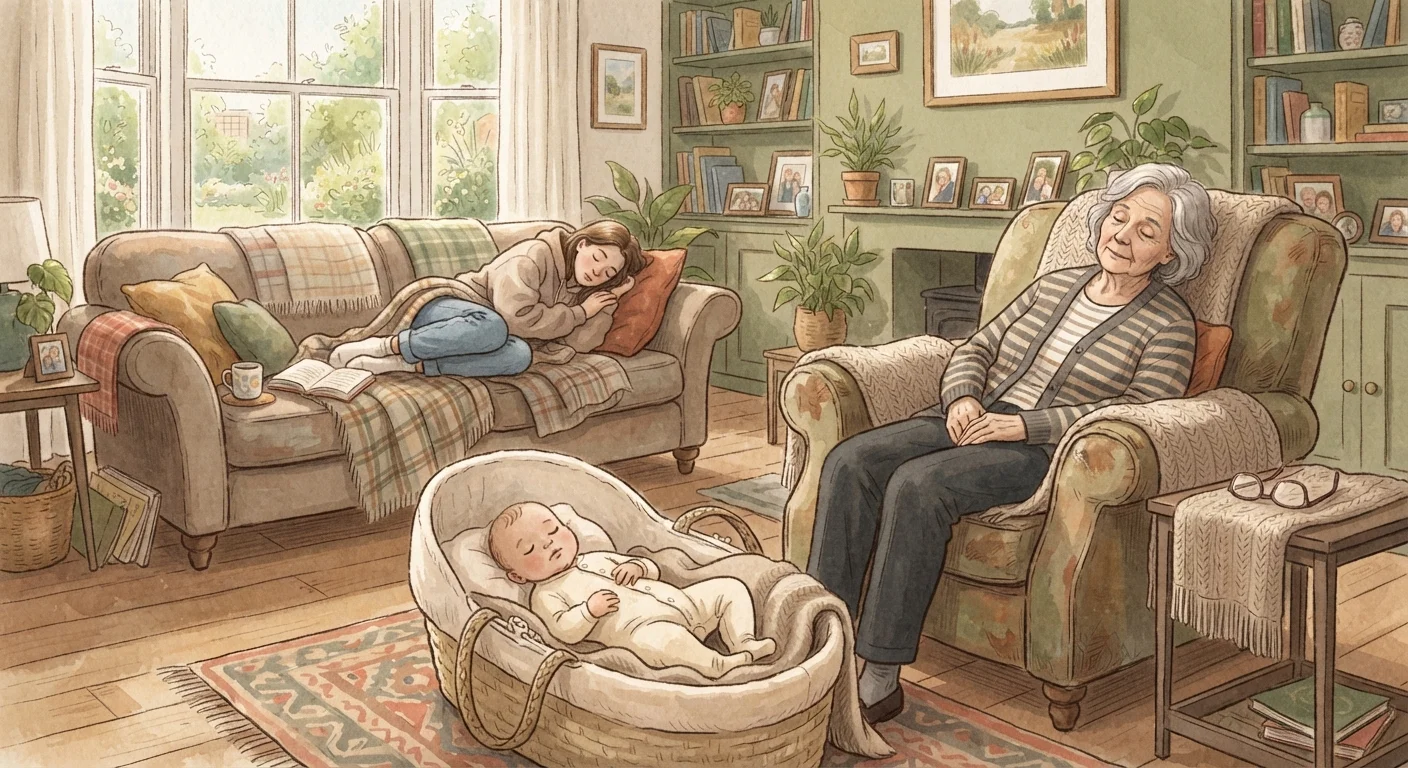
Why Sleep Requirements Change With Age
Sleep is not a fixed biological constant. The amount, structure, and quality of rest your body needs shifts substantially at every life stage — shaped by brain development, hormonal rhythms, physical demands, and the gradual changes that come with aging. Understanding these shifts helps you set realistic expectations and recognize when patterns fall outside a healthy range.
The sleep science underlying these changes centers on two forces: sleep pressure (the build-up of adenosine in the brain while awake) and the circadian clock (the internal 24-hour rhythm that governs when we feel alert or drowsy). Both mechanisms mature and change across a lifetime, which is why a teenager's sleep habits look nothing like an infant's — or a retiree's.
This article is a general reference. If you have concerns about your own sleep or a family member's, consult a qualified healthcare professional for personalized guidance.
Sleep by Life Stage: A Reference Guide
Infants (0–12 months)
Newborns typically sleep 14–17 hours per day, spread across multiple short periods. Their sleep cycles are shorter than adults' and consist largely of active (REM-like) sleep, which supports rapid brain development. By around 6 months, many infants begin consolidating sleep into longer nighttime stretches, though significant individual variation is normal.
Toddlers and Preschoolers (1–5 years)
Sleep needs remain high — generally 10–14 hours including naps for toddlers, tapering to 10–13 hours for preschoolers. Napping typically ends between ages 3 and 5. Deep, slow-wave sleep is proportionally high at this age, supporting physical growth and memory consolidation.
School-Age Children (6–12 years)
The recommended range is 9–12 hours per night. Children in this stage tend to be naturally early risers with strong, stable sleep patterns. Consistent bedtimes remain important: chronic short sleep at this age is associated with attention difficulties and behavioral challenges.
Teenagers (13–18 years)
Adolescence brings a well-documented biological shift in circadian timing — the body's internal clock genuinely delays, making it harder to fall asleep early and harder to wake early. Most teenagers need 8–10 hours, yet surveys consistently show many fall well short due to early school start times and social pressures. See also: how sleep patterns shift across the lifespan for deeper context on adolescent sleep biology.
Adults (18–64 years)
Most adults function best with 7–9 hours per night. Sleep architecture stabilizes during the 20s but gradually changes: slow-wave (deep) sleep begins declining in the 30s, and sleep becomes somewhat lighter and more fragmented across middle age. Physically active adults may have specific recovery considerations — learn how exercise affects sleep requirements.
Older Adults (65+)
The commonly held idea that older adults need less sleep is largely a myth. The recommendation stays at 7–8 hours, but the ability to achieve consolidated, deep sleep often diminishes. Circadian rhythms can advance (shifting earlier), REM sleep decreases, and nighttime awakenings become more frequent. These changes are normal aging — but poor sleep quality should not simply be accepted as inevitable. Explore the connection between sleep quality and healthy aging.
Warning Signs Worth Discussing With a Professional
Across all age groups, certain patterns warrant professional attention rather than self-management. These include:
- Difficulty falling or staying asleep most nights for several weeks
- Excessive daytime sleepiness that interferes with daily functioning
- Loud snoring, gasping, or breathing pauses during sleep (possible indicators of sleep apnea)
- Persistent difficulty waking in children or teens despite adequate opportunity to sleep
- Significant mood, memory, or cognitive changes linked to poor sleep in older adults
Sleep is deeply connected to other daily health habits. Daily routines that flex with your life stage can support better rest at any age. Similarly, understanding how recovery needs evolve with age gives broader context for building rest into a sustainable health routine.
This article is for general informational and educational purposes only and is not a substitute for professional medical advice, diagnosis, or treatment. Always consult a qualified healthcare provider with questions about your health or your child's health.