

Key Takeaways
- Serving size is the reference point for every number on the label — always check it first.
- Percent Daily Value (%DV) of 5% or less is low; 20% or more is high for any nutrient.
- Limit saturated fat, sodium, and added sugars; prioritize fiber, protein, and key micronutrients.
- Ingredients are listed by weight, so the first few items dominate the product's composition.
- A quick four-zone scan makes label reading fast and practical in any grocery aisle.
What you will need
Why the Nutrition Facts Panel Exists
The U.S. Nutrition Facts label is regulated by the Food and Drug Administration (FDA) and is required on virtually all packaged foods sold in the United States. Its purpose is straightforward: give consumers consistent, comparable information so they can make informed choices. The panel was significantly redesigned in 2016 — updates included a larger font for calories, a new line for added sugars, and updated serving sizes to better reflect how Americans actually eat.
Reading the label fluently connects directly to everyday decisions about macronutrients like carbohydrates, protein, and fat and helps you spot whether a food aligns with a genuinely balanced meal pattern. This walkthrough treats the label as four distinct zones, which keeps the process fast and low-stress.
The Four Zones of a Nutrition Label
Breaking the panel into zones prevents overwhelm and lets you focus on what matters most for your specific goal at a given moment.
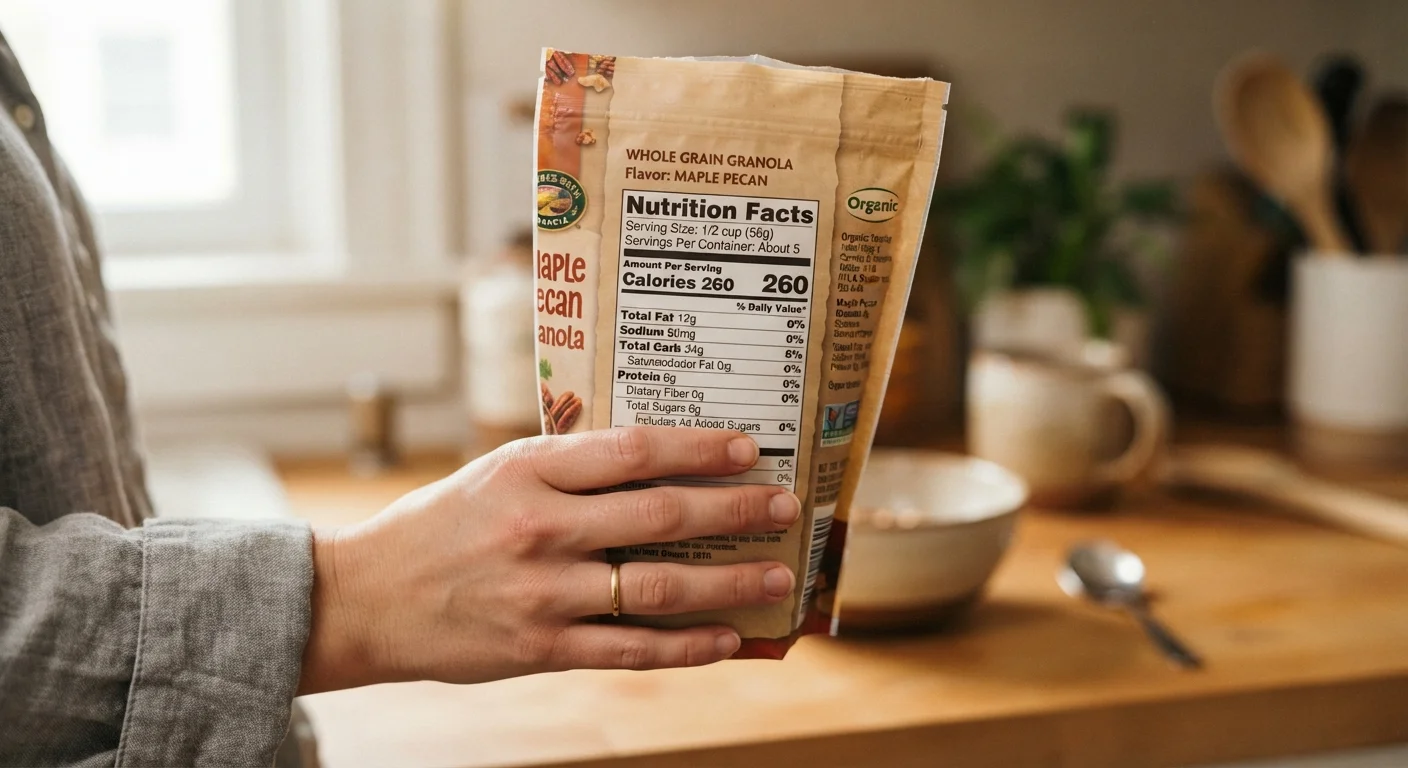
Zone 1 — Serving Information
The serving size and servings per container sit at the very top. Every calorie count and nutrient value on the label applies to one serving, not the whole package. A bag listed as 2.5 servings means the calorie count must be multiplied by 2.5 if you eat the whole bag. This is the single most important number to anchor your reading. For a deeper look at using serving information without obsessing over measurement, see our guide on portion awareness without obsessive measuring.
Zone 2 — Calories
Calories are displayed in a large font immediately below the serving information. Calories reflect the total energy provided per serving from all macronutrients combined. Context matters: 250 calories from a protein-rich Greek yogurt functions differently in a diet than 250 calories from a sugar-sweetened snack cake, even though the number is identical.
Zone 3 — Nutrients to Limit and Nutrients to Encourage
The middle section lists specific nutrients. The FDA groups them intentionally:
- Limit these: saturated fat, trans fat, sodium, and added sugars. Overconsumption of these is associated with increased risk of heart disease, high blood pressure, and other chronic conditions according to federal dietary guidelines.
- Encourage these: dietary fiber, vitamin D, calcium, iron, and potassium — nutrients many Americans fall short on. For a full reference on which nutrients are most commonly under-consumed in American diets, see key nutrients to track in a standard American diet.
If you want to understand the differences between fat types listed here, our no-jargon reference on saturated, unsaturated, and trans fats breaks it down clearly.
Use %DV to Compare Products Quickly
When choosing between two similar products on the shelf, compare the %DV column side by side rather than the raw gram amounts. It normalizes the data to a common benchmark, making it much faster to identify which option has less sodium or more fiber without doing mental math.
Zone 4 — Percent Daily Value (%DV)
The right column shows %DV, which tells you how much of a nutrient one serving contributes toward a standard 2,000-calorie daily diet. The FDA's benchmark rule: 5% DV or less is low; 20% DV or more is high. Use %DV to quickly compare similar products or to assess whether a food is meaningfully contributing to — or cutting into — your daily nutrient budget. Note that %DV is not shown for trans fat or total sugars because no recommended daily intake has been established for these.
The Ingredient List: What It Tells You
Below the Nutrition Facts panel sits the ingredient list, which is governed by a simple rule: ingredients appear in descending order by weight. The first three to five ingredients make up the bulk of what you're eating. If refined flour, corn syrup, or hydrogenated oil appears first, that food is predominantly those things — regardless of what health claims appear on the front of the package.
A short ingredient list doesn't automatically mean a food is healthier, but it often signals less processing. For a broader framework on evaluating processing levels, see whole foods vs. processed foods: understanding the spectrum.
This article is for general informational and educational purposes only and does not constitute medical or dietary advice. Individual nutritional needs vary. Consult a registered dietitian or qualified healthcare professional for guidance tailored to your health situation.