

Key Takeaways
- Hand-based reference guides offer a reliable, always-available way to estimate appropriate portions.
- Eating slowly and pausing mid-meal helps you recognize fullness before overeating occurs.
- Plate composition — not calorie math — is a practical framework most people can sustain long-term.
- Environmental cues like dish size and serving order significantly influence how much you eat.
- Portion awareness is a skill built over time, not a rulebook demanding perfection.
Why Measuring Isn't the Only Path to Awareness
Weighing every gram of food or logging every bite into an app works well for some people — but for many, that level of tracking becomes its own source of stress. Research consistently shows that rigid dietary control can backfire, leading to cycles of restriction and overeating rather than steady, sustainable habits. The good news: you don't need a food scale to develop a reliable sense of how much you're eating.
Portion awareness — understanding roughly how much food serves your body's needs — is a learnable skill grounded in everyday cues. It's worth distinguishing this from calorie obsession. The goal isn't numerical precision; it's building an intuitive feel for amounts that aligns with how hunger, fullness, and energy actually work in your body. For a broader look at how subtle habits can quietly undermine good intentions, see common patterns that derail healthy eating.
Hand-Based Portion References That Actually Work
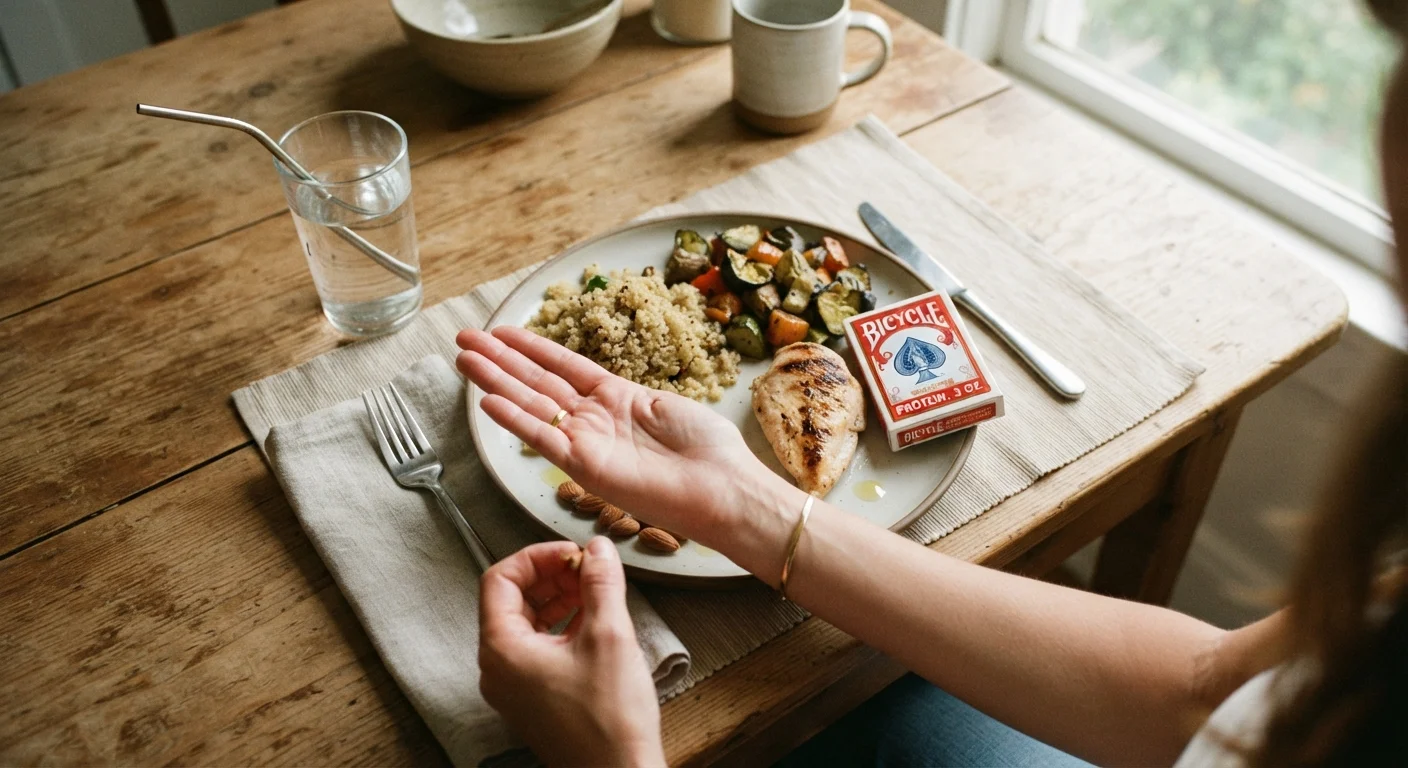
Your hand scales roughly with your body size, making it a surprisingly practical portion tool. Nutrition educators have long used hand-based guides because they require no equipment and travel with you everywhere.
These references aren't perfect — they're approximations. But consistent approximation beats inconsistent precision for most people managing everyday eating.
Using Your Plate as a Built-In Guide
The USDA's MyPlate framework offers a visual alternative to measuring cups: fill roughly half your plate with vegetables and fruit, a quarter with lean protein, and a quarter with whole grains or starchy foods. This approach naturally moderates portions without any math.
Plate size itself matters too. Studies on what researchers call the "Delboeuf illusion" show that the same amount of food looks smaller on a larger plate, which can prompt people to serve themselves more. Using a standard dinner plate (around 9–10 inches) rather than oversized restaurant-style plates is a low-effort environmental adjustment with real impact.
If you're also curious about macro-level tracking approaches that stay balanced, macro awareness without obsession covers flexible strategies worth considering alongside visual portioning.
Slowing Down to Let Fullness Register
Satiety signals — the body's way of communicating "enough" — take roughly 15 to 20 minutes to reach the brain after eating begins. Eating quickly bypasses this feedback loop almost entirely. Practicing a slower pace is one of the most evidence-supported habits for naturally moderating intake without counting anything.
Mindful eating isn't about eating less as an end goal — it's about being present enough to notice what your body is communicating. That awareness, built gradually, becomes its own portion guide. This connects naturally to everyday habits that reduce long-term health risk, where consistency in small behaviors compounds over time.
This article is for general informational purposes only and does not constitute medical or dietary advice. For personalized nutrition guidance, consult a registered dietitian or qualified healthcare professional.