

Key Takeaways
- Half your plate filled with vegetables and fruit is the single most impactful structural shift you can make.
- Whole grains provide fiber and micronutrients that refined grains largely lack.
- Lean proteins — plant or animal — support satiety and muscle maintenance at any age.
- Healthy fats are not optional; they support brain function and nutrient absorption.
- Balance is measured across the whole day, not plate by plate.
- Small, consistent changes to meal structure matter more than occasional perfection.
A Balanced Plate
A balanced plate is a meal that provides a reasonable mix of vegetables, whole grains, lean protein, and healthy fats in proportions that support overall nutrition without strict calorie counting or complicated rules. It draws on the USDA's MyPlate framework and broader dietary science to offer a visual, practical guide for building healthier meals. The goal is dietary variety and adequacy — getting the nutrients your body needs across the course of the day.
Nutritional balance is assessed across total dietary patterns, not single meals; the "balanced plate" concept is a practical proxy, not a clinical standard.
The Framework: Proportions Over Perfection
When most Americans picture a "balanced meal," they reach for mental images of old food pyramids or complicated macronutrient charts. In practice, the most reliable and research-supported framework is much simpler: proportions.
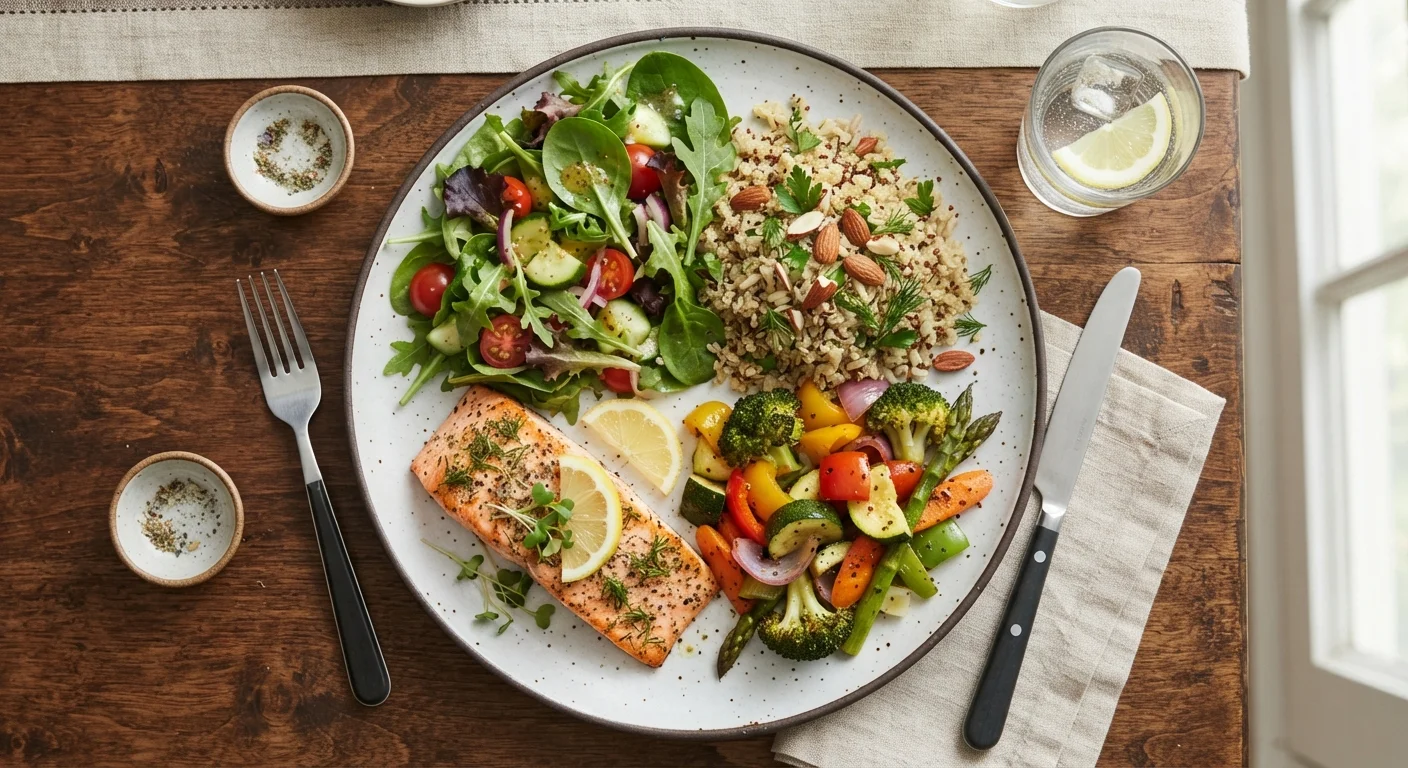
The USDA's MyPlate model — built on decades of dietary research — suggests structuring your plate so that roughly half is filled with vegetables and fruit, about a quarter contains whole grains, and the remaining quarter holds a lean protein source. A small amount of healthy fat rounds out the meal. This isn't a rigid prescription; it's a visual anchor you can adapt at any table, restaurant, or kitchen.
What makes this approach durable is that it focuses on food categories rather than calories, making it usable without any measuring tools. To understand how different eating styles fit within or diverge from these proportions, see our companion piece on macronutrient ratios across common dietary patterns.
90%
Americans not meeting vegetable intake recommendations
According to USDA Dietary Guidelines data, roughly 9 in 10 Americans fall short of recommended daily vegetable consumption.
~50%
Of daily grains should be whole grains
The USDA Dietary Guidelines for Americans recommend that at least half of all grains consumed each day come from whole grain sources.
1 in 10
Adults meet daily fruit intake recommendations
CDC data indicate that only about 12% of U.S. adults consume adequate amounts of fruit each day.
The Four Components Explained
Vegetables and Fruit (Half the Plate)
This is the most impactful structural shift most Americans can make. Vegetables and fruit supply fiber, vitamins, minerals, and antioxidants that are chronically under-consumed in typical U.S. diets. Prioritize variety in color — different pigments generally signal different beneficial compounds. Non-starchy vegetables like leafy greens, broccoli, peppers, and tomatoes can fill most of this half; fruit rounds it out without dominating.
Whole Grains (One Quarter)
Whole grains — brown rice, whole-wheat bread, oats, quinoa, farro — retain the bran and germ that refined grains lose during processing. That matters because those outer layers carry fiber, B vitamins, and minerals like magnesium. Fiber from grains supports digestive health and helps regulate blood sugar response after eating.
Lean Protein (One Quarter)
Protein supports muscle maintenance, immune function, and satiety. Good sources include fish, poultry, eggs, legumes (beans, lentils, chickpeas), tofu, and low-fat dairy. Red meat and processed meats can fit into a healthy diet in moderation, but most dietary guidelines suggest they shouldn't dominate the protein portion.
Healthy Fats (A Supporting Role)
Fats from avocado, nuts, seeds, and oils like olive oil are not adversaries — they're necessary. They assist in absorbing fat-soluble vitamins and contribute to satiety. The distinction that matters is type: unsaturated fats are generally preferred over saturated fats, and artificial trans fats are best minimized.
Making It Work in Real American Life
The gap between nutritional guidance and daily reality is real. Long work hours, limited grocery access, food budgets, and family preferences all shape what ends up on the table. A balanced plate doesn't require fresh ingredients from a specialty market or an hour of cooking.
Canned beans, frozen vegetables, and rotisserie chicken are all legitimate building blocks. Frozen vegetables are picked and frozen at peak ripeness, preserving most of their nutritional value. A bowl of brown rice, canned chickpeas, frozen spinach, and olive oil checks all four categories in under 15 minutes.
Start With One Section at a Time
If overhauling your entire plate feels overwhelming, focus on just one section first. Most Americans benefit most from adding more vegetables — even a handful of baby carrots or a side salad starts to shift the proportional balance. Build from there at a pace that feels sustainable.
Balance also isn't calculated meal-by-meal. If lunch is a rushed sandwich, dinner can lean heavier on vegetables to compensate. This cumulative thinking — looking at nutrition across the full day — is how registered dietitians actually assess dietary quality.
For a broader look at how meal structure fits your daily routine, see how meal timing fits into a daily wellness routine. And when you're grocery shopping or reading packaged food labels, our guide on reading a nutrition label without getting lost can help you make informed choices at a glance.
This article is for general informational and educational purposes only and is not a substitute for professional medical or dietary advice. Consult a qualified healthcare provider or registered dietitian for guidance tailored to your individual health needs.