

| Saturated fat — room temperature state | Solid (e.g., butter, coconut oil) |
| Unsaturated fat — room temperature state | Liquid (e.g., olive oil, canola oil) |
| Essential fatty acids | Must come from food; body cannot make them |
| USDA limit for saturated fat | Less than 10% of daily calories (USDA Dietary Guidelines for Americans, 2020–2025) |
| Artificial trans fat status in U.S. | Largely removed after FDA ruling (U.S. Food & Drug Administration) |
| Calories per gram of fat | 9 calories (all fat types) |
Why Fat Types Matter
Fat is one of the three macronutrients your body cannot function without. It provides energy, helps absorb fat-soluble vitamins, and supports cell structure. But not all dietary fat works the same way inside the body. The term "fat" covers a broad chemical family, and the differences between its members have real implications for heart health, inflammation, and overall nutrition. For a fuller picture of how fat fits alongside carbohydrates and protein, see our plain-language macronutrient guide.
The three main categories you'll encounter on a nutrition label — saturated, unsaturated, and trans fat — are defined by their chemical structure. That structure determines how they behave in your food and in your body. Knowing the basics helps you read labels confidently and make choices that reflect your health goals.
| Saturated fat — room temperature state | Solid (e.g., butter, coconut oil) |
| Unsaturated fat — room temperature state | Liquid (e.g., olive oil, canola oil) |
| Essential fatty acids | Must come from food; body cannot make them |
| USDA limit for saturated fat | Less than 10% of daily calories (USDA Dietary Guidelines for Americans, 2020–2025) |
| Artificial trans fat status in U.S. | Largely removed after FDA ruling (U.S. Food & Drug Administration) |
| Calories per gram of fat | 9 calories (all fat types) |
Saturated Fat: The Basics
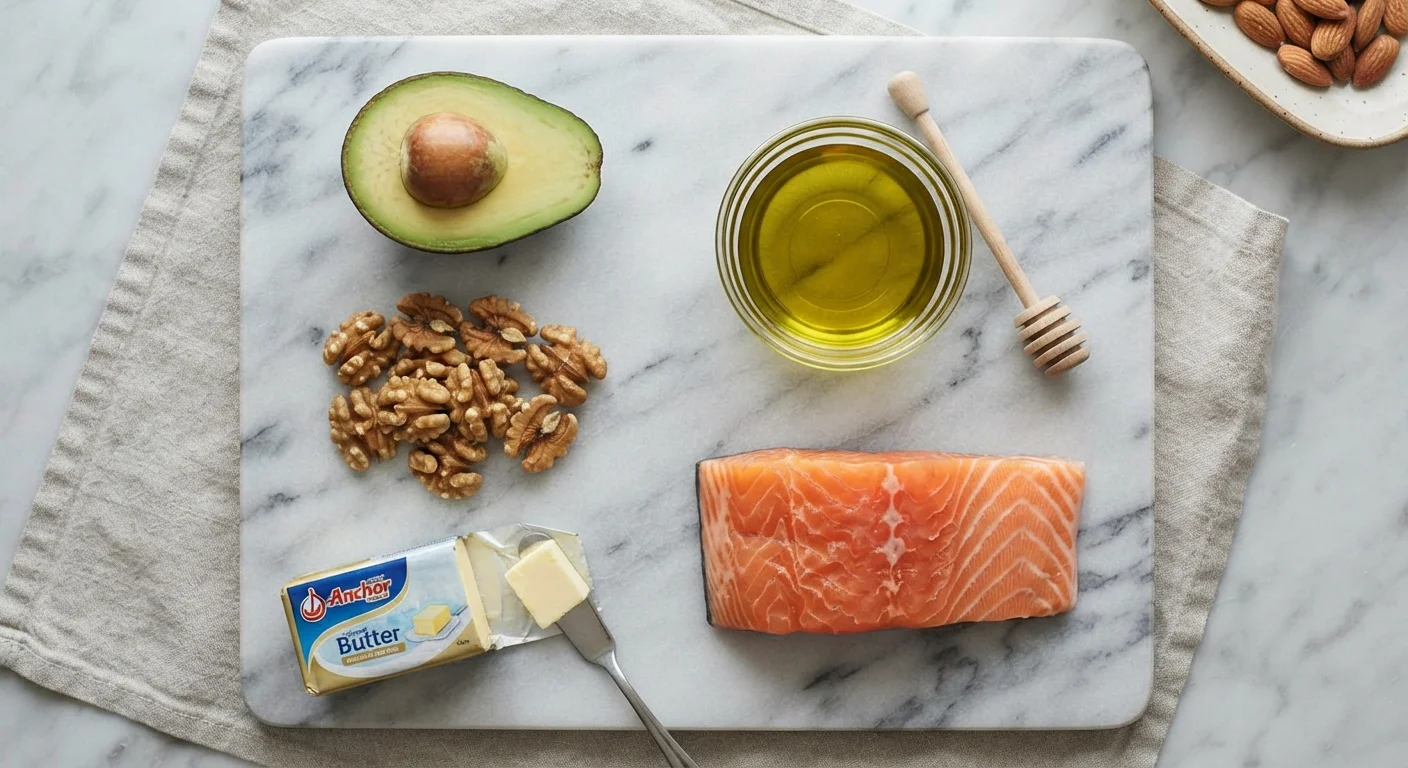
Saturated fat gets its name from chemistry: its carbon chain is fully "saturated" with hydrogen atoms, leaving no double bonds. This structure makes saturated fat solid at room temperature — think butter, lard, and the white fat marbled through red meat. Coconut oil and palm oil are plant-based sources that are also high in saturated fat.
Most dietary guidance, including the USDA Dietary Guidelines for Americans, recommends limiting saturated fat because research has associated higher intakes with elevated LDL (low-density lipoprotein) cholesterol levels. Elevated LDL is a recognized risk factor for cardiovascular disease. However, the relationship between dietary fat and health outcomes is complex, and ongoing research continues to refine how different saturated fatty acids behave individually. Talk to a healthcare provider if you have specific concerns about your cholesterol or heart health.
Unsaturated Fat: Monounsaturated and Polyunsaturated
Unsaturated fats contain one or more double bonds in their carbon chain, which is why they're typically liquid at room temperature. There are two subgroups:
- Monounsaturated fats (MUFAs) — one double bond. Found in olive oil, avocados, and most nuts. Research generally links MUFA-rich diets with favorable LDL cholesterol profiles.
- Polyunsaturated fats (PUFAs) — two or more double bonds. This group includes omega-3 and omega-6 fatty acids. Omega-3s, found in fatty fish, flaxseed, and walnuts, are associated with anti-inflammatory effects and heart health benefits. Omega-6s appear in vegetable oils such as soybean and corn oil and are also essential, though the typical American diet tends to provide them in abundance relative to omega-3s.
Because the body cannot synthesize certain PUFAs on its own, they are called essential fatty acids — dietary intake is the only way to obtain them. Unsaturated fats are also what make it possible for your body to absorb vitamins A, D, E, and K; you can read more in our guide to fat-soluble vitamins.
Trans Fat: Artificial vs. Naturally Occurring
Trans fat exists in two forms. Artificial trans fat (also called partially hydrogenated oil) was once widely used in processed foods to extend shelf life and improve texture. Industrial hydrogenation adds hydrogen to liquid vegetable oils, creating a semi-solid fat with an altered structure. Artificial trans fat has been largely removed from the U.S. food supply following an FDA determination that partially hydrogenated oils are not generally recognized as safe, though trace amounts may still appear in some products.
Naturally occurring trans fat is a different matter. Small amounts form naturally in the digestive tracts of cattle and sheep and appear in dairy and beef products. Evidence suggests this natural form does not carry the same health risks as the artificial version, though research is ongoing.
On a nutrition label, a product can list 0 g of trans fat if it contains less than 0.5 g per serving — so checking the ingredient list for "partially hydrogenated oil" is still worth doing. Our nutrition label walkthrough explains exactly where to look.
This article is for informational purposes only and is not a substitute for personalized medical or dietary advice. Consult a qualified healthcare professional for guidance specific to your health situation.