

Key Takeaways
- Carbohydrates are the body's preferred and most efficient source of immediate energy.
- Protein provides amino acids essential for building and repairing muscle, tissue, and enzymes.
- Dietary fat supports hormone production, brain function, and absorption of fat-soluble vitamins.
- All three macronutrients are necessary — eliminating any one creates nutritional gaps.
- The right balance varies by individual; a healthcare provider or registered dietitian can offer personalized guidance.
Macronutrients
Macronutrients are the three main categories of nutrients your body needs in relatively large amounts to function: carbohydrates, protein, and fat. Together, they supply the energy (measured in calories) that powers everything from breathing to exercise. Unlike vitamins and minerals, which are needed in smaller amounts, macronutrients form the bulk of every meal you eat.
Each macronutrient provides a defined caloric yield: carbohydrates and protein each supply 4 calories per gram, while fat supplies 9 calories per gram.
Why Macronutrients Are the Foundation of Every Diet
Open any nutrition label and you'll see them listed in bold: total fat, total carbohydrate, protein. These three categories — collectively called macronutrients — are the structural backbone of your diet. They are not optional extras or things to minimize; they are the raw materials your body uses to generate energy, build tissue, and regulate nearly every biological process.
Understanding what each macronutrient does (and doesn't do) clears up a lot of the confusion created by trendy diets that demonize one while glorifying another. It's also the first step toward making everyday food choices that actually support how your body works. For context on how macros differ from the smaller but equally vital nutrients your body needs, see our overview of vitamins and minerals.
45–65%
Recommended daily calories from carbohydrates
According to the USDA Dietary Guidelines for Americans, carbohydrates should make up 45–65% of total daily calorie intake for most adults.
10–35%
Recommended daily calories from protein
The USDA Dietary Guidelines recommend that protein account for 10–35% of total daily calories for adults, depending on age and activity level.
20–35%
Recommended daily calories from fat
Major dietary guidelines suggest fat should comprise 20–35% of total daily calories, with an emphasis on unsaturated sources.
9 cal/g
Calories per gram of dietary fat
Fat is the most calorie-dense macronutrient, providing more than twice the energy per gram compared to carbohydrates or protein.
Carbohydrates: Your Body's Preferred Fuel
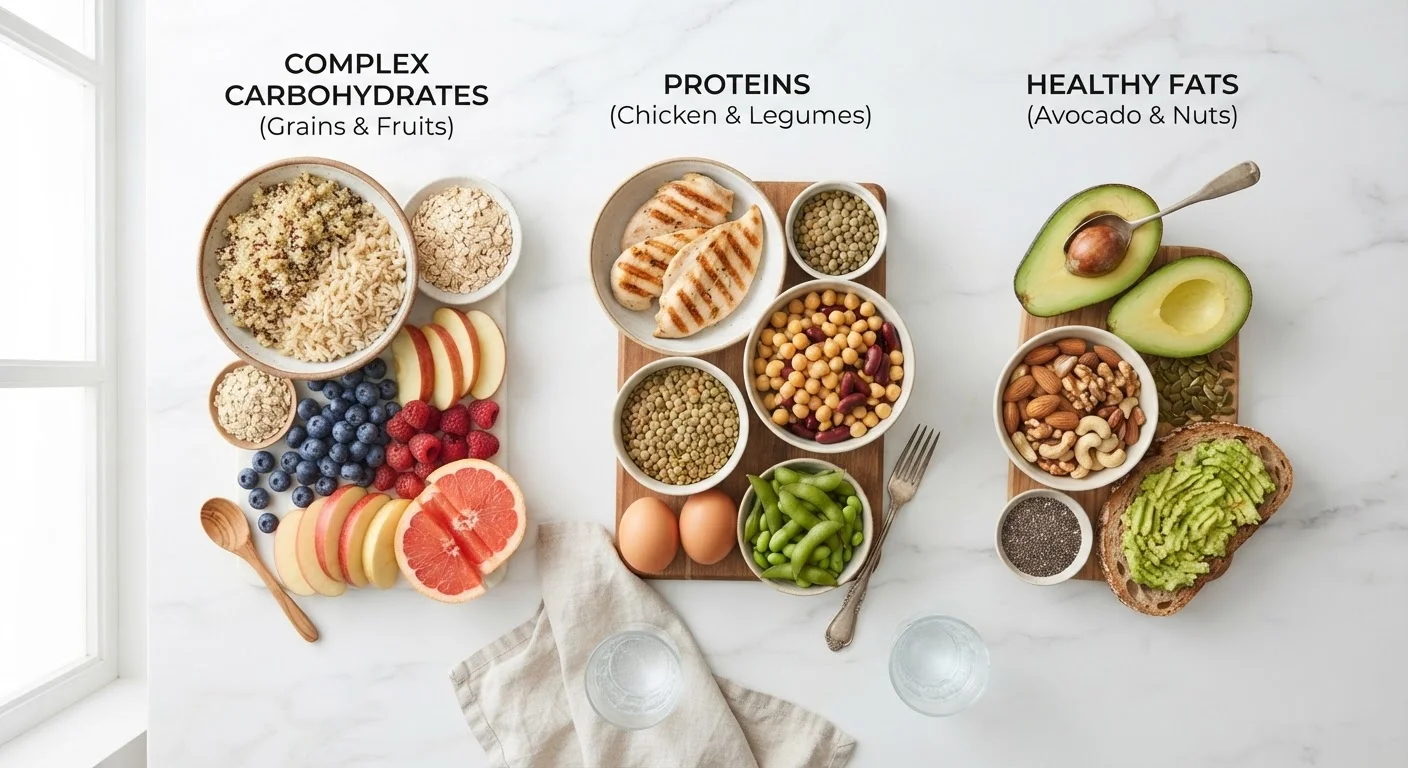
Carbohydrates are the body's fastest and most efficient energy source. When you eat carbs — whether from a slice of bread, a bowl of oatmeal, or a banana — your digestive system breaks them down into glucose. That glucose enters the bloodstream and is either used immediately for energy or stored in the liver and muscles as glycogen for later use.
Your brain is especially dependent on glucose. It cannot easily switch to other fuel sources the way muscles can, which is part of why very low-carb eating can sometimes cause mental fog or fatigue in the short term.
Not all carbohydrates behave identically in the body. Fiber — a form of carbohydrate found in vegetables, legumes, whole grains, and fruit — slows digestion, supports gut health, and helps stabilize blood sugar. Added sugars, common in ultra-processed foods, provide energy but little else nutritionally. Choosing carbohydrate sources that are rich in fiber and minimally processed makes a meaningful difference in diet quality.
To see how carbohydrate use shifts during physical activity, visit our article on how your body uses each macronutrient during exercise.
Protein: Builder, Repairer, Regulator
Protein does far more than build muscle, though that function gets the most attention. Every protein you eat is broken down into amino acids — smaller molecules your body reassembles into enzymes, hormones, antibodies, and structural components like hair and skin. Without adequate protein intake, repair processes throughout the body slow down.
There are 20 amino acids in total. Nine of them are classified as essential, meaning your body cannot synthesize them on its own — they must come from food. Animal foods (meat, poultry, fish, eggs, dairy) typically contain all nine in sufficient quantities. Plant sources can also meet protein needs, though pairing a variety of foods helps ensure you get the full amino acid profile over the course of a day.
Protein also plays a role in satiety. It tends to be more filling per calorie than carbohydrates or fat, which is why protein-adequate meals are often associated with feeling satisfied longer after eating. For a closer look at how protein supports recovery after exercise specifically, see how nutrition shapes recovery.
Dietary Fat: Essential, Not the Enemy
Fat spent decades with an undeserved reputation as the macronutrient to avoid. The science tells a different story. Dietary fat is essential for absorbing fat-soluble vitamins — A, D, E, and K — which cannot enter the bloodstream without it. Fat also provides the raw material for hormone production, including sex hormones and stress hormones, and makes up a significant portion of cell membranes throughout the body.
The brain is roughly 60% fat by dry weight, and dietary fat contributes to maintaining that structure over time. Omega-3 fatty acids — found in fatty fish, walnuts, and flaxseed — are particularly associated with brain and cardiovascular health in the research literature.
Fat type matters. Unsaturated fats (found in olive oil, avocados, nuts, and most fish) are broadly associated with favorable health outcomes in the research. Saturated fats (found in red meat and full-fat dairy) are recommended in moderation by major health organizations. Trans fats, once common in processed foods, have been largely removed from the food supply due to their well-documented negative effects on cardiovascular health.
This article is for general informational purposes only and does not constitute medical or dietary advice. For personalized guidance, consult a qualified healthcare provider or registered dietitian.