

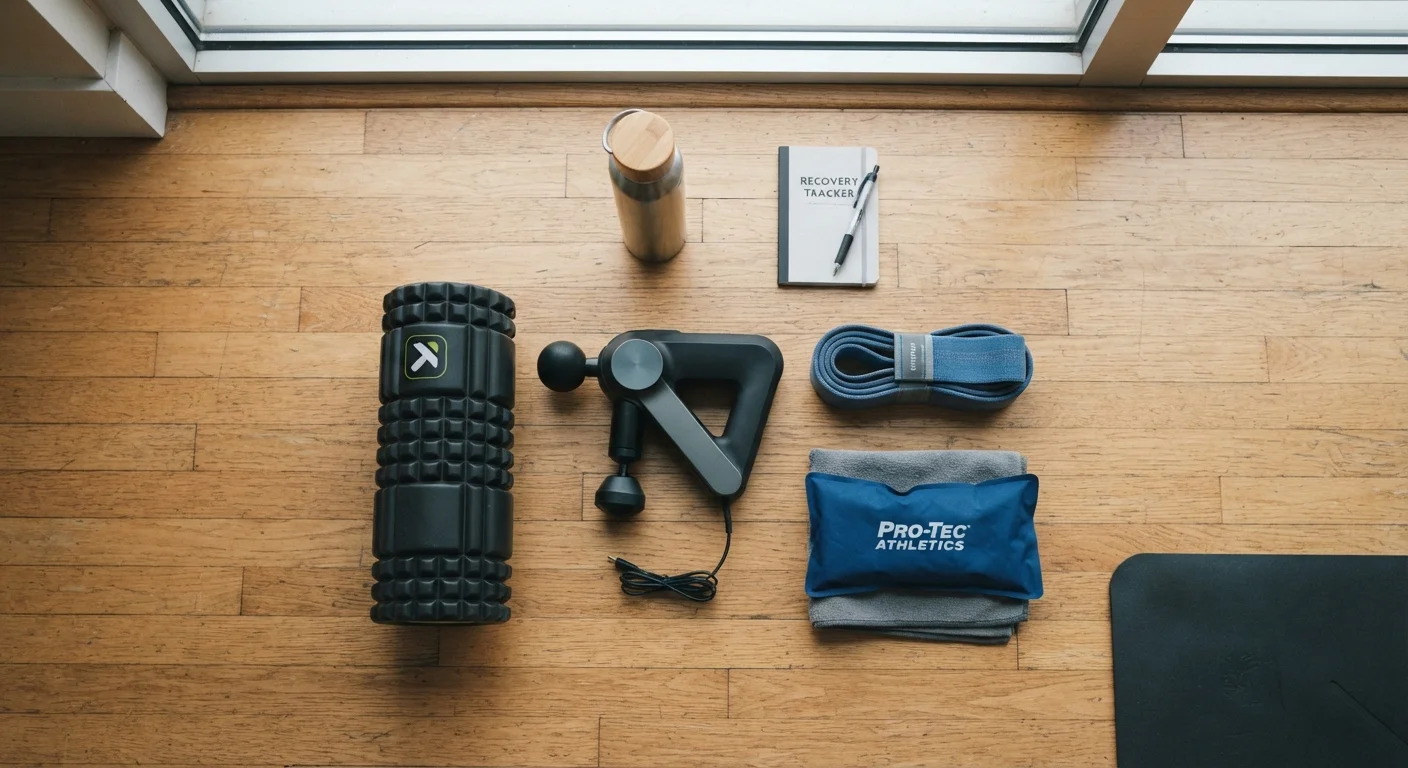
Key Takeaways
- Foam rolling and massage reduce perceived soreness but show modest effects on actual muscle repair.
- Static stretching improves flexibility over time but has limited direct impact on recovery speed.
- Massage — manual or device-assisted — has among the strongest evidence for short-term soreness relief.
- No single recovery method is universally superior; context, training load, and individual response matter.
- Combining two or more strategies may offer additive benefit, though more research is needed.
- Always consult a healthcare professional if pain is sharp, persistent, or accompanies injury.
Our Verdict
Each recovery method addresses a somewhat different physiological target, and the evidence supporting them varies in strength. Massage and massage-device therapy show the most consistent short-term soreness relief, while foam rolling and stretching offer value as accessible, low-cost complements. The best approach depends on your training intensity, available time, and physical goals — and stacking compatible methods thoughtfully tends to outperform relying on any single tool.
| Best for | Recommended |
|---|---|
| Those seeking the strongest evidence-backed soreness relief | Massage (manual or device-assisted) |
| People wanting an accessible, low-cost daily practice | Foam Rolling |
| Anyone prioritising long-term flexibility and joint range of motion | Stretching |
| High-volume athletes managing systemic fatigue and inflammation | Combined approach (massage + cold/heat therapy) |
Why Recovery Strategy Matters
Physical recovery is not passive — it is an active physiological process that determines how quickly muscles repair, how soreness resolves, and how prepared you are for the next bout of activity. Yet most people choose a recovery method based on habit or convenience rather than evidence.
The four approaches most commonly used — foam rolling, static stretching, manual massage, and device-assisted massage (such as percussive massage guns) — each operate through different mechanisms. Understanding what each actually does, and what the research supports, helps you make better decisions for your body. For a broader look at when rest itself is the right call, see our comparison of active recovery and complete rest.
Foam Rolling: Pressure, Tissue, and Perceived Relief
Foam rolling — technically called self-myofascial release — involves applying body-weight pressure to muscles using a dense cylindrical roller. The proposed mechanism is that sustained pressure alters fascial tissue tension and stimulates sensory receptors, reducing perceived tightness and soreness.
Research generally supports foam rolling as a tool for short-term improvements in range of motion and modest reductions in delayed-onset muscle soreness (DOMS). A 2015 review in the Journal of Athletic Training found that foam rolling post-exercise reduced DOMS perception in subsequent days, though effects on actual muscle function recovery were less clear. It is worth noting that most studies rely on self-reported soreness rather than objective markers of muscle repair.
Practically speaking, foam rolling is low-cost, requires no professional, and can be incorporated before or after workouts. Its limitations: improper technique can cause bruising or discomfort, and rolling over joints or inflamed tissue is not recommended. For a detailed evidence breakdown, see what the science actually says about foam rolling.
Stretching: Flexibility vs. Recovery Speed
Static stretching — holding a muscle in a lengthened position for 20 to 60 seconds — is widely practiced as both a warm-down and a recovery tool. However, the evidence distinguishing its role in flexibility improvement from its role in recovery acceleration is important.
On flexibility and joint range of motion, evidence is consistent and well-established. On recovery speed from exercise-induced muscle damage, the picture is less supportive. Research has not demonstrated that static stretching meaningfully reduces DOMS or speeds muscle repair. It may help some individuals feel subjectively looser, but that sensation does not necessarily reflect faster physiological recovery.
Mobility work — a distinct but related practice — focuses on active joint control across a range of motion, not simply lengthening a muscle passively. Understanding the difference can sharpen your practice: see how mobility work differs from stretching.
| Foam Rolling | Static Stretching | Manual Massage | Massage Gun | |
|---|---|---|---|---|
| Evidence for soreness reduction | Moderate | Weak | Strong | Moderate–Strong |
| Flexibility benefit | Mild short-term | Well-established | Mild | Mild short-term |
| Cost / accessibility | Low cost, self-applied | Free, no equipment | Higher cost, professional | Moderate cost, self-applied |
| Time required | 5–15 minutes | 5–20 minutes | 30–60 minutes | 5–15 minutes |
| Skill or technique needed | Moderate | Low | High (practitioner) | Moderate |
| Risk of misuse | Low–moderate | Low | Low with professional | Low–moderate |
Massage and Device-Assisted Therapy: The Strongest Evidence
Manual massage — applied by a trained therapist — has the most robust body of evidence among common recovery strategies. Meta-analyses have found that massage reduces DOMS ratings, decreases perceived fatigue, and may support psychological recovery from intense training. The mechanisms likely involve improved local circulation, reduced sympathetic nervous system activation, and direct pressure effects on muscle tissue.
Percussive massage devices (often called massage guns) deliver rapid, repetitive pressure to muscle tissue. Early research suggests benefits comparable to some manual massage techniques for short-term soreness and range of motion — though fewer long-term studies exist. These devices are increasingly accessible, though technique and pressure intensity matter for safety.
Temperature-based strategies — cold water immersion, heat therapy, and contrast methods — represent a separate but complementary category. For a side-by-side breakdown, see cold therapy vs. heat therapy for sore muscles and cold plunges, heat therapy, and contrast method comparisons.
This article is for general informational purposes only and does not constitute medical advice. If you experience sharp, worsening, or persistent pain, consult a qualified healthcare professional before continuing any recovery practice.