

Key Takeaways
- Stretching improves passive flexibility; mobility work builds active, controlled range of motion.
- Flexibility is a component of mobility, but mobility also requires strength and neuromuscular control.
- Mobility drills are better suited as warm-up preparation; static stretching typically fits better post-workout.
- Both practices are valuable - combining them strategically produces the most complete results.
- Neither stretching nor mobility work replaces the need to consult a professional for pain or injury.
Option A
Stretching
The passive, tissue-lengthening practice most people already know.
Best for: Improving the passive length of muscles and connective tissue after exercise or during a cooldown.
Option B
Mobility Work
The active, strength-through-range training that builds functional movement.
Best for: Developing usable range of motion you can control - essential for athletic performance and injury resilience.
If you want to reduce post-workout muscle tightness
Stretching
Static stretching after exercise helps relax muscle tone and temporarily increases passive tissue length, making it a practical cooldown tool.
If you want to move better during workouts and daily life
Mobility Work
Mobility drills train your nervous system and muscles to actively control new ranges, translating directly to safer, more efficient movement patterns.
If you're preparing your body before a training session
Mobility Work
Dynamic mobility exercises elevate tissue temperature, activate stabilizers, and prime joints for load - making them a superior warm-up strategy.
If you're building a complete long-term recovery routine
Stretching
Regular static and dynamic stretching complements mobility training and supports flexibility maintenance over time when used consistently.
Why the Terms Get Confused
Most people use "stretching" and "mobility work" interchangeably - and it's an understandable mix-up. Both involve moving joints through range of motion, both can feel like recovery, and both show up in warm-up and cooldown routines. But the underlying goals and mechanisms are meaningfully different, and knowing the distinction helps you train smarter.
Flexibility is the passive ability of a muscle or connective tissue to lengthen. Traditional stretching - holding a hamstring stretch for 30 seconds, for example - targets this quality. You're applying an external force (gravity, your own hands, a strap) to lengthen tissue.
Mobility is how much usable, controlled range of motion you have at a joint. It requires flexibility as a foundation, but it adds two additional layers: strength and neuromuscular coordination. A flexible hip and a mobile hip are not the same thing. You could be flexible enough to passively place your leg in a split position but lack the muscular control to actively move through that range during a squat or a lateral lunge.
Think of flexibility as the ceiling of a room - it sets the limit. Mobility is how much of that ceiling space you can actually reach and use.
How Each Practice Works
Understanding the mechanisms clarifies when to use each approach.
Stretching
Static stretching - holding a position for 20 to 60 seconds - is the most common form. It works primarily by influencing the nervous system's tolerance to length (a concept sometimes called stretch tolerance) and, over time, by promoting structural changes in connective tissue. It's best placed after a workout or as a standalone session, since research suggests prolonged static stretching before strength or power training may temporarily reduce force output. For a deeper look at timing, see static vs. dynamic stretching placement.
Mobility Work
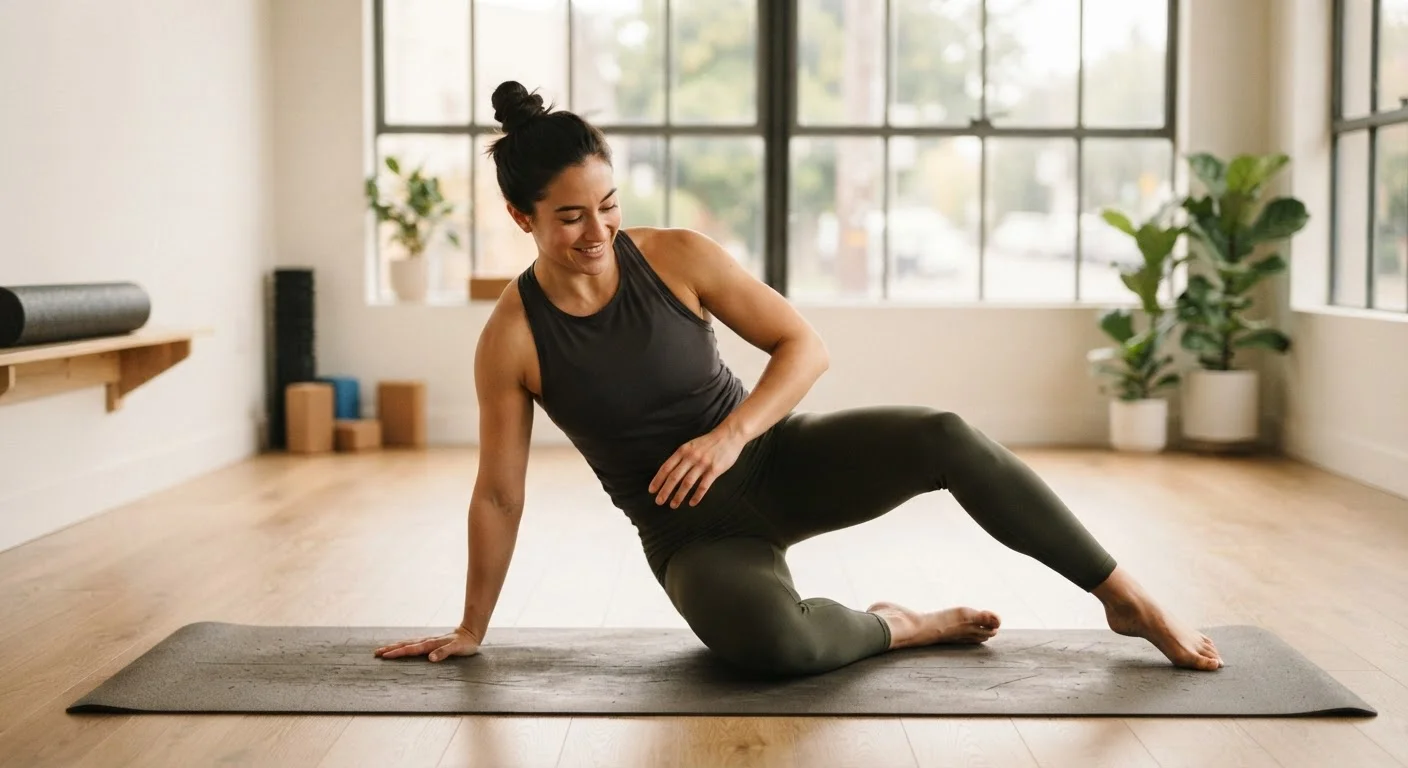
Mobility drills are active. Common examples include hip 90/90 transitions, thoracic spine rotations, and controlled articular rotations (CARs) - movements where you slowly drive a joint through its full range under muscular tension, not passive weight. This active loading teaches the nervous system that the new range is safe and accessible, which is why mobility improvements tend to carry over into sport and daily movement more reliably than passive flexibility gains alone.
| Criterion | Stretching | Mobility Work |
|---|---|---|
| Primary goal | Lengthen tissue passively | Build active, controlled range |
| Type of effort | Passive (held position) | Active (muscular engagement) |
| Best timing | Post-workout or standalone | Pre-workout or warm-up |
| Transfers to sport/movement | Indirectly over time | More directly and reliably |
| Strength component | Minimal | Central to the practice |
| Example exercise | Seated hamstring hold | Hip 90/90 transition |
For a broader look at how these practices fit into recovery, recovery strategies compared covers the evidence on foam rolling, massage, and more.
Building a Practice That Uses Both
The most effective movement routines aren't either/or - they use both tools at the right time.
- Before training: Prioritize mobility drills and dynamic movement. Hip circles, ankle rocks, and thoracic rotations activate muscles, warm tissue, and prepare joints for load without the temporary force-output drop linked to prolonged static holds.
- After training: Static stretching fits well here. Muscles are warm, the nervous system is less guarded, and passive lengthening can aid the sense of recovery. Foam rolling before stretching may also help muscles relax into longer positions.
- On recovery days: Light mobility sessions - 10 to 15 minutes of controlled joint work - count as active recovery and keep tissues responsive without adding training stress. Active recovery vs. complete rest explores when full rest is the smarter call.
Consistency matters more than duration. Even brief daily mobility work - five to ten minutes of intentional joint movement - tends to produce more noticeable improvements than occasional long sessions.
This article is for general informational purposes only and does not constitute medical advice. If you're experiencing pain, limited range of motion related to an injury, or a chronic joint condition, consult a qualified healthcare professional before starting any new movement practice.