

Key Takeaways
- Dynamic stretching uses controlled movement and belongs before exercise to prepare muscles and joints.
- Static stretching — holding a position — is most effective after exercise when muscles are warm.
- Research suggests static stretching before intense activity may temporarily reduce power output.
- Both types improve flexibility over time, but their immediate effects and ideal timing differ.
- Combining both approaches — dynamic pre-workout, static post-workout — gives you the benefits of each.
Our Verdict
Neither static nor dynamic stretching is universally superior — they serve different physiological purposes at different points in your workout. Dynamic stretching primes your nervous system and warms up movement patterns before exercise, while static stretching encourages muscle lengthening and relaxation when it matters most: after training. Used together in the right sequence, they form a well-rounded approach to movement preparation and recovery.
| Best for | Recommended |
|---|---|
| Pre-workout preparation and athletic warm-up | Dynamic Stretching |
| Cool-down and post-exercise flexibility work | Static Stretching |
| Improving range of motion as a long-term goal | Static Stretching |
| Full recovery and movement health routine | Both combined in sequence |
What Makes These Two Types of Stretching Different
Stretching is often treated as a single, interchangeable activity — something you do before or after a workout, perhaps somewhat reluctantly. But static and dynamic stretching are physiologically distinct, and using one when you should use the other can limit your results or, in some cases, work against you.
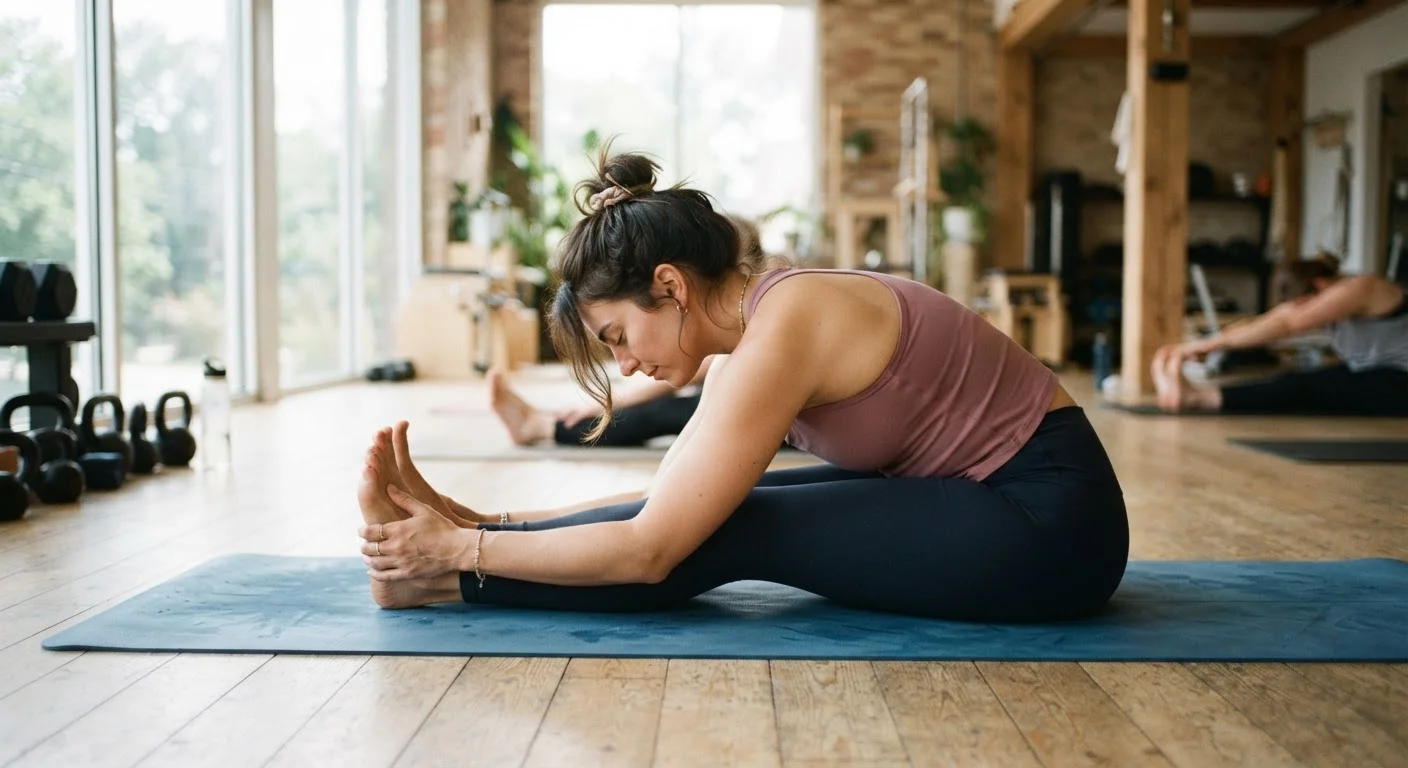
Static stretching involves holding a muscle in a lengthened position for a sustained period — typically 20 to 60 seconds. Think of a seated hamstring stretch or a standing quad pull. The muscle is taken to its end range and held there without movement.
Dynamic stretching uses controlled, repetitive movement through a joint's range of motion — leg swings, arm circles, walking lunges, or hip rotations. The key word is controlled: dynamic stretching is deliberate and smooth, not the ballistic bouncing that sports scientists generally caution against.
Both improve flexibility over time. Where they diverge is in their immediate effects on muscle temperature, neural readiness, and performance — which is why timing matters so much. For a broader look at how stretching fits alongside other recovery tools, see how stretching compares to other recovery methods.
Dynamic Stretching: Why It Belongs Before Exercise
Your muscles, connective tissues, and nervous system perform better when they're warm and primed. Dynamic stretching serves exactly that purpose. By moving through progressively larger ranges of motion, you:
- Increase blood flow and tissue temperature
- Activate the neural pathways involved in the movements you're about to perform
- Improve joint lubrication through synovial fluid circulation
- Rehearse movement patterns at lower intensity
Research published in sports science literature consistently supports dynamic warm-up routines as a way to preserve — or even enhance — subsequent strength and power output. This contrasts with what studies have found about static stretching performed immediately before activity.
| Dynamic Stretching | Static Stretching | |
|---|---|---|
| Movement involved | Yes — controlled, repetitive motion | No — held in one position |
| Best timing | Before exercise (warm-up) | After exercise (cool-down) |
| Primary benefit | Neural activation, blood flow | Muscle lengthening, relaxation |
| Effect on immediate power output | Neutral to positive | May reduce slightly if done pre-workout |
| Long-term flexibility gains | Moderate | Strong with consistent practice |
| Examples | Leg swings, arm circles, hip rotations | Seated forward fold, quad pull, chest stretch |
Good dynamic warm-up options include leg swings, hip circles, inchworms, shoulder rolls, and bodyweight squats with a pause at the bottom. Aim for two to three sets of 10 repetitions per movement, focusing on smooth control rather than speed.
Static Stretching: Where It Earns Its Place
Static stretching gets an undeservedly mixed reputation largely because of when it's used, not what it does. When applied after exercise — when muscle temperature is elevated and tissues are pliable — static stretching is one of the most effective tools available for improving flexibility and supporting recovery.
Holding a stretch for 20 to 60 seconds allows the muscle's stretch reflex to subside, enabling a gradual increase in length. Over weeks of consistent practice, this leads to meaningful improvements in range of motion. Post-workout is also when the body is shifting from sympathetic (fight-or-flight) to parasympathetic (rest-and-digest) dominance, and slow, deliberate static stretching supports that transition.
Common post-workout static stretches include the seated forward fold (hamstrings), figure-four stretch (glutes and hip external rotators), doorway chest stretch (pectorals), and cross-body shoulder stretch. Hold each position steadily — you should feel mild tension, not sharp pain.
Note: This article provides general fitness information and is not a substitute for personalized advice from a qualified healthcare or fitness professional. If you have an injury or chronic condition, consult a professional before beginning any stretching routine.
It's also worth distinguishing stretching from broader mobility work, which targets joint control and active range of motion rather than passive muscle lengthening alone.
Building a Routine That Uses Both Effectively
The most practical approach is straightforward: dynamic before, static after. Here's how that looks in a typical workout structure:
- Pre-workout (5–10 minutes): Dynamic stretching targeting the muscles and joints you'll use. A lower-body day might include leg swings, hip circles, and walking lunges. An upper-body day might feature arm circles, thoracic rotations, and band pull-aparts.
- Main workout: Your primary training session — strength, cardio, sport, or a combination.
- Post-workout cool-down (5–10 minutes): Static stretches held for 20 to 45 seconds each, focusing on the muscles worked. Breathe steadily through each hold; avoid straining into pain.
Consistency matters more than perfection. Even a brief, intentional stretching routine performed regularly will yield greater long-term flexibility gains than occasional deep sessions. If you're navigating how stretching fits into your broader recovery day choices, active recovery vs. passive rest is a useful companion read for structuring your off days.