

Key Takeaways
- Cold therapy is most effective in the first 24–72 hours after an acute injury or intense exercise session.
- Heat therapy works best for chronic muscle tension and stiffness, not fresh inflammation.
- Neither modality has been shown to fully prevent delayed onset muscle soreness (DOMS).
- Applying heat to a freshly swollen injury can worsen inflammation; applying ice to stiff muscles may increase tightness.
- Consult a healthcare professional if pain is severe, persistent, or linked to a specific injury.
Option A
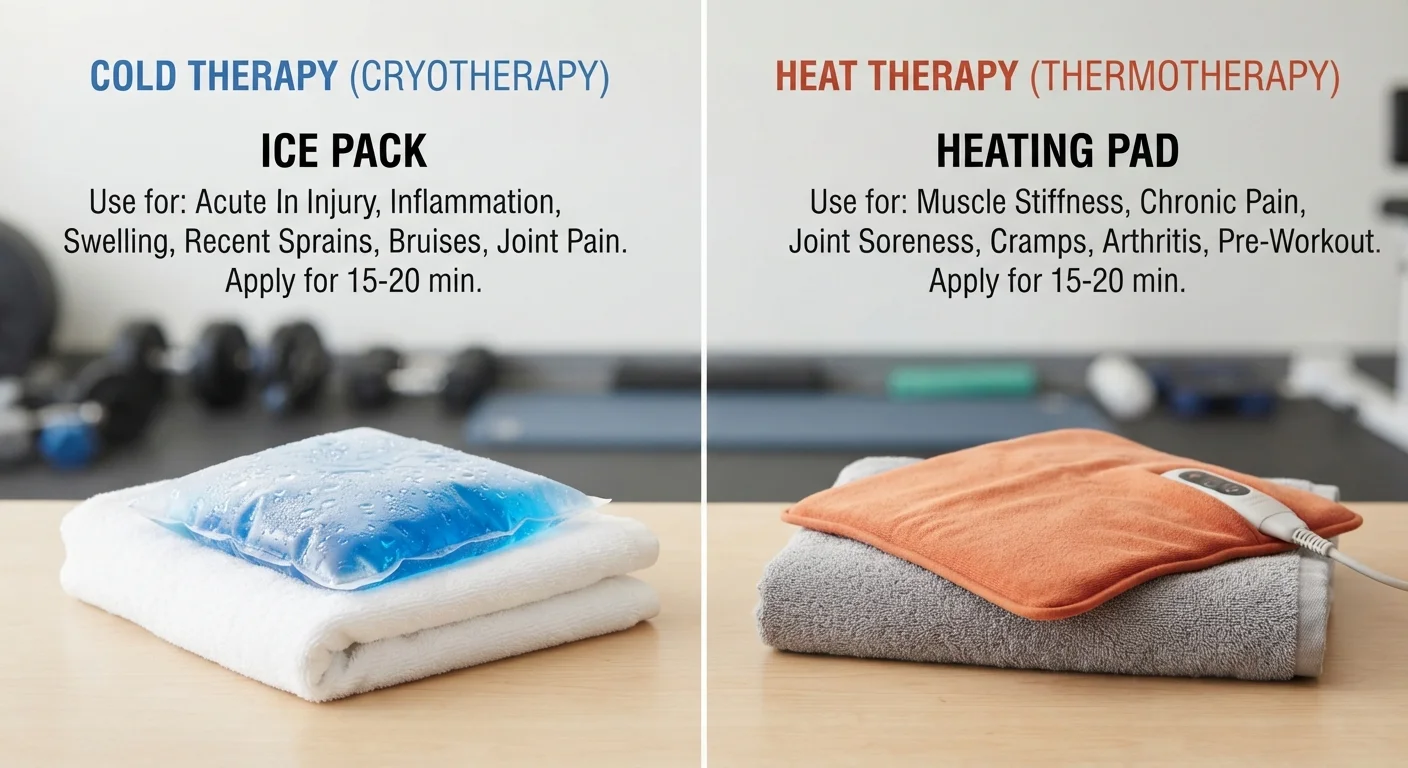
Cold Therapy
The acute-phase intervention for inflammation and swelling.
Best for: Best for acute injuries, fresh swelling, or post-exercise inflammation in the first 24–72 hours.
Option B
Heat Therapy
The chronic-phase soother for tight, stiff, or aching muscles.
Best for: Best for chronic muscle tightness, stiffness, or ongoing soreness that is not accompanied by active swelling.
If you've just finished an intense workout and feel acute inflammation
Cold Therapy
Cold reduces blood flow and metabolic activity in stressed tissue, helping limit swelling in the immediate post-exercise window.
If you wake up with stiff, aching muscles the morning after exercise
Heat Therapy
Heat increases tissue flexibility and blood flow, making it better suited for loosening muscles that are sore but not acutely inflamed.
If you're dealing with a recent sprain or soft tissue injury with visible swelling
Cold Therapy
Ice or cold packs remain a standard first-response tool for acute soft tissue injuries, helping manage pain and limit swelling early on.
If you have chronic tension or recurring muscle tightness
Heat Therapy
Sustained warmth relaxes muscle fibers and connective tissue, offering relief for patterns of tension that are not inflammation-driven.
How Cold and Heat Affect Muscle Tissue Differently
Cold therapy and heat therapy work through opposite physiological mechanisms — which is precisely why choosing the wrong one at the wrong time can backfire.
Cold therapy (cryotherapy) causes vasoconstriction, narrowing blood vessels and slowing circulation to the affected area. This limits the inflammatory cascade that follows tissue stress, reduces local metabolic activity, and numbs pain receptors. It's most effective when tissue is actively inflamed or swollen.
Heat therapy (thermotherapy) does the opposite: it dilates blood vessels, increases blood flow, and raises tissue temperature. This relaxes muscle fibers, improves connective tissue extensibility, and eases the chronic, dull ache of tight or stiff muscles. Applied too early after an acute injury, however, heat can amplify swelling.
| Criterion | Cold Therapy | Heat Therapy |
|---|---|---|
| Primary mechanism | Vasoconstriction, reduces nerve conduction | Vasodilation, increases tissue extensibility |
| Best timing | Within 24–72 hours of acute injury or hard effort | After 72 hours, or for chronic soreness |
| Effect on swelling | Reduces swelling | May increase swelling if applied too early |
| Effect on muscle stiffness | Can temporarily increase stiffness | Reduces stiffness and improves flexibility |
| Common methods | Ice packs, cold water immersion | Heating pads, warm baths, heat wraps |
| Pain relief speed | Fast, especially for sharp or acute pain | Gradual, better for dull chronic ache |
| Risk if misapplied | Frostbite if applied too long or without barrier | Burns or worsened inflammation if used acutely |
For a broader look at how these two modalities stack up alongside contrast methods, see cold plunges, heat therapy, and contrast methods compared.
When to Use Cold, When to Use Heat
The decision largely comes down to two factors: timing and type of soreness.
Use cold therapy when:
- You've just sustained an acute soft tissue injury (sprain, strain) with visible swelling
- You finished a high-intensity workout and feel localized heat or acute inflammation in a joint or muscle
- Pain is sharp and has an identifiable sudden onset
Use heat therapy when:
- Soreness is dull and generalized — the kind that lingers 24–48 hours after exercise
- Muscles feel stiff or tight rather than swollen
- You're dealing with recurring tension in areas like the lower back, shoulders, or neck
A Note on DOMS and Both Therapies
Delayed onset muscle soreness (DOMS) — the ache that peaks 24 to 48 hours after unfamiliar or intense exercise — is not fully prevented or eliminated by either cold or heat. Research on cold water immersion for DOMS shows modest short-term benefits, but evidence is mixed and effects vary by individual. Heat may ease the subjective discomfort of DOMS but does not speed muscle repair. If soreness is severe or persistent beyond a few days, consult a healthcare provider.
It's worth noting that individual responses vary. Some people find cold intolerable or counterproductive for certain chronic conditions; others find heat aggravates headaches or certain inflammatory conditions. Pay attention to your body's response and adjust accordingly.
To compare cold and heat alongside other popular recovery tools, the recovery strategies comparison covering foam rolling, stretching, and massage offers additional context on what the research supports.
Practical Application and Safety Considerations
Both therapies are generally safe when applied correctly, but improper use carries real risks.
Cold therapy safety: Always place a cloth or towel between an ice pack and skin. Limit sessions to approximately 20 minutes to avoid frostbite or nerve damage. People with conditions affecting circulation or sensation — such as Raynaud's disease or peripheral neuropathy — should consult a healthcare provider before using cold therapy.
Heat therapy safety: Use moderate heat, not extreme temperatures. Heating pads should never be used while sleeping or left on for extended periods, which can cause burns. Avoid heat over open wounds, areas with reduced sensation, or acutely swollen tissue.
For those interested in how cold and heat compare mechanically to manual recovery methods, foam rolling, stretching, and massage each have distinct mechanisms worth understanding.
This article is for general informational purposes only and does not constitute medical advice. Always consult a qualified healthcare professional for personal medical decisions, especially if you are managing an injury, chronic condition, or are in a special population such as pregnancy, childhood, or older adulthood.