

Key Takeaways
- Sleep hygiene refers to behaviors and environment factors that collectively promote consistent, restorative sleep.
- Poor sleep is linked to increased risk of heart disease, diabetes, and mental health conditions.
- Bedroom temperature, light exposure, and screen habits all meaningfully influence sleep quality.
- Consistent wake times — even on weekends — are among the most evidence-backed sleep hygiene practices.
- Sleep hygiene alone does not treat sleep disorders; persistent problems warrant professional evaluation.
Start here
What Is Sleep Hygiene, Really?
Understand why
The Science Behind Sleep: Why It Matters for Your Health
Set the stage
Building Your Sleep Environment
Build the habit
Daily Habits That Support — or Sabotage — Sleep
Know your limits
When to Talk to a Healthcare Provider
What Is Sleep Hygiene, Really?
Sleep hygiene is a term used by clinicians and researchers to describe the collection of behaviors, routines, and environmental conditions that influence how well — and how consistently — you sleep. The word "hygiene" is borrowed from the public health tradition of preventive practices, much like hand-washing prevents illness. Applied to sleep, it means doing the things that make good rest more likely, night after night.
It's worth being clear about what sleep hygiene is not. It isn't a single trick, a gadget, or a supplement. It's a system of interconnected habits. For a fuller picture of how sleep fits into an overall preventive lifestyle, see our guide to sustainable daily preventive routines.
Circadian rhythm
Your body's internal 24-hour clock that regulates when you feel sleepy or alert, driven largely by exposure to light and darkness.
Melatonin
A hormone produced by the brain in response to darkness that signals it's time to sleep. Light exposure — especially blue light — suppresses its release.
Sleep architecture
The structured pattern of sleep stages (light, deep, and REM sleep) that cycle through the night. Disruptions to this pattern reduce how restorative sleep feels.
REM sleep
Rapid Eye Movement sleep — a stage of sleep critical for memory consolidation, emotional regulation, and cognitive function.
Sleep pressure
The growing urge to sleep that builds the longer you've been awake, driven by the accumulation of a brain chemical called adenosine.
CBT-I
Cognitive Behavioral Therapy for Insomnia — a structured, evidence-based program that addresses the thoughts and behaviors maintaining chronic sleep problems, without medication.
The Science Behind Sleep: Why It Matters for Your Health
Sleep is not passive downtime. During sleep, the brain consolidates memories, clears metabolic waste products, and regulates hormones. The body repairs tissue, supports immune function, and resets cardiovascular systems. The Centers for Disease Control and Prevention (CDC) identifies insufficient sleep as a public health concern linked to conditions including obesity, type 2 diabetes, cardiovascular disease, and depression.
Two biological systems govern sleep: the circadian rhythm — your internal 24-hour clock driven largely by light exposure — and sleep pressure, the buildup of adenosine (a chemical byproduct of waking activity) that creates the urge to sleep. Sleep hygiene practices work by supporting both systems, not fighting them.
To explore how sleep connects to mental wellness and recovery, the Sleep & Recovery hub offers additional depth on these mechanisms.
Building Your Sleep Environment
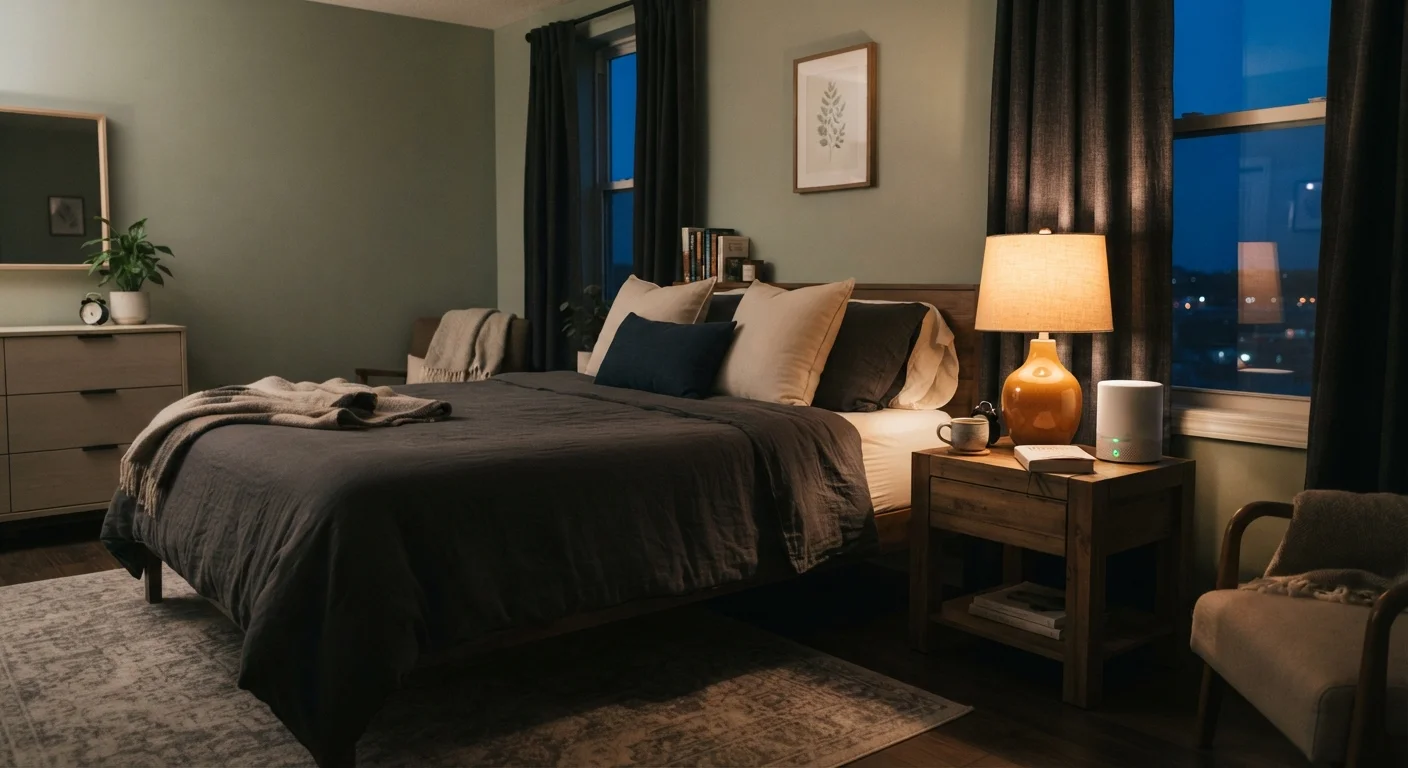
Your bedroom sends signals to your brain. When those signals are consistent and sleep-conducive, falling and staying asleep becomes easier. The core environmental factors to address are:
- Light: Darkness triggers melatonin release. Blackout curtains, eye masks, or simply removing LED standby lights from devices can make a measurable difference.
- Temperature: A cooler room (roughly 65–68°F) supports the natural drop in core body temperature that accompanies sleep onset.
- Noise: Unpredictable noise disrupts sleep architecture. White noise machines or earplugs can buffer intermittent sounds.
- Association: Using your bed only for sleep (and sex) reinforces a mental link between bed and sleepiness. Working or watching TV in bed weakens that association over time.
These aren't expensive renovations — most are free or low-cost behavioral adjustments. For a more advanced look at what happens during sleep at a physiological level, our article on reading a sleep study report explains the clinical metrics used to measure sleep quality.
Daily Habits That Support — or Sabotage — Sleep
What you do during the day shapes how well you sleep at night. Key habits include:
Start with your wake time, not your bedtime
Most people focus on when they go to bed, but sleep researchers emphasize that a fixed, consistent wake time is the more powerful lever. By anchoring your morning, your body's sleep drive naturally aligns your evening sleepiness. Pick a realistic wake time you can maintain seven days a week and hold it for at least two weeks before evaluating results.
- Consistent wake time: Waking at the same time daily — including weekends — anchors your circadian rhythm. This is one of the most evidence-supported sleep hygiene practices.
- Caffeine timing: Caffeine has a half-life of roughly 5–6 hours in most adults. Consuming it late in the afternoon can delay sleep onset, even if you don't feel alert.
- Exercise: Regular physical activity is associated with improved sleep quality, though vigorous exercise very close to bedtime may be stimulating for some people.
- Screen use before bed: Blue light from screens suppresses melatonin. Reducing screen time in the hour before bed — or dimming brightness — can help preserve natural sleep cues.
- Alcohol: While alcohol may help you fall asleep faster, it fragments the second half of sleep and reduces restorative REM stages.
These habits don't require a complete lifestyle overhaul. The Daily Routines hub offers practical frameworks for building these patterns incrementally.
When to Talk to a Healthcare Provider
Sleep hygiene is a powerful preventive tool, but it has clear limits. It is not a treatment for clinical sleep disorders such as insomnia disorder, obstructive sleep apnea, restless legs syndrome, or narcolepsy. If you've consistently practiced good sleep hygiene for several weeks and still struggle to fall asleep, stay asleep, or feel rested, that's a signal worth bringing to a healthcare provider.
Cognitive Behavioral Therapy for Insomnia (CBT-I) — a structured, non-medication approach — is considered first-line treatment for chronic insomnia by major clinical organizations. It addresses the thoughts and behaviors that perpetuate sleeplessness in ways that hygiene tips alone cannot.
For a candid look at where sleep hygiene reliably helps and where it falls short, see our article on the real limits of sleep hygiene. And for those who have been referred for a formal sleep evaluation, the full picture beyond bedtime routines covers the broader clinical context.
This article is for general informational purposes only and is not a substitute for professional medical advice, diagnosis, or treatment. Always consult a qualified healthcare provider with questions about your sleep or health.