

Key Takeaways
- Sleep hygiene is a full system of habits, biology, and environment — not just a consistent bedtime.
- Circadian rhythms and sleep pressure work together and can be supported or undermined by daily choices.
- Light, temperature, and noise are among the most powerful environmental levers for better sleep.
- Anxiety and poor sleep reinforce each other, making mental wellness central to any sleep strategy.
- Sleep hygiene helps many people but is not a cure for clinical sleep disorders — professional guidance matters.
What Sleep Hygiene Actually Encompasses
The phrase sleep hygiene gets thrown around so frequently that its meaning has blurred. Most people picture it as simply going to bed at the same time each night — a useful habit, but only a small slice of what the term actually covers.
Sleep hygiene refers to the full collection of behavioral and environmental practices that influence sleep quality and duration. It draws on circadian biology, cognitive psychology, and environmental science. The real scope of sleep hygiene includes how you manage light exposure, what you eat and drink, how you handle stress, and how your bedroom is set up — all working together as an interconnected system.
Understanding this broader picture is what separates genuine improvement from surface-level fixes that don't hold up over time.
The Biology You Can't Ignore
Two biological forces govern your sleep: the circadian rhythm — roughly a 24-hour internal clock driven largely by light exposure — and sleep pressure, the gradual buildup of adenosine (a chemical that accumulates the longer you're awake). Both systems need to align for restorative sleep to happen reliably.
Your circadian rhythm is anchored by light signals received through your eyes. Morning light exposure helps set this clock earlier; evening bright light — especially blue-spectrum light from screens — can delay it, pushing your natural sleep window later than intended. For a deeper look at how these biological systems interact across your life, see understanding sleep from every angle.
Try anchoring your wake time first, before trying to fix your bedtime. A consistent rising time is the strongest single behavioral anchor for your circadian clock.
Sleep researchers often emphasize that wake time is more stable than sleep-onset time because it's more controllable and directly influences when sleep pressure peaks the following night.
If you lie awake for more than 20 minutes, get out of bed and do something quietly calming in dim light until you feel sleepy — then return. This preserves the mental association between your bed and sleep.
This technique, called stimulus control, is a core component of CBT-I and is supported by decades of clinical research showing it reduces conditioned arousal in the bedroom.
Sleep architecture — the cycling through light sleep, deep sleep, and REM (rapid eye movement) sleep — also shifts with age. What feels like worsening sleep in your 40s or 60s often reflects normal biological change rather than personal failure. The science of how sleep changes across life stages can offer useful context here.
Your Environment's Role in Sleep Quality
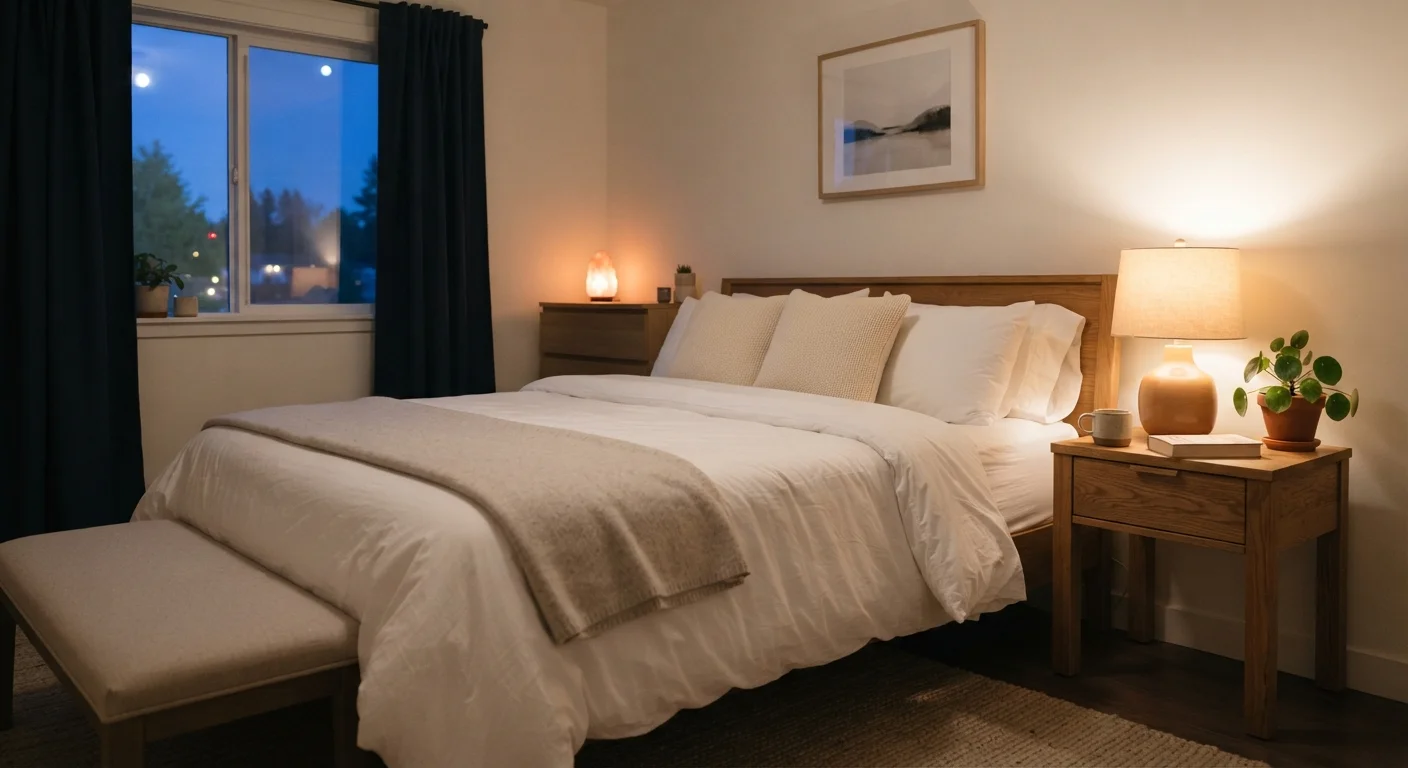
The space where you sleep sends constant signals to your nervous system about whether it's safe and appropriate to rest. Four environmental factors carry the most weight:
- Light: Darkness cues melatonin release. Even low ambient light can blunt this response.
- Temperature: Core body temperature needs to drop slightly for sleep onset. A cooler room — generally in the 65–68°F range for most adults — supports this process, though individual comfort varies.
- Noise: Sudden or unpredictable sounds fragment sleep architecture even when they don't fully wake you.
- Screen use: Blue-light exposure delays circadian timing; the cognitive stimulation of content also raises alertness.
These factors are explored in detail in the pre-bed environment guide, which offers specific adjustments for each. Treating your bedroom as a dedicated sleep space — not a workspace or entertainment hub — is one of the most consistent evidence-based recommendations in sleep medicine.
Daytime Habits That Shape Nighttime Sleep
What you do during waking hours shapes the neurochemical and hormonal landscape you arrive at when you finally lie down. Several daytime practices have meaningful evidence behind them:
- Caffeine timing: Caffeine blocks adenosine receptors, effectively masking sleep pressure. Because its half-life is roughly 5–6 hours, afternoon consumption can delay sleep onset even if you don't feel alert.
- Physical activity: Regular movement is associated with deeper slow-wave sleep, though vigorous exercise close to bedtime may raise core temperature and alertness in some people.
- Meal timing: Eating very large or heavy meals late in the evening can disrupt sleep by raising body temperature and activating the digestive system.
- Napping: Short naps (under 30 minutes, earlier in the afternoon) can support alertness without significantly eroding nighttime sleep pressure. Long or late naps often do the opposite.
These aren't rigid rules — individual variation is real. Think of them as levers to experiment with, noting how changes affect how you feel in the morning.
Mental Wellness and Sleep: A Two-Way Street
Sleep and mental health don't merely coexist — they actively regulate each other. Anxiety and rumination make it harder to fall asleep; disrupted sleep raises emotional reactivity, lowers distress tolerance, and amplifies negative thinking the next day. This creates a self-reinforcing loop that purely behavioral interventions sometimes struggle to break on their own.
Cognitive approaches address this cycle directly. Cognitive behavioral therapy for insomnia (CBT-I) — a structured, evidence-based program — targets the thoughts, behaviors, and physiological arousal that sustain sleeplessness. Research consistently positions it as a first-line treatment for chronic insomnia, often more effective than sleep medications over the long term. It addresses patterns like lying awake clock-watching, catastrophizing about lost sleep, and building anxiety around the bedroom itself.
Winding-down rituals also help bridge the mental health–sleep relationship. Practices such as journaling, slow breathing, or progressive muscle relaxation signal the nervous system to downshift from a stress-activated state. The goal isn't forced relaxation — it's reducing the cognitive and physiological arousal that keeps the brain on alert when rest is needed.
This article is for general informational purposes only and does not constitute medical advice. If you are experiencing significant sleep difficulties or mental health concerns, please consult a qualified healthcare professional.
When Sleep Hygiene Isn't Enough
Sleep hygiene is genuinely helpful for many people — particularly those whose sleep problems stem from poor habits or correctable environmental factors. But it has real limits, and recognizing them is important.
Conditions like sleep apnea (repeated airway obstruction during sleep), restless legs syndrome, circadian rhythm disorders, or clinical insomnia disorder involve mechanisms that behavioral adjustments alone cannot resolve. Persistent fatigue despite good habits, frequent loud snoring, witnessed pauses in breathing during sleep, or daytime sleepiness that interferes with functioning are all reasons to seek professional evaluation rather than adding more hygiene tips to your list.
The limits of sleep hygiene are worth understanding clearly — not to discourage the behavioral work, but to ensure you get the right kind of help at the right time. A well-rounded approach acknowledges both what you can do on your own and when a clinician's insight is genuinely needed.
Resources through the Sleep & Recovery hub and Sleep Science hub can help you continue building that fuller picture.
This article is for general informational purposes only and does not constitute medical advice. Always consult a qualified healthcare professional for concerns about sleep or mental health.