

Key Takeaways
- Sleep hygiene refers to a set of behavioral and environmental habits that support consistent, quality rest.
- It works best for people whose poor sleep stems from modifiable lifestyle factors, not underlying conditions.
- Common practices include consistent sleep timing, limiting light exposure, and managing caffeine intake.
- Sleep hygiene alone is rarely sufficient for clinical insomnia, sleep apnea, or other sleep disorders.
- Treating sleep hygiene as a foundation — not a cure — leads to more realistic and sustainable results.
Start here
What 'Sleep Hygiene' Actually Means
Build on it
The Core Practices Sleep Hygiene Covers
Set expectations
What Sleep Hygiene Can Realistically Improve
Know the limits
Where Sleep Hygiene Falls Short
Apply it
How to Use Sleep Hygiene Wisely
What 'Sleep Hygiene' Actually Means
"Sleep hygiene" is a term borrowed from clinical sleep medicine and has made its way into everyday wellness conversations — sometimes helpfully, sometimes with more confidence than the evidence supports. At its core, sleep hygiene refers to a defined set of behavioral and environmental practices that research has linked to better sleep quality and consistency.
The concept was developed to give clinicians a non-pharmacological toolkit for addressing sleep complaints. For everyday readers, it's useful to understand sleep hygiene as a framework, not a prescription. It describes habits worth building, not outcomes guaranteed by following a checklist.
For a broader look at how sleep underpins everything from mood to metabolism, see why sleep is the foundation every other healthy habit depends on.
Sleep hygiene
A set of behavioral and environmental habits — such as consistent sleep timing and a dark bedroom — that research has linked to better quality and more consistent sleep.
Circadian rhythm
Your body's internal 24-hour clock that regulates when you feel sleepy and when you feel alert, influenced by light exposure, meal timing, and daily routines.
Melatonin
A hormone produced by the brain in response to darkness that signals to the body that it's time to sleep; light exposure, especially blue light, can delay its release.
CBT-I
Cognitive Behavioral Therapy for Insomnia — an evidence-based, structured therapeutic approach that addresses the thought patterns and behaviors maintaining chronic insomnia.
Sleep latency
The amount of time it takes you to fall asleep after getting into bed; a shorter sleep latency generally indicates it's easier for you to transition to sleep.
Insomnia disorder
A clinical condition characterized by persistent difficulty falling or staying asleep that causes daytime impairment, distinct from occasional poor sleep nights.
The Core Practices Sleep Hygiene Covers
Sleep hygiene encompasses two broad categories: behavioral habits and environmental conditions. Both matter, and both are within most people's control to some degree.
- Consistent sleep timing: Going to bed and waking at the same time each day — including weekends — helps stabilize your circadian rhythm, the internal biological clock that regulates sleepiness and alertness.
- Light management: Bright light in the morning supports alertness; dimming lights in the hour before bed signals to the body that sleep is approaching. Blue light from screens is a specific concern because it can delay melatonin release.
- Caffeine and alcohol awareness: Caffeine can remain active in the body for several hours, potentially disrupting sleep onset even when consumed in the afternoon. Alcohol may help people fall asleep faster but tends to fragment sleep in the second half of the night.
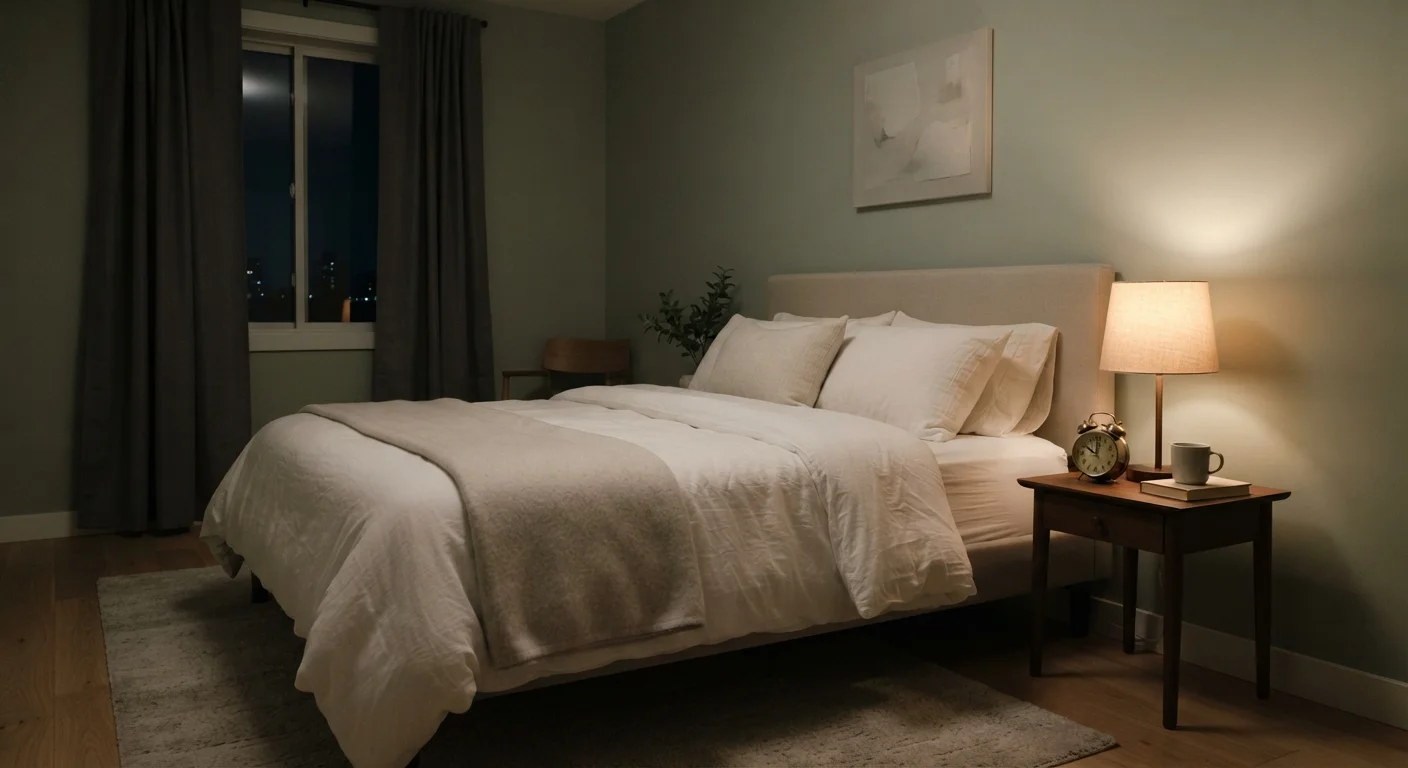
- Sleep environment: A cool, dark, and quiet bedroom is widely recommended. Noise and temperature in particular have measurable effects on sleep continuity.
- Pre-sleep routine: Engaging in calming, low-stimulation activities in the 30 to 60 minutes before bed can ease the transition from wakefulness to sleep.
For a deeper dive into the science behind these habits, understanding sleep from a circadian biology perspective provides essential context.
What Sleep Hygiene Can Realistically Improve
Sleep hygiene is most effective for people whose sleep difficulties are rooted in modifiable lifestyle factors. If you're getting poor sleep primarily because your schedule is inconsistent, your room is too warm, or you're scrolling your phone until midnight, targeted habit changes can make a meaningful difference.
Research suggests that sleep hygiene education, particularly when combined with other behavioral strategies, can improve sleep latency (how long it takes to fall asleep), reduce nighttime awakenings, and support more consistent sleep timing. These are real, practical gains for many people.
Start With One or Two Changes
Rather than adopting every sleep hygiene recommendation at once, pick the one or two habits most relevant to your current situation — such as a fixed wake time or reducing afternoon caffeine. Focusing on a small number of changes makes it far easier to stay consistent, and consistency is what drives results.
That said, the improvements tend to be incremental rather than transformative. Sleep hygiene is best thought of as setting the stage — it removes unnecessary obstacles to rest, but it doesn't override deeper biological or psychological factors.
Where Sleep Hygiene Falls Short
One of the most important things to understand about sleep hygiene is what it cannot do. When sleep difficulties stem from clinical disorders — such as insomnia disorder, obstructive sleep apnea, restless legs syndrome, or circadian rhythm disorders — sleep hygiene alone is insufficient and potentially delays appropriate care.
For chronic insomnia specifically, clinical guidelines generally recommend Cognitive Behavioral Therapy for Insomnia (CBT-I) as the first-line treatment. CBT-I addresses the thought patterns and behaviors that perpetuate insomnia — something no bedtime routine can replicate on its own. Sleep hygiene is typically a component of CBT-I, not a substitute for it.
There's also a subtler risk: when people with genuine sleep disorders apply sleep hygiene tips and see little improvement, they may feel they've "failed" or that nothing can help. The reality is that they may simply need a different level of care. If you've improved your sleep habits and still struggle consistently, speaking with a qualified healthcare provider is the appropriate next step — not more optimization.
For a nuanced look at how these habits intersect with broader sleep science, the full picture of sleep hygiene beyond bedtime is worth exploring.
How to Use Sleep Hygiene Wisely
The healthiest way to approach sleep hygiene is as a foundation, not a cure. Start with two or three high-impact habits — a consistent wake time, reducing bright light in the evening, and keeping caffeine to the morning — rather than overhauling everything at once.
Consistency matters far more than perfection. A sleep schedule followed six out of seven nights will outperform an elaborate routine applied sporadically. If you want structured guidance on building these habits into a sustainable routine, building a sleep routine that actually sticks walks through practical, evidence-informed steps.
And if you use a wearable device to monitor your sleep, keep its limitations in mind. Consumer sleep trackers can offer useful trend data but vary in accuracy for measuring sleep stages. what sleep tracking tools measure and what they miss provides an honest assessment.
Sleep hygiene is a genuinely useful concept — as long as it's understood for what it is: a set of modifiable habits that support rest, not a complete solution for every sleep challenge.
This article is for general informational and educational purposes only and is not a substitute for professional medical advice, diagnosis, or treatment. If you have concerns about your sleep or health, please consult a qualified healthcare provider.