
Nutrition, Supplements, and Immune Health: Separating Evidence from Marketing

Key Takeaways
- Vitamin C, zinc, and vitamin D have meaningful research behind them, but effects are modest and context-dependent.
- No supplement can 'boost' the immune system in the way marketing language implies.
- Nutrient deficiencies genuinely impair immunity; correcting them is where supplementation has clearest benefit.
- Elderberry and echinacea show limited, inconsistent evidence — more research is needed.
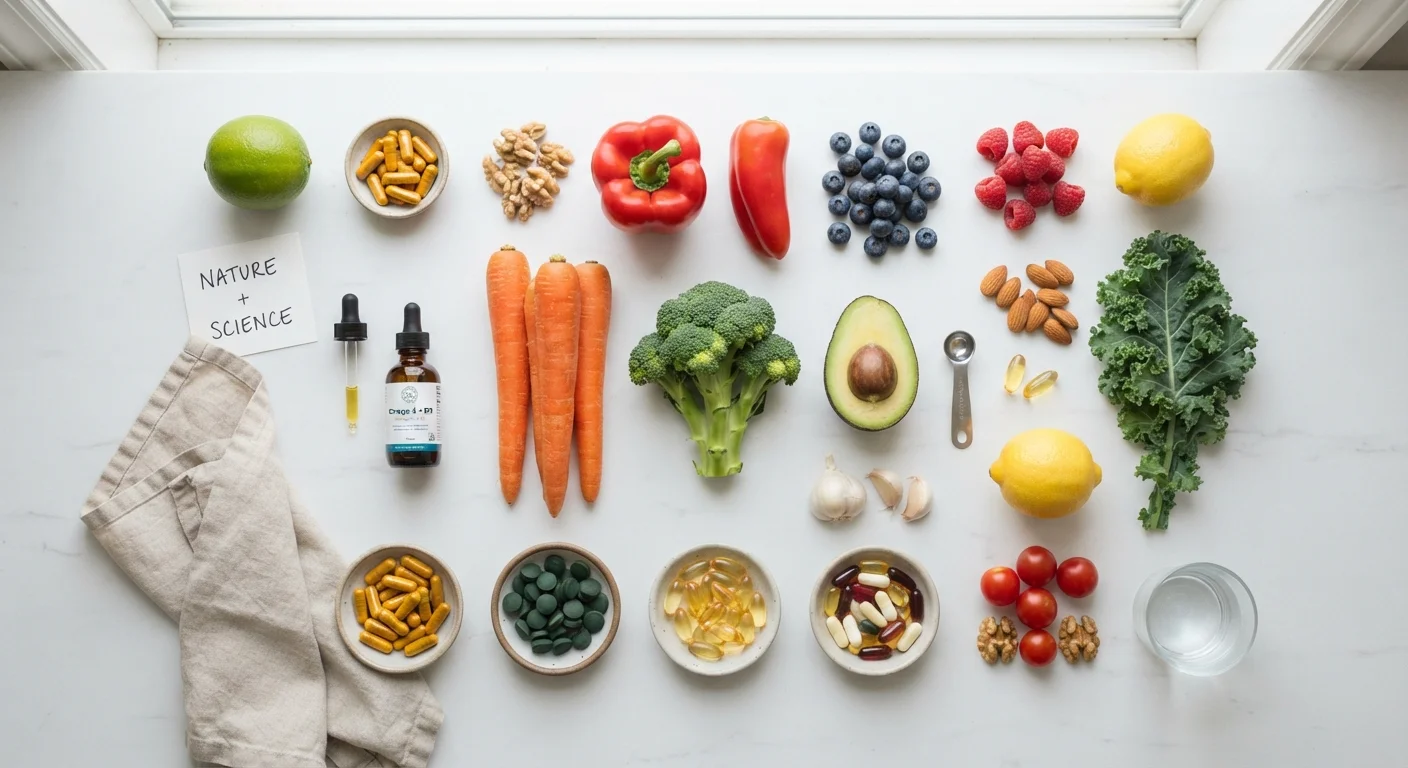
- Whole foods deliver nutrients alongside fiber and phytonutrients that isolated supplements cannot replicate.
- Always consult a healthcare provider before starting supplements, especially with existing conditions or medications.
Why the Immune-Boosting Aisle Demands Skepticism
Walk through any pharmacy or grocery store and you'll encounter shelves stacked with products promising to "strengthen," "activate," or "supercharge" your immune system. The language is confident; the evidence is often not. Immune function is a complex, tightly regulated network — not a dial you can simply turn up.
Understanding what research actually supports requires separating three distinct categories: nutrients where deficiency clearly harms immunity, supplements with modest evidence in specific contexts, and products where marketing has simply outrun the science. Recognizing these distinctions is the foundation of informed consumer decision-making.
For a broader look at how daily habits shape immune health, see lifestyle habits that support healthy immune function.
Myth
Taking high-dose vitamin C will prevent you from getting a cold.
Fact
Vitamin C does not prevent colds in most people. It may slightly shorten their duration, particularly in those under heavy physical stress.
Decades of clinical trials have found that supplementing with vitamin C does not significantly reduce the incidence of colds in the general population. A widely cited Cochrane review found that in regular supplementation studies, vitamin C had no meaningful preventive effect. Where modest evidence does exist — shorter or less severe colds — the effect size is small. For individuals under extreme physical stress, such as marathon runners or military recruits in cold environments, there may be a more notable benefit. But for most adults eating a reasonably varied diet, extra vitamin C provides little added immune protection.
Myth
Elderberry supplements are a proven remedy for colds and flu.
Fact
Elderberry has some early research suggesting possible symptom relief, but the evidence is limited, inconsistent, and not yet sufficient to draw firm conclusions.
Elderberry (Sambucus nigra) extracts have attracted attention due to small studies suggesting they may reduce the duration of cold or influenza symptoms. However, most of these trials are small, industry-funded, or methodologically limited. Regulatory agencies and major health organizations do not currently endorse elderberry as a proven treatment. It is generally considered safe for short-term use in healthy adults, but it is not a substitute for evidence-based measures like vaccination and good hygiene. People with autoimmune conditions or taking immunosuppressant medications should consult a healthcare provider before use.
Myth
If a supplement is labeled 'immune-boosting,' it has been tested and approved by the FDA.
Fact
Dietary supplements in the U.S. are not required to prove safety or effectiveness before going to market. The FDA does not approve supplements the way it approves drugs.
Under the Dietary Supplement Health and Education Act (DSHEA) of 1994, supplement manufacturers are responsible for ensuring their products are safe — but they do not need to provide that evidence to the FDA before selling. The agency can take action after a product is on the market if it proves harmful, but pre-market approval is not required. "Immune-boosting" is a marketing claim, not a regulated health claim with a defined evidentiary standard. Third-party certification programs (such as USP or NSF International) can verify purity and label accuracy, but they do not verify efficacy claims.
Myth
More zinc is always better for fighting off illness.
Fact
Zinc is essential for immune function, but excessive supplementation can actually suppress immune response and cause copper deficiency.
Zinc plays a genuine and well-documented role in immune cell development and signaling. Short-term supplementation at the onset of cold symptoms may modestly reduce duration, according to some clinical evidence. However, taking high doses of zinc over extended periods can backfire. Excess zinc competes with copper absorption, which can lead to copper deficiency — itself a cause of immune impairment and neurological problems. The tolerable upper intake level for zinc set by the National Institutes of Health is 40 mg per day for adults. Lozenges used for short-term cold treatment should not be confused with a long-term supplementation strategy.
Myth
If you eat well, you don't need to worry about vitamin D for immunity.
Fact
Vitamin D is difficult to obtain from diet alone, and deficiency — which is common in the U.S. — is linked to increased infection risk.
Few foods contain meaningful amounts of vitamin D naturally. Fatty fish, egg yolks, and fortified dairy or plant milks provide some, but most people rely primarily on sun exposure for synthesis. Factors including geographic latitude, skin pigmentation, age, and sunscreen use significantly limit that synthesis for large segments of the U.S. population. Studies have linked vitamin D deficiency to greater susceptibility to respiratory infections. Supplementation to correct a confirmed deficiency — ideally identified through a blood test — is one area where evidence for immune benefit is relatively robust. Supplementing beyond sufficiency, however, does not appear to offer additional protection and carries risks at very high doses.
What the Evidence Actually Supports
Among the most studied nutrients in immune health, vitamin D stands out. Many Americans are deficient — particularly those with limited sun exposure — and low vitamin D levels are associated with increased susceptibility to respiratory infections. Correcting a deficiency through supplementation appears to offer meaningful protection, though effects in people who are already sufficient are less impressive. The Vitamins & Minerals hub covers the broader role of micronutrients in daily health.
Zinc is essential for the development and function of immune cells. Evidence suggests that zinc supplementation, when started within 24 hours of cold-symptom onset, may modestly reduce symptom duration. However, long-term high-dose zinc supplementation can actually impair immune function by interfering with copper absorption — more is not better.
42%
U.S. adults estimated to be vitamin D deficient or insufficient
Research published in Nutrition Research estimated that over 40% of U.S. adults have insufficient vitamin D levels, with higher rates among certain demographic groups.
~1 day
Potential cold duration reduction with zinc lozenges
A Cochrane systematic review found zinc supplementation started within 24 hours of cold onset may reduce symptom duration by approximately one day on average.
$49B+
Annual U.S. dietary supplement industry revenue
The Council for Responsible Nutrition reports the U.S. supplement market exceeds $49 billion annually, reflecting massive consumer demand that often outpaces the underlying clinical evidence.
Vitamin C is perhaps the most mythologized supplement in immune health. Research consistently shows it does not prevent colds in the general population. It may reduce the duration and severity of colds slightly, and there is some evidence of benefit in people under significant physical stress. But for most adults, megadosing vitamin C offers little additional protection beyond what a balanced diet provides. For a deeper look at common misconceptions, see widespread myths about vitamin supplements.
When it comes to whole foods versus isolated supplements, the comparison is rarely equal. Foods deliver nutrients alongside fiber, antioxidants, and phytonutrients that work synergistically — a benefit that capsules cannot fully replicate. Learn more about micronutrients from whole foods vs. supplements.
Supplements Don't Replace Vaccinations
No dietary supplement replaces the protection offered by recommended vaccines. For immune-preventable illnesses such as influenza, COVID-19, and pneumococcal disease, vaccination remains the most evidence-based intervention available. Supplements may support general nutritional status, but they cannot prime the immune system the way immunization does. Speak with your healthcare provider about staying current on your recommended vaccine schedule.
This article provides general health information and education only, and is not a substitute for personalized medical advice. Consult a qualified healthcare professional before making decisions about supplementation, diagnosis, or treatment.