
Micronutrients From Whole Foods vs. Supplements: Understanding the Differences

Key Takeaways
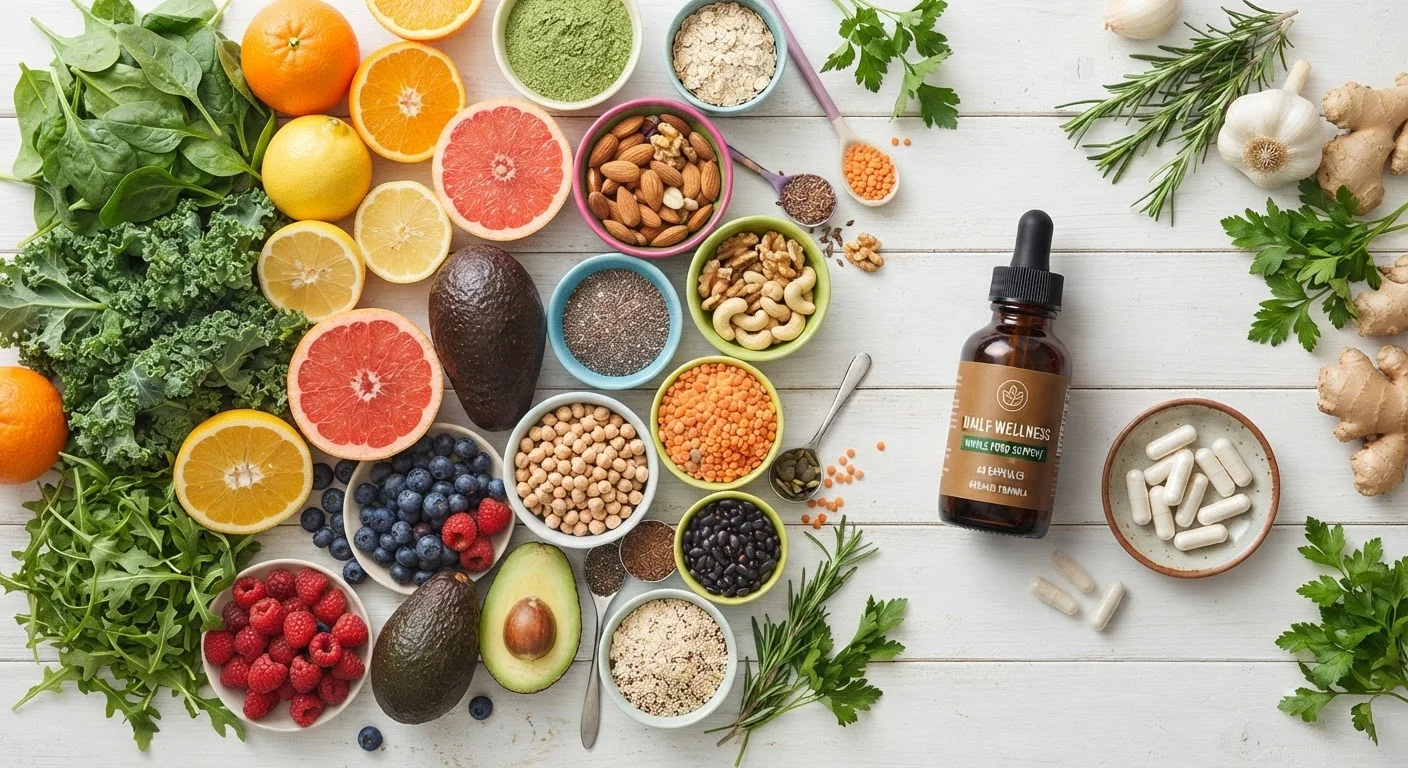
- Whole foods deliver vitamins and minerals alongside fiber, phytonutrients, and synergistic compounds that supplements cannot fully replicate.
- Supplements can be a valuable tool for filling specific, documented nutrient gaps — but are not a substitute for a balanced diet.
- Certain populations, including pregnant individuals, older adults, and those with absorption disorders, may have clinically established supplement needs.
- Bioavailability — how well your body absorbs a nutrient — often differs between food sources and supplement forms.
- Always consult a healthcare provider before starting any supplement regimen, especially with existing conditions or medications.
Our Verdict
Whole foods remain the nutritional gold standard for most healthy adults, offering a complexity of compounds that no pill fully reproduces. Supplements have a legitimate, evidence-backed role in specific circumstances — but that role is targeted, not blanket. Understanding which approach fits your situation is the most practical takeaway.
| Best for | Recommended |
|---|---|
| Most healthy adults seeking complete, everyday nutrition | Whole Foods |
| Individuals with documented deficiencies or increased physiological needs | Targeted Supplements |
| Those with dietary restrictions limiting key food groups | Targeted Supplements |
| Anyone optimizing long-term diet quality and disease risk reduction | Whole Foods |
What Whole Foods Bring That Supplements Cannot Package
When you eat a handful of almonds, you're not just consuming vitamin E. You're also getting magnesium, healthy fats, fiber, and dozens of plant compounds — all working together in a nutritional matrix your body has evolved to recognize and use efficiently. This concept, sometimes called the food synergy effect, is one of the core reasons nutrition scientists continue to favor dietary sources over isolated supplements for the general population.
Phytonutrients — bioactive compounds found in plants like flavonoids, carotenoids, and polyphenols — don't show up on a standard supplement label, yet research consistently associates their presence in the diet with meaningful health outcomes. They interact with vitamins and minerals in ways that isolated nutrients simply cannot replicate. For a fuller picture of how vitamins and minerals function as a group, see our beginner's guide to micronutrients.
Bioavailability — the proportion of a nutrient your body actually absorbs and uses — also tends to be higher from food. Iron from animal sources (heme iron) is absorbed at roughly 15–35%, while non-heme iron from plants or supplements absorbs at 2–20%, depending on the meal's composition. Consuming vitamin C alongside non-heme iron sources significantly improves uptake — a real-food pairing that's hard to engineer in capsule form.
Where Supplements Have a Legitimate Role
Dismissing supplements entirely would ignore a clear body of evidence. Certain nutrients are genuinely difficult to obtain in sufficient quantities from food alone, especially for specific populations:
- Vitamin D: Few foods are naturally rich in it, and many Americans — particularly those in northern climates or who spend limited time outdoors — have measured insufficiency. Guidelines from institutions including the National Institutes of Health acknowledge supplementation as often appropriate.
- Vitamin B12: Found almost exclusively in animal products, making supplementation important for those following vegan or strict vegetarian diets.
- Folate (as folic acid): Recommended in supplement form before and during early pregnancy, because the demand during neural tube development exceeds what diet reliably provides for many people.
- Iron: Individuals with iron-deficiency anemia, determined through blood testing, typically need supplemental iron under medical supervision.
These aren't speculative uses — they're examples where clinical evidence and established dietary guidelines support supplementation. For a closer look at where supplement use can go wrong, including toxicity from fat-soluble vitamins, read our article on where vitamin supplementation can go wrong.
| Whole Foods | Supplements | |
|---|---|---|
| Nutrient complexity | Full matrix: vitamins, minerals, fiber, phytonutrients | Isolated or combined select nutrients only |
| Bioavailability | Generally high; enhanced by food synergy | Variable; depends on form and formulation |
| Risk of excess intake | Very low for most nutrients from food alone | Higher risk, especially fat-soluble vitamins |
| Convenience for gap-filling | Requires dietary planning and variety | Highly convenient for targeted deficiencies |
| Evidence base for general use | Strong; consistently supported by dietary guidelines | Supports specific, documented needs only |
| Cost | Varies; whole foods can be budget-friendly | Ongoing expense; cost varies widely by type |
Key Micronutrients and Their Best Food Sources
For most micronutrients, a varied diet built around whole foods covers daily needs without supplementation. The USDA Dietary Guidelines consistently emphasize food-first strategies centered on vegetables, fruits, whole grains, legumes, nuts, and lean proteins. Here's where some of the most commonly under-consumed nutrients are most concentrated:
- Magnesium: Pumpkin seeds, black beans, edamame, whole grains
- Potassium: Potatoes (with skin), bananas, lentils, spinach
- Calcium: Dairy products, fortified plant milks, sardines, bok choy
- Zinc: Oysters, beef, chickpeas, hemp seeds
- Vitamin A (as beta-carotene): Sweet potatoes, carrots, dark leafy greens
For practical strategies on building a micronutrient-dense plate from everyday groceries, see building a micronutrient-rich diet from everyday grocery store foods. It's also worth understanding how vitamins and minerals differ from each other — they have distinct functions and absorption pathways that affect how you prioritize both food choices and any supplement use.
This article is for informational purposes only and is not a substitute for professional medical advice. Consult a qualified healthcare provider before making changes to your diet or beginning any supplement regimen.