

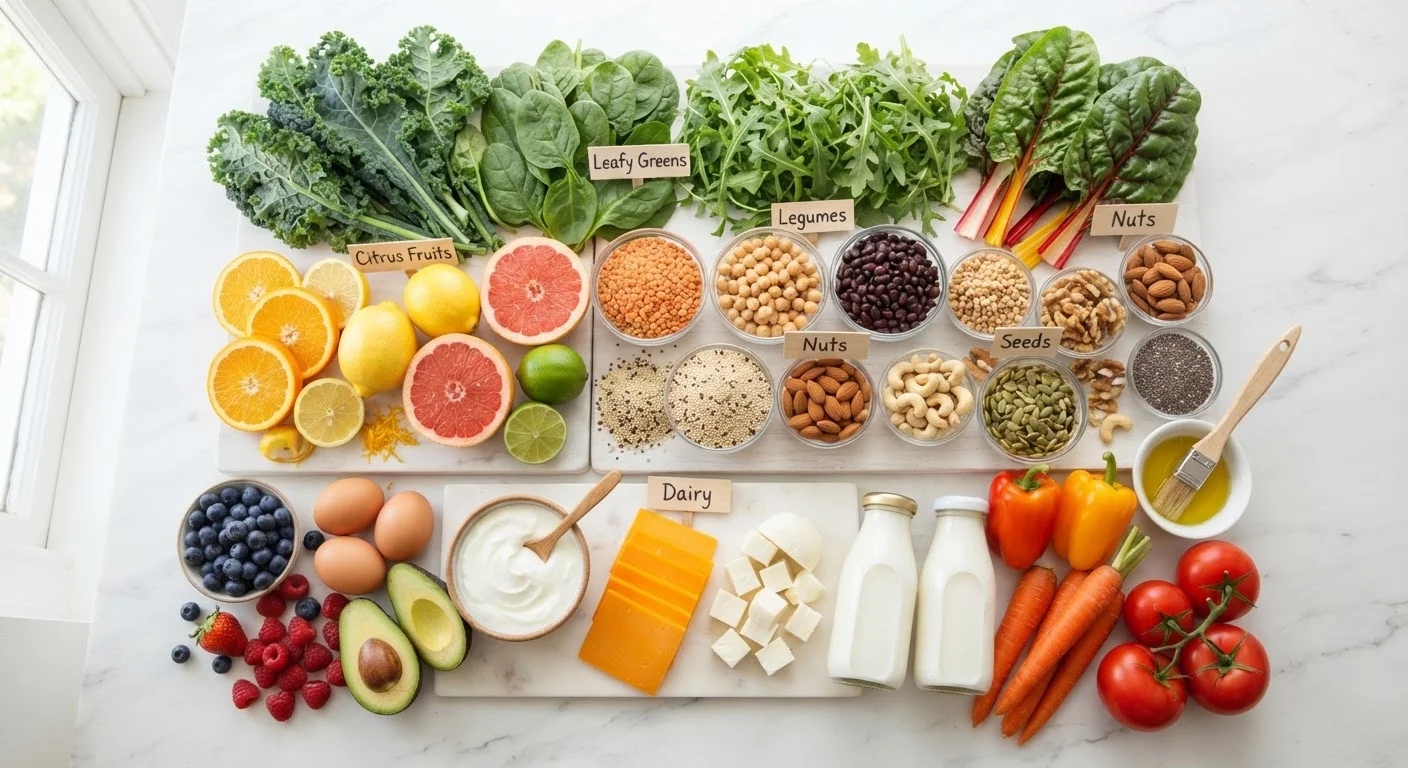
Key Takeaways
- Vitamins and minerals are essential nutrients your body cannot produce in sufficient amounts on its own.
- Vitamins are organic compounds; minerals are inorganic elements — both are critical for normal body function.
- Most people can meet their micronutrient needs through a varied, whole-food diet.
- Deficiencies in iron, vitamin D, calcium, and B12 are among the most common in the United States.
- Supplements can help in specific situations but should not replace a balanced diet without medical guidance.
Start here
What Are Micronutrients?
Next
Key Vitamins and What They Do
Then
Essential Minerals Your Body Relies On
Apply it
How to Get Enough From Food
Watch out for
When You Might Fall Short
What Are Micronutrients?
When nutrition experts talk about what your body needs to function, they split nutrients into two broad groups: macronutrients — carbohydrates, proteins, and fats — and micronutrients. If you want to understand the macro side first, see our overview of macronutrients and how they fuel your body.
Micronutrients are vitamins and minerals your body needs in relatively small amounts, but they are far from minor. They drive nearly every biological process: energy production, immune defense, bone strength, blood clotting, and DNA repair, to name a few. Unlike macronutrients, they provide no calories — their value is entirely functional.
The critical point: your body cannot manufacture most of these compounds on its own in the amounts it needs. That means the only reliable way to stay supplied is through what you eat.
Micronutrients
Vitamins and minerals your body needs in small but critical amounts to carry out essential biological functions. Unlike macronutrients, they provide no energy (calories).
Fat-soluble vitamins
Vitamins A, D, E, and K, which dissolve in fat and are stored in the body's fatty tissue and liver. Because they accumulate, very high intakes over time can become harmful.
Water-soluble vitamins
Vitamin C and the B vitamins, which dissolve in water and are not stored significantly by the body. Regular dietary intake is important since excess amounts are excreted.
Heme iron
A form of iron found in animal foods like meat and seafood that the body absorbs more readily than the non-heme iron found in plant foods.
Trace minerals
Minerals the body needs in very small amounts — such as iron, zinc, and iodine — as opposed to major minerals like calcium and magnesium, which are needed in larger quantities.
Fortified foods
Foods that have had specific vitamins or minerals added during processing — for example, vitamin D added to milk or B12 added to certain plant-based milks — to help people meet their nutritional needs.
Key Vitamins and What They Do
Vitamins fall into two categories based on how the body stores them:
- Fat-soluble vitamins (A, D, E, K) — absorbed with dietary fat and stored in body fat and the liver. Because they accumulate, excess intake from supplements can become problematic over time.
- Water-soluble vitamins (C and the eight B vitamins) — dissolve in water and are not significantly stored, so regular dietary intake matters more. Excess amounts are generally excreted in urine.
Highlights Worth Knowing
- Vitamin D helps the body absorb calcium and supports immune function. Fatty fish, egg yolks, and fortified dairy or plant milks are food sources; the body also synthesizes it from sunlight exposure.
- Vitamin B12 is essential for nerve function and red blood cell formation. It is found almost exclusively in animal products, making it a key consideration for people eating plant-based diets.
- Vitamin C supports the immune system, collagen synthesis, and helps the body absorb iron from plant foods. Citrus fruits, bell peppers, and broccoli are excellent sources.
- Folate (B9) is critical for DNA synthesis and is especially important before and during pregnancy to support healthy fetal development.
Essential Minerals Your Body Relies On
Minerals are inorganic elements — meaning they originate in the earth, move into plants and animals through soil and water, and ultimately reach your plate. They are divided into major minerals (needed in larger amounts, such as calcium, magnesium, and potassium) and trace minerals (needed in smaller amounts, such as iron, zinc, and iodine).
Four to Pay Attention To
- Calcium — the most abundant mineral in the body, primarily responsible for bone and tooth strength. Dairy products, fortified plant milks, tofu made with calcium sulfate, and leafy greens like kale are reliable sources.
- Iron — essential for transporting oxygen in the blood. Red meat and shellfish contain heme iron, which absorbs efficiently. Beans, lentils, and spinach contain non-heme iron, which absorbs better when eaten alongside a vitamin C source.
- Magnesium — involved in over 300 enzymatic reactions, including muscle and nerve function. Nuts, seeds, whole grains, and dark leafy greens are good sources.
- Potassium — helps regulate blood pressure and fluid balance. Bananas, potatoes, avocados, and legumes are among the richest food sources.
How to Get Enough From Food
The most practical strategy is straightforward: eat a wide variety of minimally processed whole foods. No single food delivers everything, but a diverse plate naturally covers a broad micronutrient spectrum.
Build Variety Into Your Weekly Routine
Rather than trying to optimize every single meal, aim for variety across the week as a whole. Rotating your vegetables, protein sources, and grains naturally broadens your micronutrient intake without requiring you to track every nutrient individually. Small, consistent changes — like swapping iceberg lettuce for spinach or adding a handful of pumpkin seeds to a salad — add up meaningfully over time.
A few food-first principles that work in everyday American kitchens:
- Fill half your plate with vegetables and fruits. Different colors signal different phytonutrients and micronutrients — aiming for variety across the week matters more than perfection at any single meal.
- Choose whole grains over refined ones. Whole grains retain the bran and germ, which hold most of the B vitamins and minerals stripped away during refining.
- Include protein variety. Rotating between beans, lentils, fish, eggs, poultry, and nuts broadens your intake of iron, zinc, B vitamins, and omega-3 fatty acids.
- Use fortified foods strategically. Fortified breakfast cereals, plant milks, and orange juice can meaningfully close gaps — especially for vitamin D and B12.
As your needs grow and change across life, those food choices may need to shift. Our companion article on vitamins and minerals through every life stage walks through how priorities evolve from childhood through older adulthood.
When You Might Fall Short
Even with a generally healthy diet, certain circumstances increase the risk of micronutrient deficiency:
- Restrictive eating patterns — vegan and vegetarian diets can fall short in B12, iron, zinc, calcium, and vitamin D without careful planning.
- Life stage changes — pregnancy increases needs for folate, iron, and iodine significantly. Older adults often absorb B12 less efficiently and may need more calcium and vitamin D.
- Digestive conditions — disorders like celiac disease or Crohn's disease can impair absorption of several key nutrients regardless of dietary intake.
- Limited sun exposure — people who spend little time outdoors, live in northern climates, or routinely use sunscreen may produce less vitamin D.
If you suspect a deficiency, a healthcare provider can order a simple blood test to check your levels and recommend next steps. Self-diagnosing and self-supplementing without guidance can occasionally cause harm — particularly with fat-soluble vitamins and iron, where excess is a real concern.
This article is for general informational and educational purposes only and is not a substitute for professional medical advice, diagnosis, or treatment. Always consult a qualified healthcare provider with questions about your nutritional needs or health status.