
Widespread Myths About Vitamin Supplements That Nutrition Science Doesn't Support

Key Takeaways
- Most healthy adults can meet their vitamin needs through a varied, balanced diet.
- Megadosing fat-soluble vitamins like A, D, E, and K can cause toxicity, not extra benefit.
- No single supplement has been proven to reliably 'boost' or 'strengthen' the immune system.
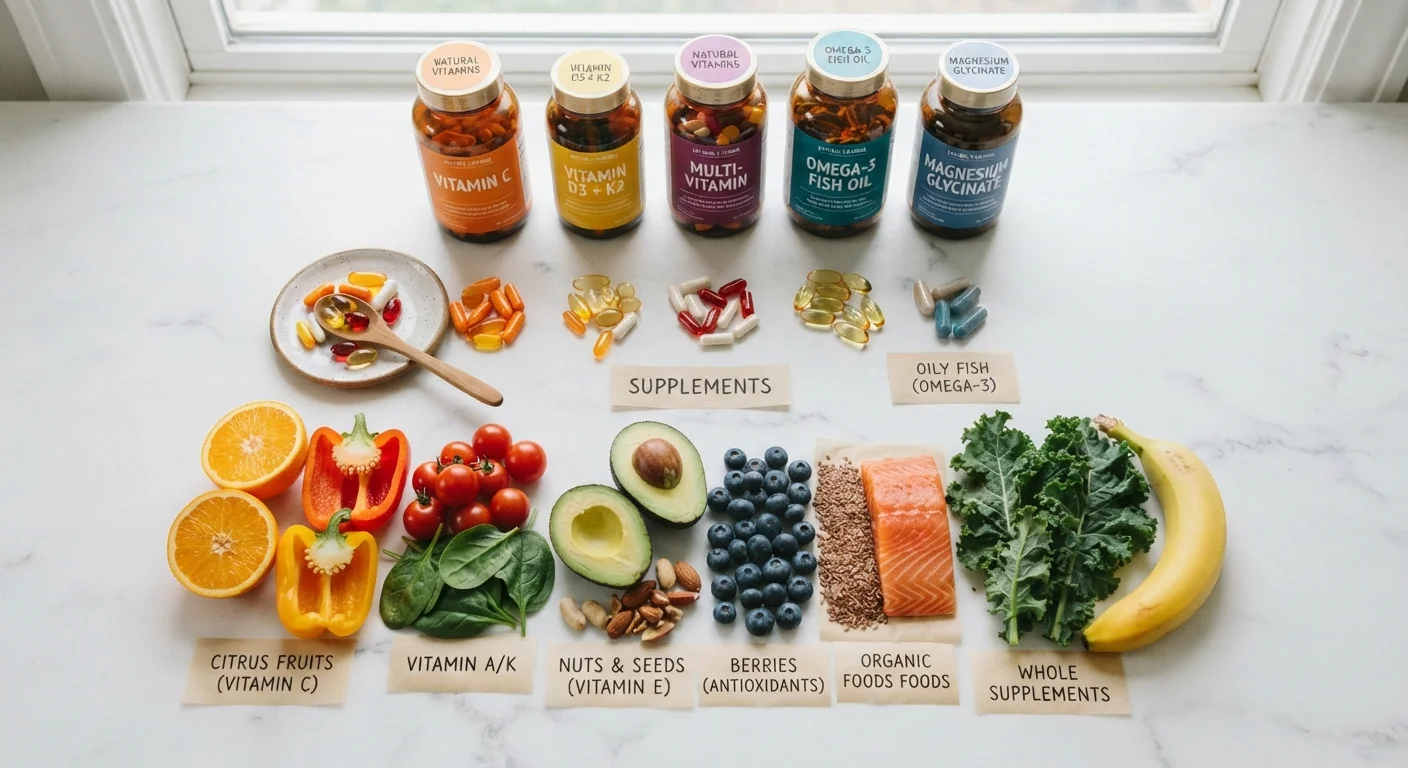
- Whole foods provide fiber, phytonutrients, and synergistic compounds that isolated supplements cannot replicate.
- Supplements can fill genuine nutritional gaps but should be guided by a healthcare professional.
Why Supplement Myths Are So Persistent
Americans spend billions of dollars annually on vitamin and mineral supplements, driven in part by compelling marketing language and the reassuring idea that more nutrition is always better. Social media amplifies supplement claims that often travel much faster than the peer-reviewed research needed to evaluate them. The result: a wide gap between what many people believe about vitamins and what the science actually demonstrates.
This article uses a myth-versus-fact format to address the most common misconceptions, grounded in established nutritional guidelines and research. It is general health information — not medical advice — and is not a substitute for guidance from a qualified healthcare professional.
Myth
Taking extra vitamins is always safe because they're natural and your body just flushes out what it doesn't need.
Fact
Fat-soluble vitamins (A, D, E, and K) accumulate in body tissue and can reach toxic levels with excessive supplementation.
Water-soluble vitamins like vitamin C and B vitamins are excreted more readily in urine, but that doesn't make them harmless in excess. Very high doses of vitamin B6, for example, have been associated with nerve damage in some studies. Fat-soluble vitamins are stored in the liver and fatty tissues, so consistent megadosing can lead to hypervitaminosis — a condition caused by excessive vitamin accumulation. Vitamin A toxicity, for instance, can cause nausea, dizziness, and in severe cases, liver damage. Always check with a qualified healthcare provider before taking high-dose supplements.
Myth
Vitamin and mineral supplements can boost your immune system and prevent illness.
Fact
No supplement has been clinically proven to 'boost' immunity; adequate nutrition supports normal immune function, but excess supplementation doesn't enhance it further.
The immune system is an extraordinarily complex network — it can't simply be 'boosted' by a pill. What nutrients like vitamin C, zinc, and vitamin D can do is support the immune system's normal operation when your body has sufficient levels. Research shows that correcting a deficiency in these nutrients may help restore normal immune responses, but supplementing beyond sufficiency in healthy people has not been shown to provide additional protection. For a deeper look at what the evidence says on this topic, see what research supports about supplements and immune health.
Myth
If a vitamin is sold over the counter, the FDA has verified it's effective and safe at the doses on the label.
Fact
Dietary supplements in the U.S. are not required to undergo FDA pre-market approval for safety or efficacy.
Unlike prescription drugs, dietary supplements — including vitamins and minerals — are regulated under the Dietary Supplement Health and Education Act (DSHEA) of 1994. This means manufacturers are not required to prove a product is effective or safe before it reaches store shelves. The FDA can act after the fact if a product is found to be harmful, but it does not approve supplements in advance. Consumers should look for products verified by independent third-party organizations and discuss supplement use with a healthcare provider.
Myth
Supplements are a reliable substitute for eating a healthy, varied diet.
Fact
Whole foods contain thousands of bioactive compounds — phytonutrients, fiber, and antioxidants — that supplements cannot fully replicate.
A multivitamin might deliver isolated nutrients in measured doses, but it misses the broader nutritional matrix that comes with real food. When you eat a handful of berries, for example, you're consuming hundreds of phytochemicals that work together synergistically — effects that have not been reliably reproduced in capsule form. The USDA Dietary Guidelines consistently emphasize a food-first approach precisely because the evidence base for whole-diet patterns (like the Mediterranean or DASH diets) far outpaces the evidence for individual supplement use. For a balanced comparison, see how whole foods and supplements differ in delivering micronutrients.
Myth
Everyone needs a daily multivitamin to stay healthy.
Fact
Most healthy adults who eat a varied, balanced diet do not have nutrient deficiencies that require a daily multivitamin.
Multivitamins are appropriate for specific populations — including pregnant individuals (who need folic acid and iron), older adults (who may absorb less B12 and vitamin D), and people with certain medical conditions or dietary restrictions. But large-scale studies, including those reviewed by the U.S. Preventive Services Task Force, have not found that routine multivitamin use reduces mortality or chronic disease risk in otherwise healthy adults. Rather than defaulting to a supplement, focus on identifying any actual nutritional gaps through dietary assessment — ideally with a registered dietitian or physician.
The Food-First Principle and When Supplements Genuinely Help
Nutrition science consistently points to a food-first approach for a reason: whole foods deliver nutrients in a complex matrix that promotes absorption and works synergistically in ways that isolated supplements have yet to replicate. Dark leafy greens, legumes, fatty fish, whole grains, and a rainbow of fruits and vegetables provide the full range of vitamins, minerals, fiber, and phytonutrients the body needs for optimal function.
Supplements Can Interact With Medications
Certain vitamins and minerals can interfere with prescription drugs in clinically significant ways. Vitamin K affects blood-thinning medications like warfarin. High-dose calcium can reduce absorption of some antibiotics and thyroid medications. St. John's Wort — often marketed alongside vitamins — can reduce the effectiveness of several prescription drugs. Always disclose all supplements you take to your doctor or pharmacist.
That said, supplements do serve a legitimate purpose for people with verified deficiencies or increased needs. Vitamin D supplementation, for example, is broadly supported for people with limited sun exposure or confirmed low serum levels. Folic acid before and during early pregnancy is a well-established recommendation. Vitamin B12 supplementation is often appropriate for people following strict plant-based diets. The key difference is targeted use based on an actual need — not reflexive supplementation driven by marketing claims.
Understanding where supplementation can go wrong is equally valuable. Common missteps include poor timing, interactions with medications, and choosing high doses without clinical rationale — topics explored further in a detailed look at where vitamin supplementation can go wrong. For readers interested in how similar myth-busting applies to other health domains, see common exercise beliefs the science doesn't support and gut health myths circulating on social media.
This article is for informational and educational purposes only and does not constitute medical advice. Consult a qualified healthcare provider before starting, stopping, or changing any supplement regimen.