

Key Takeaways
- Water-soluble vitamins include all eight B vitamins and vitamin C.
- Because most aren't stored in the body, you need to consume them regularly through food.
- Each B vitamin plays a distinct role, from energy metabolism to DNA synthesis.
- Vitamin C supports immune function and helps absorb plant-based iron.
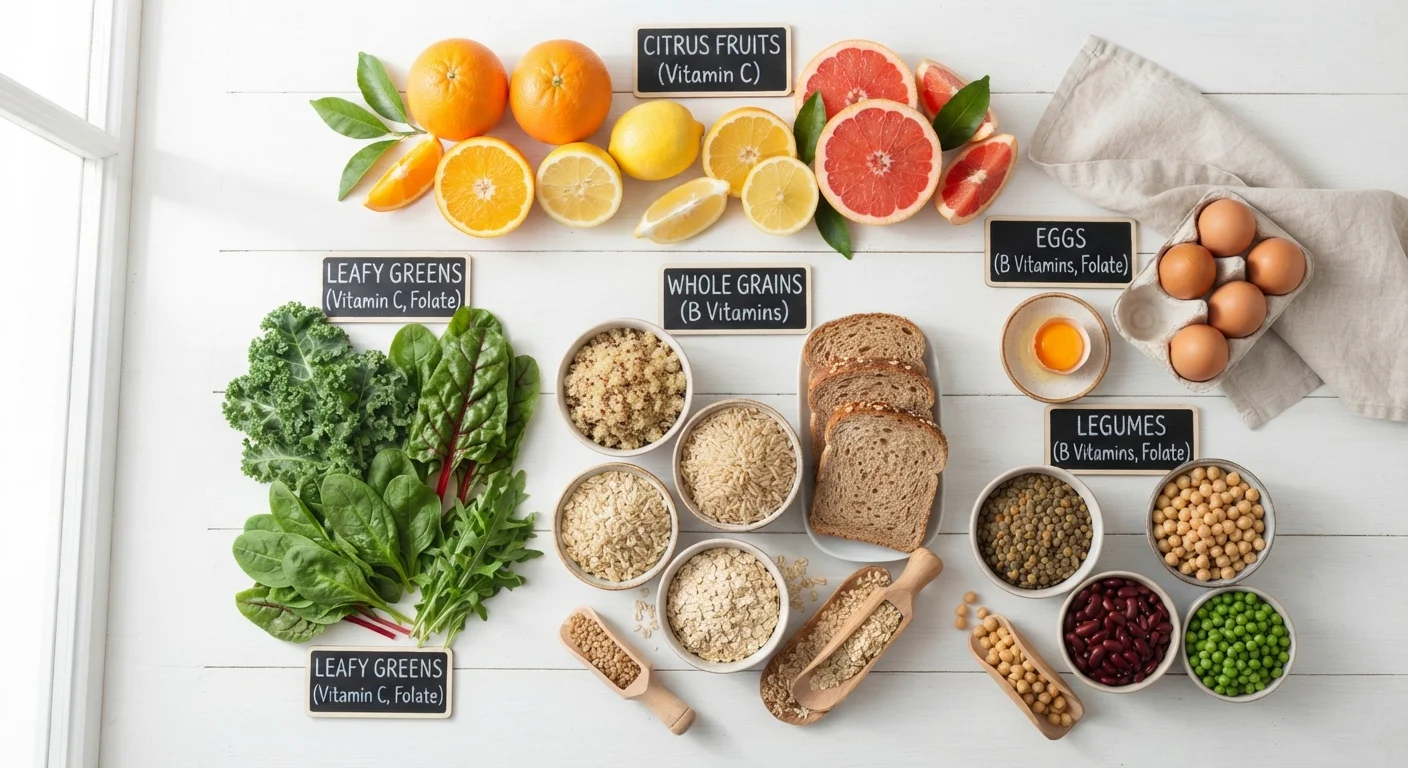
- A varied diet rich in whole grains, legumes, produce, and lean protein covers most needs.
- Vitamin B12 is the exception — it can be stored in the liver for years.
Water-Soluble Vitamins
Water-soluble vitamins are nutrients that dissolve in water and travel freely through the bloodstream. Unlike fat-soluble vitamins, most water-soluble vitamins are not stored in significant amounts by the body — excess amounts are typically excreted through urine. This means you need a regular, consistent supply from food or beverages to maintain adequate levels.
The water-soluble vitamin group includes all eight B vitamins (B1, B2, B3, B5, B6, B7, B9, and B12) plus vitamin C. Vitamin B12 is a partial exception — it can be stored in the liver for several years.
What Makes a Vitamin Water-Soluble?
All vitamins are essential micronutrients your body needs in small amounts to function, but they're not all handled the same way. The key dividing line is solubility — how a vitamin dissolves and moves through the body. To understand the full picture of how vitamins and minerals differ from one another, see our overview of micronutrient groups.
Fat-soluble vitamins (A, D, E, and K) are absorbed alongside dietary fat and accumulate in fatty tissues and the liver. Water-soluble vitamins take a different path: they absorb directly into the bloodstream through the intestinal lining and circulate in fluid. Because they don't bind to fat storage sites, the kidneys filter and excrete any surplus. For a side-by-side comparison, our guide to fat-soluble vitamins walks through A, D, E, and K in detail.
The practical implication: you can't build up a large reserve of most water-soluble vitamins the way you can with vitamin D or vitamin A. Consistent daily intake from food is the most reliable strategy.
The Eight B Vitamins: Roles and Food Sources
The B vitamins are a chemically diverse group that share a common theme — they act as coenzymes, meaning they help enzymes carry out reactions that release energy from carbohydrates, fats, and protein, and that build new molecules the body needs.
8
Distinct B vitamins required by the body
Each B vitamin has a unique chemical structure and performs specific metabolic functions, according to established nutritional science.
~3 years
How long B12 can be stored in the liver
Vitamin B12 is the notable exception among water-soluble vitamins, with the liver capable of storing several years' worth under normal circumstances.
3x
Potential increase in plant-iron absorption with vitamin C
Research has shown that consuming vitamin C alongside plant-based iron sources can substantially increase non-heme iron absorption.
- B1 (Thiamin): Converts carbohydrates into usable energy and supports nerve function. Found in whole grains, pork, and legumes.
- B2 (Riboflavin): Key to cellular energy production and metabolism of fats and drugs. Dairy products, eggs, and beef liver are top sources.
- B3 (Niacin): Supports DNA repair and energy metabolism. Chicken, tuna, beef, and fortified cereals supply meaningful amounts.
- B5 (Pantothenic Acid): Involved in synthesizing hormones and metabolizing nutrients. It's widespread in food — chicken, avocado, sunflower seeds, and whole grains all provide it.
- B6 (Pyridoxine): Essential for amino acid metabolism and neurotransmitter production. Chickpeas, salmon, poultry, and bananas are reliable sources.
- B7 (Biotin): Supports fat synthesis and glucose production. Eggs (especially the yolk), salmon, and almonds are good sources.
- B9 (Folate/Folic Acid): Critical for DNA synthesis and cell division, making it especially important during pregnancy. Dark leafy greens, lentils, and fortified grains are key sources.
- B12 (Cobalamin): Supports red blood cell formation and neurological function. Found almost exclusively in animal products — meat, fish, dairy, and eggs. People following plant-based diets should discuss B12 intake with a healthcare provider.
If you're new to micronutrients generally, our beginner's guide to vitamins and minerals provides helpful foundational context.
Vitamin C: More Than Immune Support
Vitamin C (ascorbic acid) is the only water-soluble vitamin outside the B group. It's well known for supporting immune defenses, but its roles go further. Vitamin C is essential for synthesizing collagen — the structural protein in skin, blood vessels, cartilage, and bone. It also acts as an antioxidant, neutralizing compounds called free radicals that can damage cells.
One underappreciated function: vitamin C significantly enhances the absorption of non-heme iron, the type found in plant foods. Pairing iron-rich plant foods like lentils or spinach with a vitamin C source — citrus juice, bell peppers, or strawberries — can meaningfully improve iron uptake. This is especially relevant for people eating predominantly plant-based diets. Our reference guide to key minerals explains iron absorption in more detail.
Citrus fruits, bell peppers, kiwi, broccoli, and strawberries are among the richest sources of vitamin C. Because it's heat-sensitive, raw or lightly cooked produce retains more than heavily boiled vegetables.
This article is for informational purposes only and does not constitute medical advice. Consult a qualified healthcare professional for guidance specific to your health needs.