

| Iron: Men's daily target | 8 mg (USDA Dietary Guidelines for Americans) |
| Iron: Women's daily target (premenopausal) | 18 mg (USDA Dietary Guidelines for Americans) |
| Magnesium: Men's daily target | 400–420 mg (National Institutes of Health, Office of Dietary Supplements) |
| Magnesium: Women's daily target | 310–320 mg (National Institutes of Health, Office of Dietary Supplements) |
| Zinc: Men's daily target | 11 mg (USDA Dietary Guidelines for Americans) |
| Zinc: Women's daily target | 8 mg (USDA Dietary Guidelines for Americans) |
| Potassium: Men's adequate intake | 3,400 mg (USDA Dietary Guidelines for Americans) |
| Potassium: Women's adequate intake | 2,600 mg (USDA Dietary Guidelines for Americans) |
Why These Four Minerals?
Among the many minerals the human body requires, iron, magnesium, zinc, and potassium consistently rank among those most likely to fall short in typical American diets. Each plays a distinct set of roles — from carrying oxygen in the blood to keeping the heart beating in a normal rhythm — yet all four are obtainable through everyday food choices when you know where to look.
This reference guide is designed for quick lookup: what each mineral does, how much most adults generally need, and which foods deliver meaningful amounts. It is not a substitute for personalized advice from a registered dietitian or physician. If you're new to nutrition science, our Micronutrients 101 starter guide provides helpful background context.
Heme iron
A form of dietary iron found exclusively in animal foods such as meat, poultry, and seafood. Heme iron is absorbed more efficiently by the body than non-heme iron.
Non-heme iron
The form of iron found in plant foods, eggs, and fortified products. It is less readily absorbed than heme iron, but absorption can be improved by pairing it with vitamin C.
Electrolyte
A mineral that carries an electrical charge when dissolved in body fluids. Electrolytes like potassium help regulate fluid balance, nerve signaling, and muscle contractions.
Adequate Intake (AI)
A reference value used when there is not enough evidence to establish a firm Recommended Dietary Allowance. It represents a level assumed to meet the needs of most healthy individuals.
Phytates
Natural compounds found in whole grains, legumes, and seeds that can bind to minerals like zinc and iron in the digestive tract, reducing how much the body absorbs.
Enzymatic reaction
A chemical process in the body that is sped up or made possible by an enzyme. Many enzymatic reactions require minerals like magnesium as cofactors to function correctly.
Mineral-by-Mineral Breakdown
Iron
Iron is central to the production of hemoglobin, the protein in red blood cells that carries oxygen throughout the body. It also supports energy metabolism and immune function. Two forms exist in food: heme iron (found in animal products, more readily absorbed) and non-heme iron (found in plants, less readily absorbed but still valuable). Consuming vitamin C-rich foods alongside plant iron sources can meaningfully improve absorption.
General adult daily intake targets from the USDA Dietary Guidelines: approximately 8 mg for men and postmenopausal women, and 18 mg for premenopausal women. Pregnant individuals have higher needs — consult a healthcare provider.
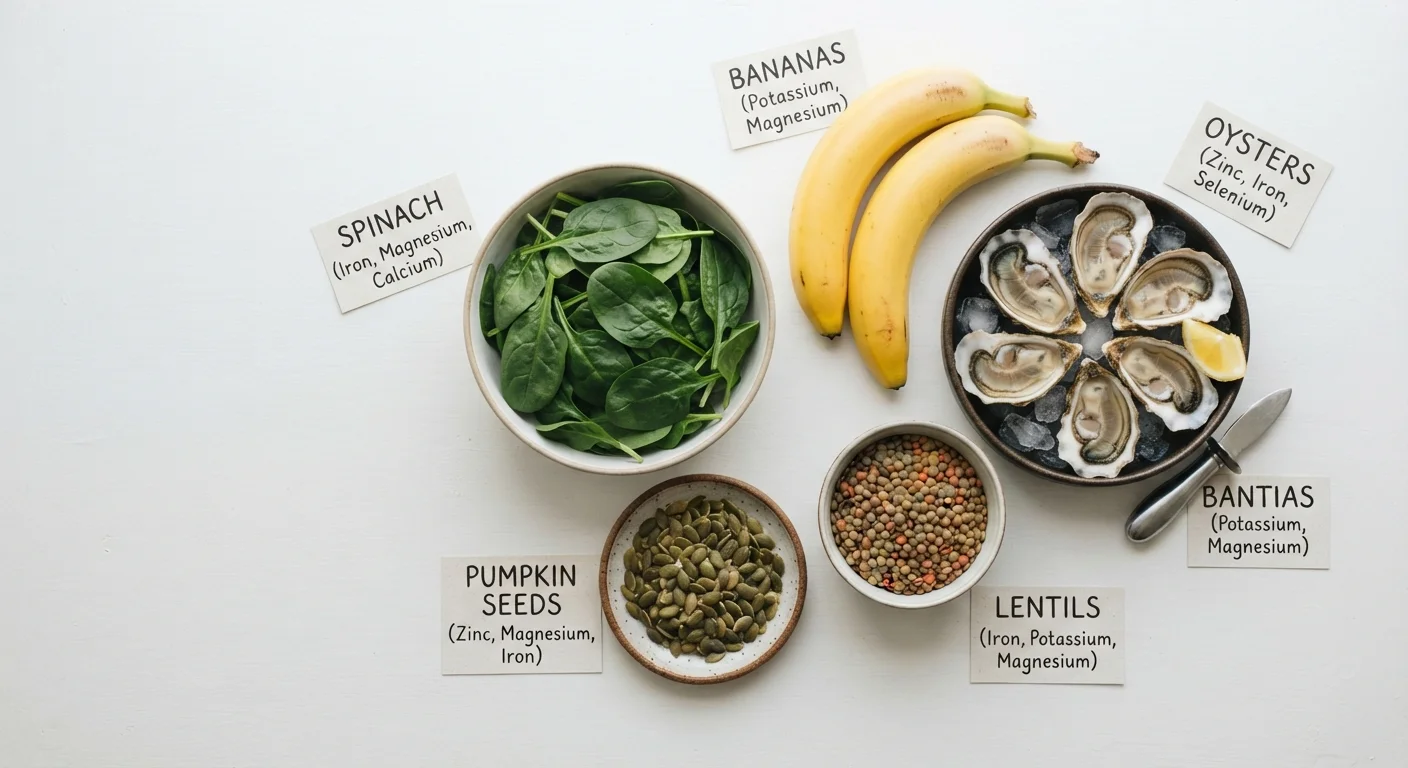
- Top sources: beef liver, oysters, lentils, kidney beans, tofu, fortified cereals, pumpkin seeds, spinach
Magnesium
Magnesium is involved in more than 300 enzymatic reactions, including muscle and nerve function, blood glucose regulation, and bone formation. It also supports normal blood pressure and protein synthesis. Despite its widespread importance, surveys suggest many Americans consume less than recommended amounts.
General adult daily targets: 400–420 mg for men, 310–320 mg for women (values increase during pregnancy). See foods surprisingly rich in overlooked minerals for more magnesium sources beyond the obvious.
- Top sources: pumpkin seeds, chia seeds, almonds, black beans, edamame, whole wheat bread, avocado, dark chocolate
Zinc
Zinc is essential for immune defense, wound healing, DNA synthesis, and the senses of taste and smell. The body does not store zinc in a meaningful way, making regular dietary intake important. Absorption is influenced by diet composition — phytates in whole grains and legumes can reduce absorption, whereas animal protein tends to enhance it.
General adult daily targets: 11 mg for men, 8 mg for women.
- Top sources: oysters (exceptionally high), beef, crab, pork, pumpkin seeds, hemp seeds, chickpeas, cashews
Potassium
Potassium is an electrolyte that helps maintain fluid balance, supports proper muscle contraction (including the heart muscle), and offsets some of sodium's blood-pressure-raising effects. Most Americans consume well below the adequate intake level, partly because potassium-rich whole foods — fruits, vegetables, legumes — are under-consumed relative to processed foods.
Adequate intake for adults: 2,600 mg per day for women and 3,400 mg per day for men, per USDA guidelines. For more on how nutrient gaps show up in typical American eating patterns, see key nutrients to track in a standard American diet.
- Top sources: white beans, lentils, baked potato (with skin), dried apricots, acorn squash, banana, yogurt, spinach
| Iron: Men's daily target | 8 mg (USDA Dietary Guidelines for Americans) |
| Iron: Women's daily target (premenopausal) | 18 mg (USDA Dietary Guidelines for Americans) |
| Magnesium: Men's daily target | 400–420 mg (National Institutes of Health, Office of Dietary Supplements) |
| Magnesium: Women's daily target | 310–320 mg (National Institutes of Health, Office of Dietary Supplements) |
| Zinc: Men's daily target | 11 mg (USDA Dietary Guidelines for Americans) |
| Zinc: Women's daily target | 8 mg (USDA Dietary Guidelines for Americans) |
| Potassium: Men's adequate intake | 3,400 mg (USDA Dietary Guidelines for Americans) |
| Potassium: Women's adequate intake | 2,600 mg (USDA Dietary Guidelines for Americans) |
Putting It Into Practice
Covering all four minerals through food is achievable without complicated planning. A diet that emphasizes legumes, leafy greens, nuts and seeds, whole grains, and a variety of fruits covers much of this ground naturally. Animal proteins like meat and seafood contribute meaningfully to iron and zinc. Dairy and starchy vegetables round out potassium and magnesium.
Needs shift across life stages — children, older adults, and people who are pregnant or nursing have different targets. For a fuller picture of how requirements change over time, see vitamins and minerals through every life stage. If you're working with typical supermarket ingredients, building a micronutrient-rich diet from everyday grocery store foods offers practical strategies.
If you suspect a deficiency or have a condition that affects absorption (such as Crohn's disease, celiac disease, or kidney disease), speak with a healthcare provider before adjusting your diet or considering supplements. Mineral supplementation carries real risks at high doses and is not appropriate for everyone.
This article is for informational purposes only and is not medical advice. Always consult a qualified healthcare professional for guidance specific to your health situation.