

Key Takeaways
- Protein is involved in enzyme production, immune defense, hormone signaling, and fluid balance — not just muscle.
- Every cell in the human body contains protein, making adequate intake critical for overall function.
- Complete proteins contain all nine essential amino acids; animal foods typically provide them, as do some plant sources like soy and quinoa.
- Most American adults consume enough total protein, but quality and distribution throughout the day vary widely.
- Consult a healthcare provider or registered dietitian to determine the right protein intake for your individual needs.
Protein
Protein is one of three macronutrients your body requires in large amounts, alongside carbohydrates and fat. It is made up of smaller units called amino acids, which your body uses as building materials for virtually every structure and process that keeps you alive. While protein is closely associated with muscle, it is equally essential for making enzymes, hormones, antibodies, and much more.
Of the 20 amino acids the human body uses, nine are classified as essential — meaning the body cannot synthesize them and must obtain them through food. The remaining 11 are non-essential, as the body can produce them on its own.
Why Protein Deserves More Credit
Protein has a branding problem. Most people associate it almost exclusively with gym culture — protein shakes, chicken breast, muscle gains. That framing, while not entirely wrong, sells the nutrient dramatically short. Protein is involved in nearly every biological process that keeps you functioning from one moment to the next.
Understanding protein's full role matters for anyone trying to eat well — not just athletes. It helps clarify why skimping on this macronutrient has consequences that go well beyond how you look at the gym.
~50,000+
Distinct proteins in the human body
The human body is estimated to contain tens of thousands of unique proteins, each with a specific structural or functional role, according to general biochemistry literature.
0.8 g/kg
Daily protein baseline for sedentary adults
The USDA Dietary Reference Intake sets 0.8 grams of protein per kilogram of body weight as the recommended dietary allowance for most healthy sedentary adults.
9
Essential amino acids humans cannot make
Of the 20 amino acids used by the body, nine must come from food because the body lacks the metabolic pathways to synthesize them, per established nutritional biochemistry.
Enzymes: Protein as the Body's Workforce
Most people have heard the word "enzyme" but may not realize what enzymes actually are: proteins. Enzymes are specialized proteins that speed up chemical reactions in your body. Without them, processes like digesting food, copying DNA, and converting nutrients into usable energy would happen far too slowly to sustain life.
Your digestive system, for example, relies on enzyme proteins like amylase (which breaks down carbohydrates), lipase (which breaks down fats), and pepsin (which breaks down other proteins). Every time you eat a meal, a coordinated team of protein-based enzymes goes to work.
Hormones, Transport, and Structural Roles
Some of your most important hormones are proteins or are derived from amino acids. Insulin — the hormone that regulates blood sugar — is a protein. So is glucagon, which signals the liver to release stored glucose. These molecules act as chemical messengers, coordinating how your body responds to food, stress, and energy demands.
Protein also handles transportation. Hemoglobin, the molecule in red blood cells that carries oxygen throughout your body, is a protein. So are the carrier proteins that shuttle vitamins, minerals, and other substances through the bloodstream to where they are needed.
Structurally, proteins like collagen form the scaffolding of your skin, tendons, cartilage, and bones. Keratin is the protein that makes up your hair and nails. These structural proteins give tissues their shape, strength, and resilience — none of which has anything to do with lifting weights.
Immune Function and Fluid Balance
Your immune system is, in large part, a protein system. Antibodies — the molecules that identify and neutralize bacteria, viruses, and other pathogens — are proteins produced by immune cells. When protein intake is consistently low, the body's ability to mount an effective immune response can be compromised.
Protein also plays a quiet but critical role in fluid balance. Albumin, a protein made by the liver and circulated in the blood, helps keep fluid from leaking out of blood vessels into surrounding tissue. Low albumin levels — which can result from inadequate protein intake or certain medical conditions — are associated with edema, or abnormal fluid accumulation in the body.
For those curious about how muscle repair specifically fits into the picture, see our guide to what happens after a hard workout — the protein synthesis process there is just one example of these broader mechanisms in action.
Protein Quality and Food Sources
Not all dietary protein is equivalent. What matters is not just how many grams you consume, but whether those grams supply all nine essential amino acids — the ones your body cannot produce on its own. Foods that do this are called complete proteins.
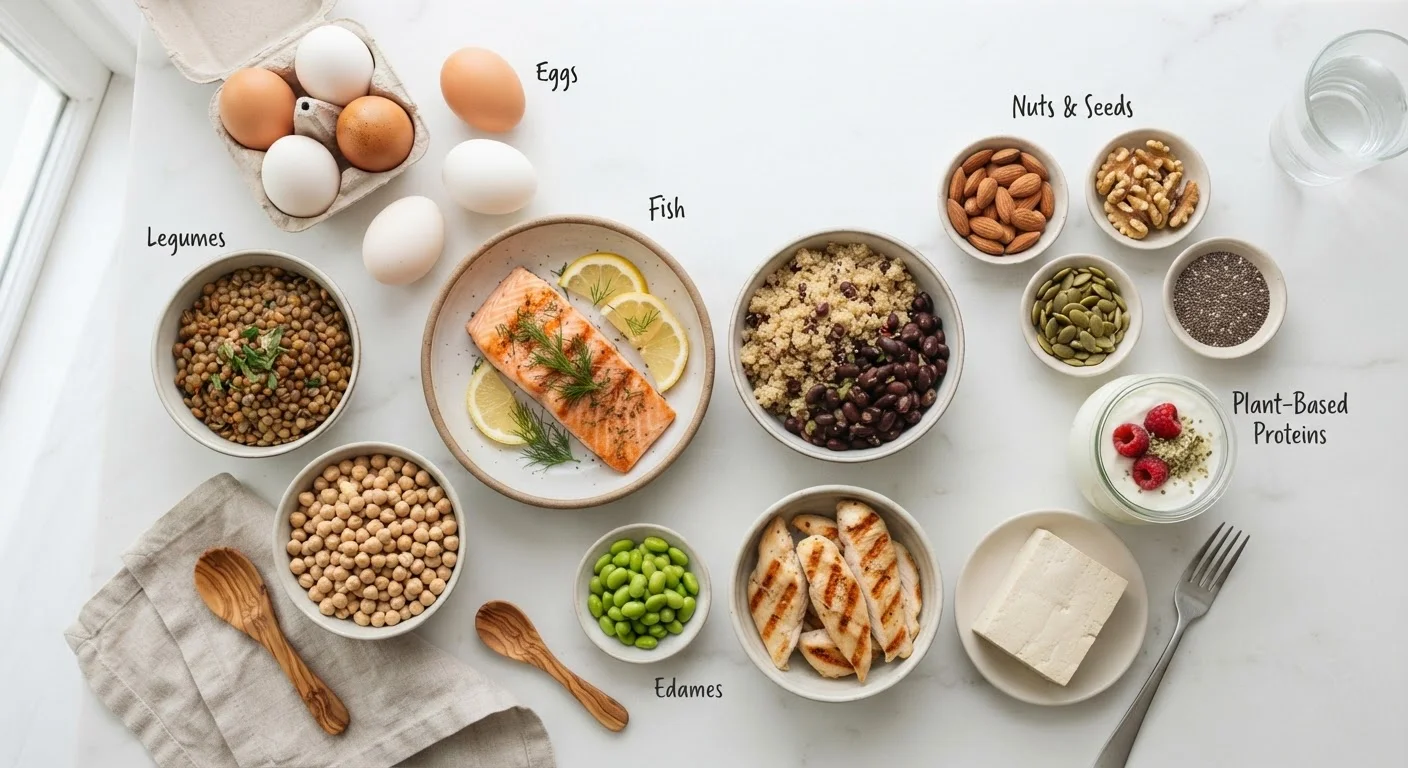
Animal-based foods — meat, poultry, fish, eggs, and dairy — are generally complete. Among plant foods, soy products (like tofu and edamame), quinoa, and buckwheat are notable complete sources. Other plant proteins, such as those from legumes or grains alone, may be lower in one or more essential amino acids, but eating a variety of plant foods throughout the day reliably covers these gaps for most people.
If you're curious about whether the timing of your protein intake matters, protein timing research offers an honest look at what the evidence does and doesn't support.
This article is for general informational and educational purposes only and is not a substitute for professional medical or nutritional advice. Please consult a qualified healthcare provider or registered dietitian before making significant changes to your diet.