

| Framework Published | 2013, in the journal Cell (López-Otín et al., Cell, 2013) |
| Number of Hallmarks | 9 (original framework) (López-Otín et al., Cell, 2013) |
| Field of Study | Geroscience |
| Primary Research Goal | Extending healthspan, not just lifespan |
| Hallmarks Modifiable by Lifestyle | Multiple, including mitochondrial function and nutrient sensing (Ongoing research; context varies by individual) |
What Are the Hallmarks of Aging?
In 2013, a landmark paper published in the journal Cell proposed a framework identifying nine biological processes - called hallmarks of aging - that collectively drive the decline in cellular function associated with getting older. The framework has since become a foundational reference in geroscience, the field dedicated to understanding and extending healthspan.
Each hallmark describes a distinct mechanism that accumulates damage over time, contributes to age-related disease, and - crucially - may be modified through lifestyle, clinical intervention, or future therapies under active research. Understanding these processes helps readers follow longevity science with confidence rather than confusion. For a broader introduction to the field, see our plain-language longevity primer.
Hallmarks of Aging
A set of biological processes identified by researchers as primary drivers of aging across species. Each hallmark is characterized by its accumulation with age and its ability to accelerate aging when experimentally enhanced.
Senescence
A state in which a damaged cell permanently stops dividing but remains metabolically active. Senescent cells can harm surrounding tissue by secreting inflammatory proteins.
Proteostasis
The cellular system responsible for maintaining a healthy population of properly folded proteins, including mechanisms for synthesis, folding, and degradation of damaged proteins.
Epigenetics
Chemical modifications to DNA and associated proteins that affect gene expression without altering the underlying DNA sequence. These patterns are heritable and change with age and environment.
Inflammaging
A term describing the chronic, low-grade systemic inflammation observed in older adults, believed to arise partly from accumulated senescent cells and altered immune signaling.
Telomere
Repetitive DNA sequences capping the ends of chromosomes that protect genetic material during cell division. Telomeres shorten progressively with each division and with certain types of oxidative stress.
The Nine Hallmarks Explained
The hallmarks fall into three conceptual tiers: primary causes of damage, the cellular responses triggered by that damage, and the downstream consequences that alter tissues and organs.
| Framework Published | 2013, in the journal Cell (López-Otín et al., Cell, 2013) |
| Number of Hallmarks | 9 (original framework) (López-Otín et al., Cell, 2013) |
| Field of Study | Geroscience |
| Primary Research Goal | Extending healthspan, not just lifespan |
| Hallmarks Modifiable by Lifestyle | Multiple, including mitochondrial function and nutrient sensing (Ongoing research; context varies by individual) |
1. Genomic Instability
DNA accumulates damage throughout life from radiation, oxidative stress, and replication errors. Cells have repair mechanisms, but these become less efficient with age, allowing mutations to accumulate and contribute to cancer and functional decline.
2. Telomere Attrition
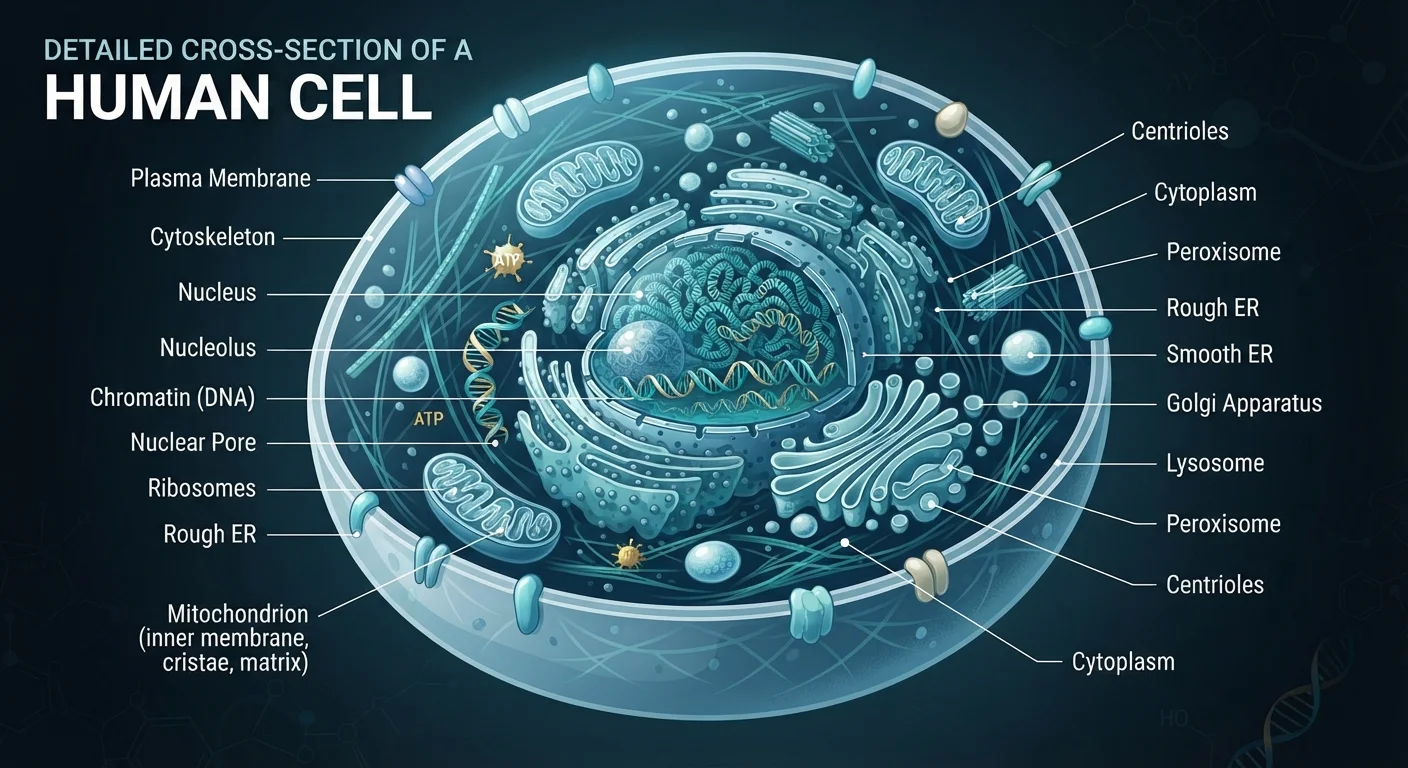
Telomeres are protective caps on chromosome ends that shorten each time a cell divides. When they become critically short, cells can no longer divide safely, contributing to tissue aging. Learn more about telomere biology and other cellular processes in our deeper cell biology explainer.
3. Epigenetic Alterations
Epigenetic marks - chemical tags on DNA and histone proteins - regulate which genes are expressed. These patterns shift with age in ways that can silence protective genes and activate harmful ones, even without changes to the underlying DNA sequence.
4. Loss of Proteostasis
Cells depend on a quality-control network to fold proteins correctly and dispose of damaged ones. Aging impairs this system, allowing misfolded proteins to accumulate - a process implicated in Alzheimer's and Parkinson's diseases.
5. Deregulated Nutrient Sensing
Pathways such as insulin/IGF-1 signaling and mTOR help cells detect and respond to nutrient availability. Chronic overactivation of these pathways - linked to excess caloric intake and sedentary behavior - appears to accelerate aging in multiple animal models.
6. Mitochondrial Dysfunction
Mitochondria generate cellular energy (ATP) and regulate cell death signals. Their function declines with age, producing more reactive oxygen species and less efficient energy output, which strains muscles, neurons, and the heart.
7. Cellular Senescence
Damaged cells that can no longer divide safely enter a state called senescence rather than dying. These cells linger in tissues and secrete inflammatory molecules - a phenomenon researchers call the senescence-associated secretory phenotype (SASP) - which disrupts surrounding healthy tissue.
8. Stem Cell Exhaustion
Tissue repair relies on stem cells replenishing lost cells. As stem cell pools shrink and become less functional with age, regenerative capacity falls - contributing to slower wound healing and age-related muscle loss (sarcopenia).
9. Altered Intercellular Communication
Aging disrupts the signaling networks through which cells coordinate their behavior, including hormonal communication and immune surveillance. Chronic low-grade inflammation (sometimes called inflammaging) is one prominent outcome, associated with a wide range of age-related conditions.
What This Means for Everyday Decisions
The hallmarks framework is more than academic taxonomy - it gives researchers and clinicians specific targets for intervention. Physical activity, adequate sleep, and a nutrient-dense diet all have documented effects on several hallmarks simultaneously, including mitochondrial function, nutrient-sensing pathways, and inflammatory signaling. None of these replaces individualized medical care, and no lifestyle habit yet proven to reverse any hallmark in humans should be treated as a guaranteed longevity strategy.
For a practical audit of evidence-backed aging habits organized by decade, see our whole-person aging checklist. Emerging interventions targeting specific hallmarks - including senolytics, NAD+ precursors, and rapamycin analogs - are active research areas but remain largely investigational; discuss any interest in these with a qualified healthcare provider before pursuing them.
This article is for general informational and educational purposes only and does not constitute medical advice. Always consult a qualified healthcare professional before making changes to your health regimen.