

Key Takeaways
- A lipid panel measures four distinct values, each telling a different part of your cardiovascular story.
- LDL is often called 'bad' cholesterol because high levels are linked to plaque buildup in arteries.
- HDL is considered 'good' cholesterol — higher levels generally indicate lower cardiovascular risk.
- Triglycerides reflect dietary fat and sugar intake and should be evaluated alongside cholesterol numbers.
- Most adults should have their cholesterol checked at least every four to six years, starting at age 20.
- Your doctor interprets lipid panel results in the context of your full health picture, not as standalone numbers.
Lipid Panel
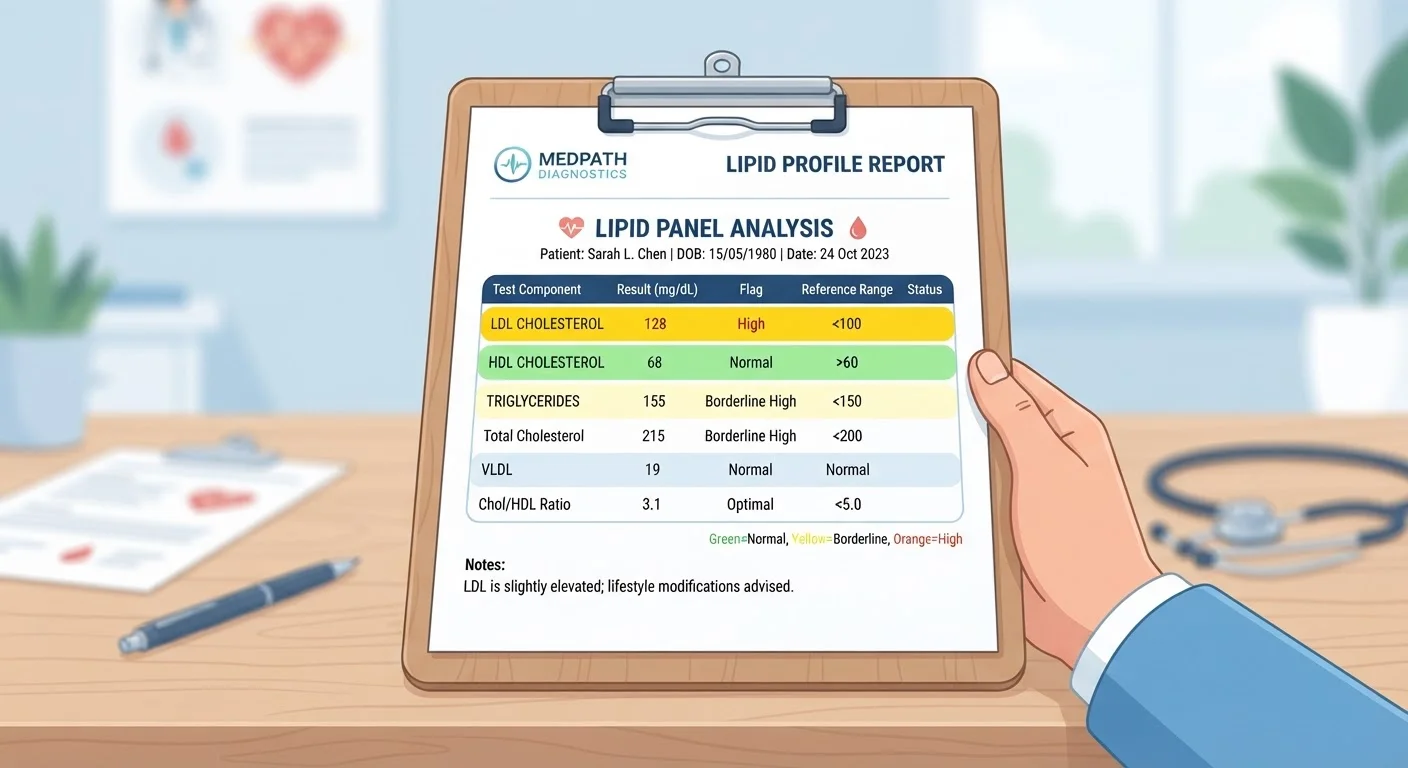
A lipid panel — also called a lipid profile — is a routine blood test that measures the levels of fats (lipids) circulating in your bloodstream. It typically reports four values: total cholesterol, LDL (low-density lipoprotein), HDL (high-density lipoprotein), and triglycerides. Doctors use these numbers together to assess cardiovascular health and guide preventive care decisions.
Results are expressed in milligrams per deciliter (mg/dL). Some laboratories also calculate a non-HDL cholesterol figure and a cholesterol ratio, which can provide additional clinical context.
The Four Numbers That Matter
When your lipid panel results arrive, you'll typically see four core values. Understanding what each one measures helps you have a more informed conversation with your doctor rather than staring at numbers in isolation.
- Total Cholesterol: The combined measure of all cholesterol types in your blood. A reading below 200 mg/dL is generally considered desirable, but this figure alone doesn't tell the whole story.
- LDL (Low-Density Lipoprotein): Commonly called "bad" cholesterol, LDL carries cholesterol particles through the bloodstream. High LDL levels can contribute to plaque buildup in artery walls, raising the risk of heart attack and stroke.
- HDL (High-Density Lipoprotein): Known as "good" cholesterol, HDL helps transport excess cholesterol back to the liver for removal. Higher HDL levels — generally above 60 mg/dL — are associated with lower cardiovascular risk.
- Triglycerides: These are the most common type of fat in the body, derived from calories your body doesn't immediately use. Levels above 150 mg/dL (fasting) may signal metabolic concerns worth addressing.
Just as learning to read nutrition labels for macronutrient content requires knowing what each row represents, reading a lipid panel is about understanding how each component contributes to the bigger picture.
How Doctors Use These Numbers Together
No single lipid value determines your cardiovascular risk in isolation. Clinicians evaluate the full panel — and often calculate additional ratios — in the context of other health factors: age, sex, blood pressure, smoking status, diabetes, and family history.
~86 million
U.S. adults with high total cholesterol
According to the CDC, approximately 86 million American adults have total cholesterol levels above 200 mg/dL.
Less than half
Adults with high LDL receiving treatment
The CDC estimates that fewer than half of adults with high LDL cholesterol are currently receiving treatment to lower it.
4–6 years
Recommended screening interval for low-risk adults
Major U.S. health guidelines recommend cholesterol testing at least every four to six years for adults aged 20 and older with low baseline risk.
For example, a person with a borderline LDL but very high HDL and no other risk factors may be at lower risk than someone with a slightly lower LDL paired with low HDL, high triglycerides, and elevated blood pressure. Context is everything.
Your provider may also reference your non-HDL cholesterol (total cholesterol minus HDL), which captures all potentially harmful lipid particles. This figure is increasingly used because it accounts for lipoproteins beyond LDL that can contribute to arterial disease.
For a complementary view of how other numbers reflect cardiovascular health, see our article on what blood pressure readings reveal about long-term health.
When and How Often to Get Tested
The American Heart Association and U.S. Preventive Services Task Force generally recommend that adults begin cholesterol screening at age 20, with repeat testing every four to six years if results are normal and cardiovascular risk remains low. Children with a family history of early heart disease or inherited cholesterol conditions may be screened earlier — this is a decision best made with a pediatrician.
Frequency increases with risk. If you have type 2 diabetes, chronic kidney disease, a history of heart attack, or consistently borderline results, your doctor may recommend annual or more frequent monitoring. Medications that affect lipid levels — including some prescribed for unrelated conditions — are another reason to recheck sooner.
Bring Your Results to Every Appointment
Keeping a personal record of your past lipid panels allows your provider to track trends over time, which is often more informative than any single result. Many patient portals make it easy to download and save lab reports. If your practice offers a portal, use it to build a running health history you can reference at every visit.
Understanding your body composition alongside your lipid results can also be informative. Our guide to interpreting body composition results explains how to contextualize those measurements without overcorrecting.
This article is for general informational purposes only and does not constitute medical advice. Always consult a qualified healthcare provider for guidance on your personal health, test results, or treatment decisions.