

Key Takeaways
- Blue light from screens suppresses melatonin, making it harder to fall asleep at your intended bedtime.
- Content type matters: passive, calming content may be less disruptive than stimulating or stressful material.
- Individual sensitivity to evening screen use varies considerably from person to person.
- Screen-free wind-down alternatives exist, but screens also deliver relaxation benefits some people genuinely rely on.
- Consult a healthcare provider if sleep difficulties are persistent or affecting daily functioning.
Screens provide genuine relaxation for many people
Watching a familiar show or reading on a tablet can lower perceived stress for individuals who find these activities calming. For some, this psychological wind-down may outweigh the mild physiological costs.
Night mode settings reduce blue light exposure
Most modern devices offer warm-tone or night shift modes that shift the display toward lower-energy wavelengths. While not a complete solution, these settings measurably reduce melatonin-suppressing light compared with default settings.
Passive content can ease social isolation
Evening screen time provides connection — through messaging, video calls, or shared media experiences — that supports mental well-being, particularly for people living alone or in low-social environments.
Flexible scheduling suits shift workers and variable schedules
For people with non-traditional work hours, evening screen use aligns with their actual active period. Rigid no-screen rules designed around a 10 p.m. bedtime don't translate to everyone's lifestyle.
Audio and e-ink options offer lower-stimulation alternatives
Audiobooks, podcasts, and e-ink e-readers emit significantly less blue light than backlit tablets or smartphones, allowing screen-adjacent relaxation with reduced physiological impact.
Blue light delays melatonin onset
Even relatively brief evening exposure to blue-wavelength light can push back melatonin secretion by 30 minutes to over an hour in some individuals, making it harder to feel sleepy at an intended bedtime.
Stimulating content increases cognitive arousal
Emotionally charged, fast-paced, or interactive content activates attention and stress systems that are counterproductive to sleep preparation, independent of any light effects.
Screens displace established wind-down behaviors
Time spent scrolling often replaces activities — reading print books, light stretching, or quiet conversation — that behavioral sleep medicine research associates with better sleep onset.
Habitual use can become compulsive and hard to stop
App design intentionally rewards continued engagement through notifications and variable content rewards. This makes voluntary stopping difficult, leading to later-than-intended sleep times.
Effects may be amplified in adolescents and older adults
Younger people show heightened circadian sensitivity to evening light, and older adults often already experience altered melatonin timing — making both groups potentially more vulnerable to screen-related sleep disruption.
Our Verdict
Evening screen use carries real physiological trade-offs — chiefly melatonin suppression and delayed sleep onset — but blanket avoidance overlooks that content type, screen settings, and individual biology all influence actual impact. A rigid 'no screens after 9 p.m.' rule may be unnecessary for some people while genuinely helpful for others.
Readers who are experiencing poor sleep quality, difficulty falling asleep, or next-day fatigue and want to evaluate whether their evening screen habits may be a contributing factor.
Why Evening Screens Became a Sleep Concern
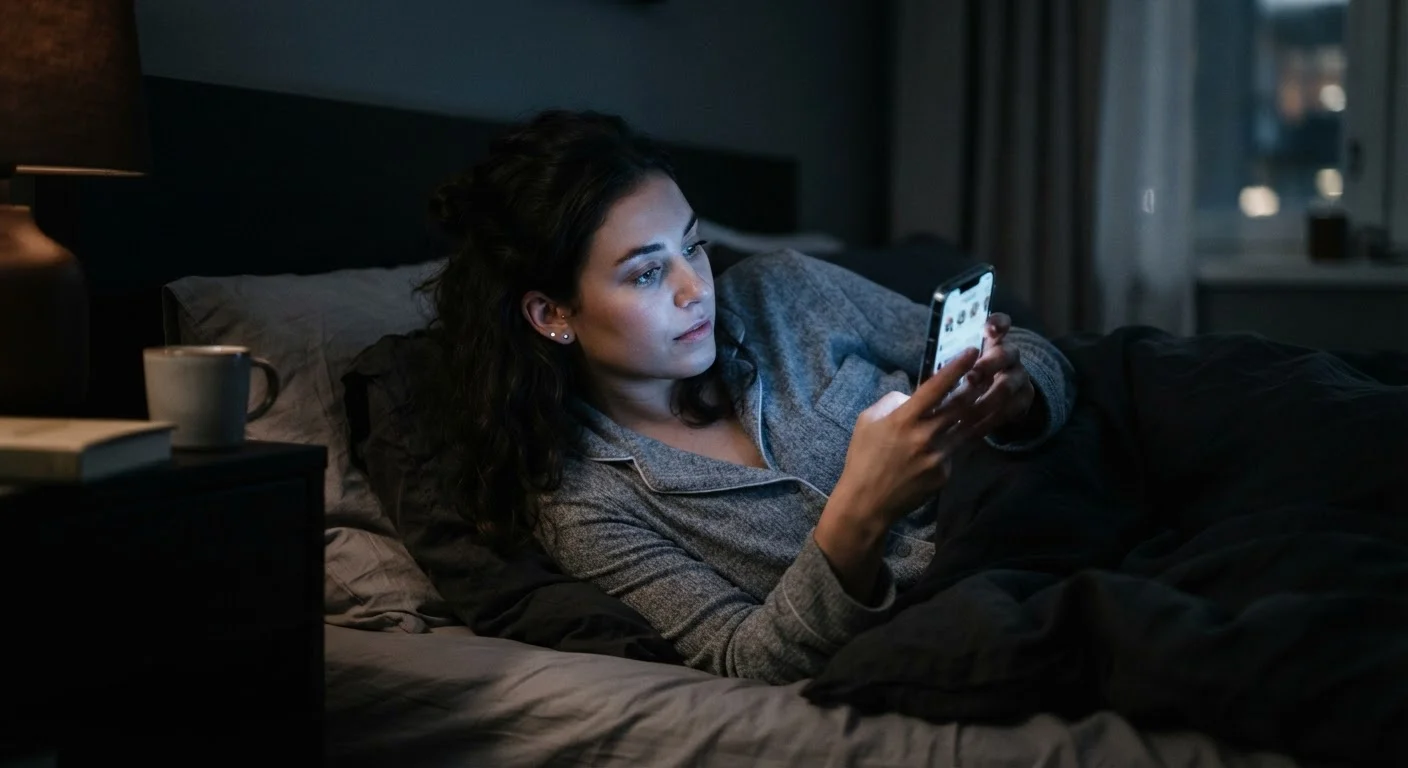
The concern about screens and sleep centers on a well-documented biological mechanism: blue-wavelength light, emitted prominently by LED-backlit devices, suppresses the production of melatonin — the hormone that signals to the brain that it's time to sleep. Research published in journals including the Journal of Clinical Endocrinology & Metabolism has confirmed that evening light exposure, including from devices, can delay the body's circadian rhythm and push back sleep onset.
But biology is only part of the picture. Screens also deliver content — and content drives psychological arousal. Checking work email, watching tense news coverage, or engaging in heated social media exchanges can keep the mind activated regardless of the light source. For a fuller look at how behavioral science frames pre-sleep habits, see what the research says about evening wind-down habits.
The Disadvantages: What the Evidence Supports
The case against evening screen use is grounded in several consistent findings across sleep research:
Blue light delays melatonin onset
Even relatively brief evening exposure to blue-wavelength light can push back melatonin secretion by 30 minutes to over an hour in some individuals, making it harder to feel sleepy at an intended bedtime.
Stimulating content increases cognitive arousal
Emotionally charged, fast-paced, or interactive content activates attention and stress systems that are counterproductive to sleep preparation, independent of any light effects.
Screens displace established wind-down behaviors
Time spent scrolling often replaces activities — reading print books, light stretching, or quiet conversation — that behavioral sleep medicine research associates with better sleep onset.
Habitual use can become compulsive and hard to stop
App design intentionally rewards continued engagement through notifications and variable content rewards. This makes voluntary stopping difficult, leading to later-than-intended sleep times.
Effects may be amplified in adolescents and older adults
Younger people show heightened circadian sensitivity to evening light, and older adults often already experience altered melatonin timing — making both groups potentially more vulnerable to screen-related sleep disruption.
It's worth noting that these effects are not uniform. Sensitivity to light-induced melatonin suppression varies by age, chronotype, and individual biology. For a detailed look at how screens specifically interact with sleep quality metrics, current evidence on evening screen use and sleep quality is a useful resource.
The Other Side: Potential Benefits Worth Acknowledging
A balanced assessment requires honest acknowledgment of what screens do offer in the evening hours:
Screens provide genuine relaxation for many people
Watching a familiar show or reading on a tablet can lower perceived stress for individuals who find these activities calming. For some, this psychological wind-down may outweigh the mild physiological costs.
Night mode settings reduce blue light exposure
Most modern devices offer warm-tone or night shift modes that shift the display toward lower-energy wavelengths. While not a complete solution, these settings measurably reduce melatonin-suppressing light compared with default settings.
Passive content can ease social isolation
Evening screen time provides connection — through messaging, video calls, or shared media experiences — that supports mental well-being, particularly for people living alone or in low-social environments.
Flexible scheduling suits shift workers and variable schedules
For people with non-traditional work hours, evening screen use aligns with their actual active period. Rigid no-screen rules designed around a 10 p.m. bedtime don't translate to everyone's lifestyle.
Audio and e-ink options offer lower-stimulation alternatives
Audiobooks, podcasts, and e-ink e-readers emit significantly less blue light than backlit tablets or smartphones, allowing screen-adjacent relaxation with reduced physiological impact.
These benefits don't cancel out the biological costs — but they do complicate a one-size-fits-all recommendation. Dismissing all pre-bed screen use as harmful ignores how people actually use technology to decompress.
What Actually Shapes the Impact
Individual Variation Is Real and Significant
Not everyone responds identically to evening screen exposure. Chronotype (whether you're naturally an early or late sleeper), age, and baseline sleep health all influence how much disruption any given habit causes. What significantly delays sleep for one person may have minimal effect on another. This is one reason population-level research findings don't always translate into identical personal recommendations.
Several modifiable factors determine how much evening screen use affects any given individual's sleep:
- Screen brightness and color temperature: Higher brightness and cooler color temperatures deliver more blue light. Night mode and warm-tone settings meaningfully reduce — though don't eliminate — this exposure.
- Content type: Passive, low-stakes content (nature documentaries, light comedy, audiobooks) tends to be less arousing than social media feeds, news, or competitive gaming.
- Timing relative to sleep: Exposure in the 30–60 minutes immediately before sleep onset appears most disruptive, according to circadian research.
- Underlying sleep health: Individuals with insomnia disorder or delayed sleep phase disorder may be more sensitive to any evening light or arousal trigger.
Your bedroom environment as a whole also matters. How light, temperature, and noise combine to shape sleep quality explains the broader picture beyond screens alone.
Building a Sustainable Approach
Rather than adopting a strict ban that may be difficult to maintain, most sleep clinicians suggest a graduated, personalized approach. Common starting points include dimming brightness and enabling warm-color modes on devices in the evening, shifting stimulating content earlier in the night, and establishing a consistent pre-sleep transition — even if that transition includes some screen use.
If you find that evening scrolling has become automatic rather than intentional, that's worth examining. Habits that silently erode sleep quality outlines how unconscious routines accumulate into real sleep debt over time.
Anyone experiencing persistent difficulty falling asleep, staying asleep, or waking unrefreshed should speak with a qualified healthcare provider. Chronic sleep disruption has associations with cardiovascular, metabolic, and mental health outcomes, and a professional evaluation can identify whether screen habits, or something else entirely, are driving the problem.
This article is for general informational purposes only and does not constitute medical advice. Consult a qualified healthcare professional for guidance on sleep concerns or any health condition.