

Key Takeaways
- Blue light from screens can suppress melatonin and delay the body's natural sleep-onset signal.
- Stimulating content — news, social media, games — can raise psychological alertness independent of light effects.
- The strength of these effects varies widely depending on individual sensitivity, screen brightness, and timing.
- Evidence supports reducing bright screen use in the 30–60 minutes before bed, though total avoidance is not always necessary.
- Screen use habits interact with other environmental factors like room temperature, noise, and ambient light.
Evening Screen Use and Sleep
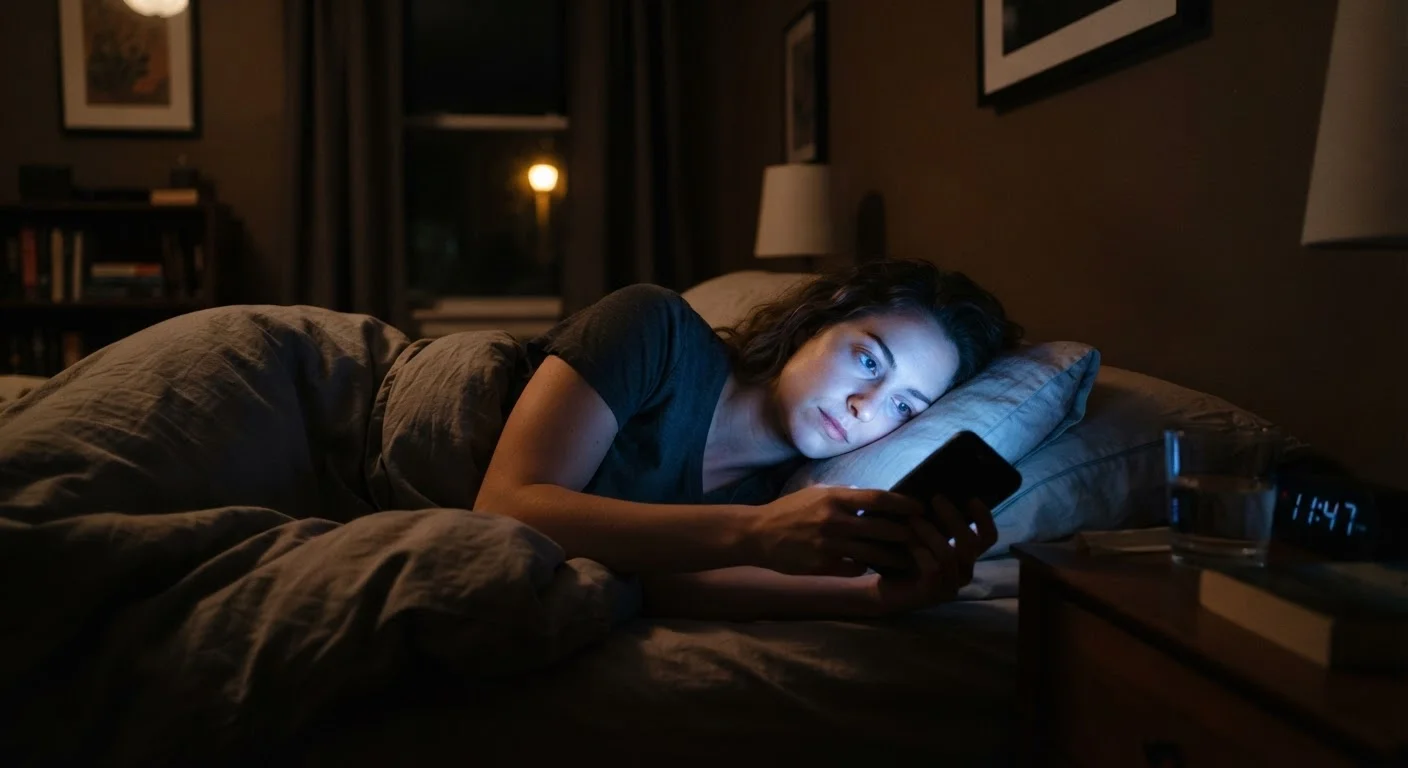
Evening screen use refers to the time people spend on phones, tablets, computers, or televisions in the hours before bed. Research suggests this habit can interfere with sleep through at least three overlapping mechanisms: blue light exposure, mentally stimulating content, and psychological arousal that keeps the mind alert when it needs to wind down.
The primary biological concern involves blue-wavelength light (roughly 460–480 nm) suppressing melatonin secretion from the pineal gland, which can delay the circadian phase and push back the onset of natural sleepiness.
The Three Pathways From Screens to Disrupted Sleep
When researchers study how evening screens affect sleep, they generally identify three distinct but overlapping pathways: blue light suppression of melatonin, cognitive and emotional stimulation from content, and conditioned alertness linked to device use itself.
Blue light and melatonin. Light is the primary environmental cue your brain uses to time sleep. As explained in our article on how light exposure shapes your sleep-wake cycle, the circadian system is especially sensitive to short-wavelength (blue) light in the evening hours. Exposure during this window can delay the rise of melatonin — the hormone that signals nighttime to the body — and push back the feeling of natural sleepiness. Importantly, this effect depends heavily on screen brightness, viewing distance, and how dark the surrounding room is.
Content stimulation. Even a screen emitting no blue light can disrupt sleep if what you're watching or reading keeps the mind alert. Emotionally charged news, competitive games, and social media feeds all activate the brain's reward and threat-detection systems, raising heart rate and cortisol in ways that are counterproductive to winding down.
Conditioned alertness. Repeated use of devices in bed can train the brain to associate the bedroom environment with wakefulness — a pattern addressed directly by behavioral sleep strategies like stimulus control. Over time, simply reaching for a phone in bed can trigger a state of alertness that takes time to unwind.
What the Research Actually Shows — and Where It Falls Short
Laboratory studies consistently show that bright light exposure in the evening delays melatonin onset and shifts circadian timing. A frequently cited body of research from Harvard's Division of Sleep Medicine, among others, has confirmed blue light's biological role. However, translating laboratory findings to real-life conditions is where the picture gets more complicated.
~90%
Americans using screens within an hour of bedtime
A National Sleep Foundation poll found that the vast majority of American adults use some form of electronic device in the hour before sleep on most nights.
1.5 hrs
Average melatonin delay from evening light exposure
Research published in sleep science literature suggests bright evening light can delay melatonin onset by roughly 90 minutes under controlled conditions, though real-world effects are typically smaller.
50+ min
Average reduction in nightly sleep among heavy evening screen users
Several large observational studies in adolescents and adults associate heavy evening screen use with sleeping 50 or more minutes less per night compared to low users, though causality remains debated.
Most controlled studies use light intensities and exposure durations that exceed typical real-world screen use. Participants in many trials stare at bright screens in otherwise darkened rooms — conditions that amplify the effect. Studies measuring sleep outcomes in naturalistic settings tend to find more modest — though still meaningful — associations. This does not mean the concern is overstated; it means the effect size depends significantly on the circumstances of your use.
A further challenge is that most observational studies cannot cleanly separate blue light from content effects. Someone scrolling distressing news for an hour before bed is simultaneously exposed to light and to emotionally activating information. Parsing which factor is doing more harm requires careful experimental design that is difficult to achieve outside a lab.
For a fuller picture of how the pre-sleep environment shapes rest, see our companion piece on the factors that quietly shape sleep quality, which places screen use alongside temperature, noise, and ambient light.
Practical Guidance Grounded in Current Evidence
Given what research supports — and acknowledging what it does not yet definitively settle — some practical approaches are well-grounded in behavioral science.
- Reduce screen brightness in the evening. Lowering display brightness reduces both blue light emission and overall luminance. This is a consistently supported lever regardless of whether you use night mode.
- Choose lower-stimulation content. If you read on a device before bed, calm material at low brightness has a meaningfully smaller impact on sleep architecture than high-intensity content. As our article on evening wind-down habits explains, what you do before sleep matters as much as when you do it.
- Keep devices out of arm's reach during the sleep window. Proximity creates temptation, and temptation creates use. Physical distance is a simple structural solution that many sleep researchers endorse.
- Consider a screen-free buffer. Even a 20–30 minute transition period without screens gives the nervous system time to downshift. The concept of digital rest explores this idea in more depth.
A Simple Evening Screen Audit
Before bed tonight, note what you're using, how bright the screen is, and whether the content is emotionally activating. Small adjustments — dimming your display, switching to calmer content, or charging your phone outside the bedroom — can meaningfully shift conditions without requiring you to give up screens entirely.
This article is for general informational purposes only and is not a substitute for professional medical advice. If you have concerns about sleep quality or a related health condition, please consult a qualified healthcare provider.