

Key Takeaways
- Iron comes in two forms — heme (meat-based) and non-heme (plant-based) — and they absorb differently.
- Pairing non-heme iron foods with vitamin C significantly boosts how much your body absorbs.
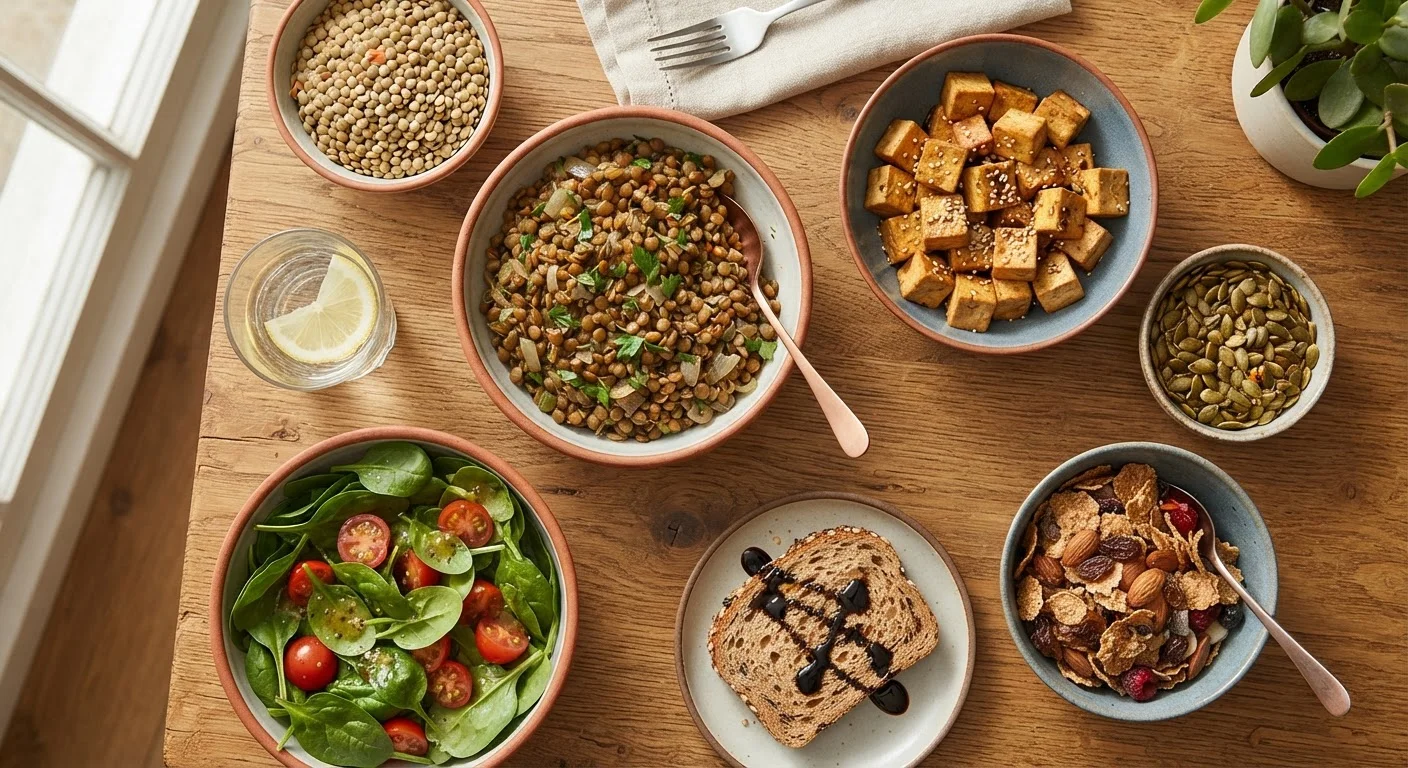
- Legumes, tofu, fortified cereals, seeds, and dark leafy greens are reliable plant iron sources.
- Some common foods and beverages can block iron absorption when consumed at the same time.
- Women of reproductive age, pregnant individuals, and athletes have higher iron needs — consult a healthcare provider.
What you will need
Why Iron Deserves Attention on a Lower-Meat Diet
Iron is essential for producing hemoglobin, the protein in red blood cells that carries oxygen throughout your body. Without adequate iron, that oxygen-delivery system falters — which is why iron deficiency is one of the most common nutritional shortfalls in the United States, particularly among women of reproductive age, endurance athletes, and people transitioning to plant-forward diets.
Cutting back on red meat removes one of the most bioavailable iron sources from the diet, but it does not make adequate iron intake impossible. The challenge is that plant-based iron behaves differently from animal-derived iron — and most people have never been taught why that matters or what to do about it.
This guide walks through the key concepts and practical steps to cover your iron needs without relying on daily red meat. For broader context on how iron fits into the overall landscape of essential minerals, the plain-language mineral reference guide covers what iron does, how much adults generally need, and how it compares to other key minerals.
Iron Deficiency Is a Medical Matter
If you suspect you have iron deficiency anemia — symptoms can include persistent fatigue, pale skin, shortness of breath, or frequent headaches — see a qualified healthcare provider before self-supplementing. A blood test is needed to confirm deficiency, and supplement dosages must be guided by a professional. This article provides general nutrition education only, not medical advice.
Putting It Together: Common Pitfalls and How to Avoid Them
Even well-intentioned eaters can undermine their iron intake through a few recurring mistakes. The most common: eating iron-rich plant foods without pairing them with vitamin C, drinking coffee or tea immediately with meals, and relying heavily on raw spinach as a primary iron source (its oxalate content limits absorption more than cooking does).
Cooking spinach, kale, and Swiss chard — even briefly — reduces oxalate content and makes their iron more accessible. This is one reason sautéed greens often serve iron needs better than large raw salad portions.
If you are working to build a nutrient-dense grocery routine that systematically covers your micronutrient bases, the micronutrient-rich diet guide offers practical strategies using standard supermarket staples — no specialty products required.
Special populations — including pregnant individuals, young children, and people managing chronic conditions — have distinct iron requirements and should work directly with a healthcare provider rather than relying on general guidelines.
This article is for general informational and educational purposes only and is not a substitute for professional medical advice, diagnosis, or treatment. Always consult a qualified healthcare provider with questions about your individual nutritional needs or health status.