

Key Takeaways
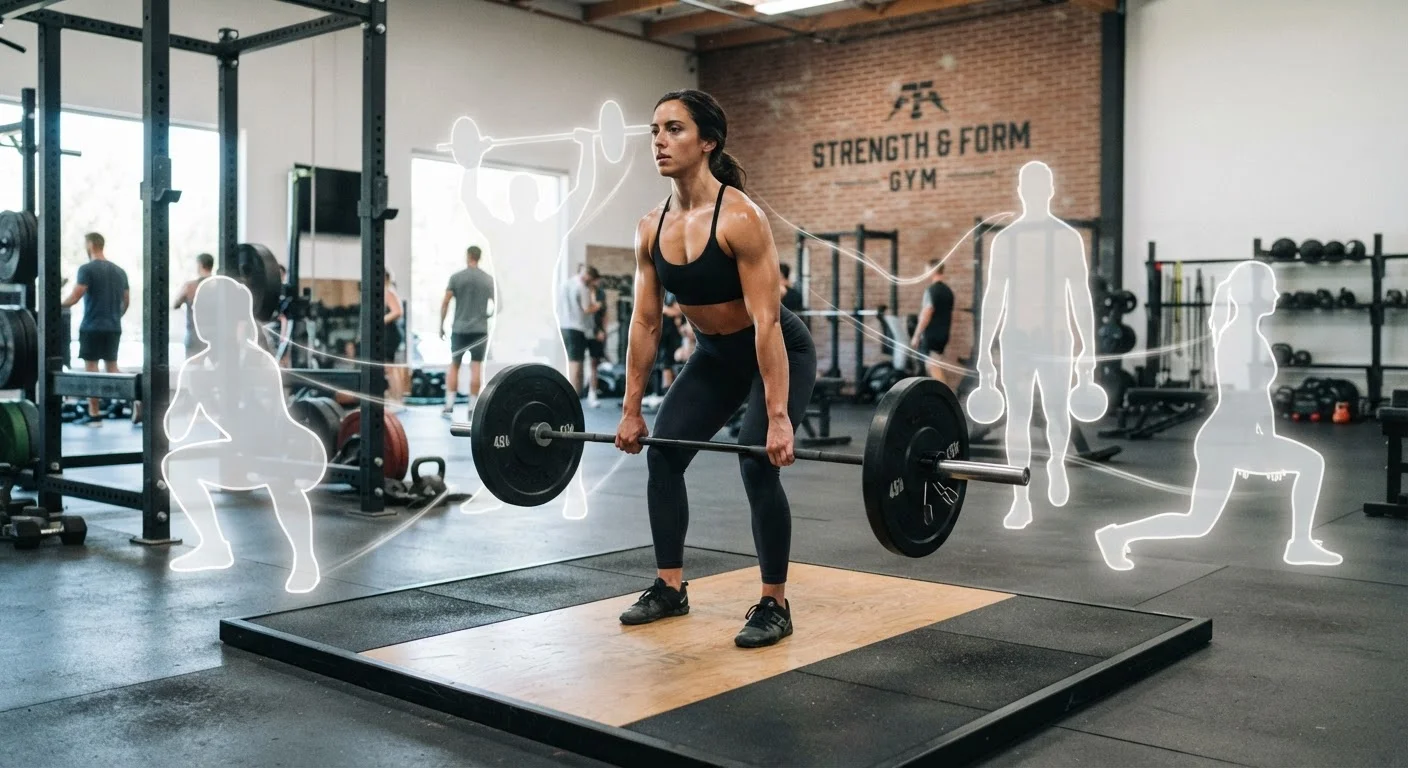
- There are seven foundational movement patterns: push, pull, hinge, squat, carry, rotate, and gait.
- Every exercise you do in a gym or at home fits into at least one of these categories.
- Training all seven patterns helps create balanced strength and reduces overuse injury risk.
- You don't need a gym to practice most of these patterns — many can be done at home with bodyweight.
- Learning to move well in each pattern is more important than the amount of weight you lift.
Foundational Movement Patterns
Foundational movement patterns are the core categories of physical motion that the human body is built to perform. Every exercise — from a gym workout to a weekend hike — is essentially a variation of one or more of these patterns. Recognizing them helps exercisers train more completely and avoid common gaps in their fitness routine.
In exercise science, these patterns are sometimes called 'primal movements' or 'fundamental movement categories,' and they map closely to activities of daily living as well as athletic performance demands.
Why Movement Patterns Matter More Than Exercise Names
Walk into any gym and you'll see hundreds of different exercises. It can feel overwhelming — especially for beginners. But here's a clarifying truth from exercise science: virtually every exercise is just a variation of one of seven core movement patterns.
Instead of memorizing a long list of movements, understanding these seven patterns gives you a mental framework. You'll recognize that a push-up and a bench press are both pushing movements; that a Romanian deadlift and a kettlebell swing are both hinges. This perspective helps you train smarter, spot gaps in your routine, and progress more confidently.
If you're just getting started with exercise, see our guide to building a daily movement habit for a practical first step before diving into structured training.
The Seven Patterns, Explained
Here's a breakdown of each pattern, what it trains, and how it shows up in both the gym and real life.
7
Core movement patterns covering all exercise
Exercise scientists and strength coaches broadly agree that push, pull, hinge, squat, carry, rotate, and gait encompass virtually all functional human movement.
~80%
Of common injuries linked to muscle imbalances
Research in sports medicine suggests the large majority of overuse and musculoskeletal injuries are associated with strength and mobility imbalances — often the result of neglecting certain movement patterns.
1. Push
Any movement where you extend force away from your body — horizontally (push-up, chest press) or vertically (overhead press). Pushes primarily train the chest, shoulders, and triceps.
2. Pull
The counterpart to pushing: drawing resistance toward your body. Rows train horizontal pulling; pull-ups and lat pulldowns train vertical pulling. These movements develop the back, biceps, and rear shoulders — muscle groups often underdeveloped in people who sit at desks.
3. Hinge
Hip-dominant movements where you push the hips back while maintaining a braced spine. Deadlifts, Romanian deadlifts, and kettlebell swings are classic hinges. The hinge builds powerful glutes and hamstrings and directly mimics picking things up off the ground.
4. Squat
Equal bending of the hips and knees, lowering the body and returning upright. Goblet squats, bodyweight squats, and leg presses all fall here. Squats train the quads, glutes, and core stability simultaneously.
5. Carry
Moving through space while bearing a load — suitcase carries, farmer's walks, overhead carries. Often overlooked, this pattern builds grip strength, shoulder stability, and total-body coordination in ways other patterns can't replicate.
6. Rotate
Controlled twisting through the torso — cable rotations, medicine ball throws, or simply a golf swing. Rotation trains the obliques and deep core, and helps protect the spine during dynamic movements.
7. Gait (Locomotion)
Walking, running, lunging, skipping — any form of propelling your body through space. Gait integrates nearly every other pattern and is fundamental to human function. Lunges and step-ups are the most common gym-based gait variations.
How to Use These Patterns in Your Training
A well-structured workout program touches all seven patterns across a weekly training cycle. A simple approach for beginners: choose one exercise per pattern and build a full-body routine around it. For example:
- Push: Push-up
- Pull: Resistance band row
- Hinge: Bodyweight good morning
- Squat: Goblet squat
- Carry: Dumbbell farmer's walk
- Rotate: Standing cable wood chop or twisting crunch
- Gait: Reverse lunge
As you progress, you swap in more challenging variations — not a different framework, just a harder version of the same pattern. This is what structured progression actually looks like.
Audit Your Current Workout
Write down every exercise you currently do and label each with its movement pattern. If any of the seven patterns is missing entirely from your weekly routine, that's a gap worth addressing. You don't need to add a dozen new exercises — one solid movement per missing pattern is enough to get started.
Once you're comfortable with these movement shapes, the next priority is refining how you perform them. Our article on why technique matters more than the weight on the bar explains why movement quality should always come before adding resistance.
This article is for general informational and educational purposes only and is not medical or exercise advice. If you have an injury, chronic condition, or health concern, consult a qualified healthcare professional or certified fitness professional before beginning a new exercise program.