
Reps, Sets, and Rest Periods: What the Numbers on Your Workout Plan Actually Mean

| Notation format | Sets × Reps (e.g., 3×10 = 3 sets of 10 reps) |
| Endurance rep range | 12–20+ reps per set (General exercise science guideline) |
| Hypertrophy rep range | 6–12 reps per set (General exercise science guideline) |
| Strength rep range | 1–5 reps per set (General exercise science guideline) |
| Rest for strength training | 2–5 minutes between sets |
| Rest for hypertrophy | 60–90 seconds between sets |
Decoding the Basic Notation: What 3×10 Actually Means
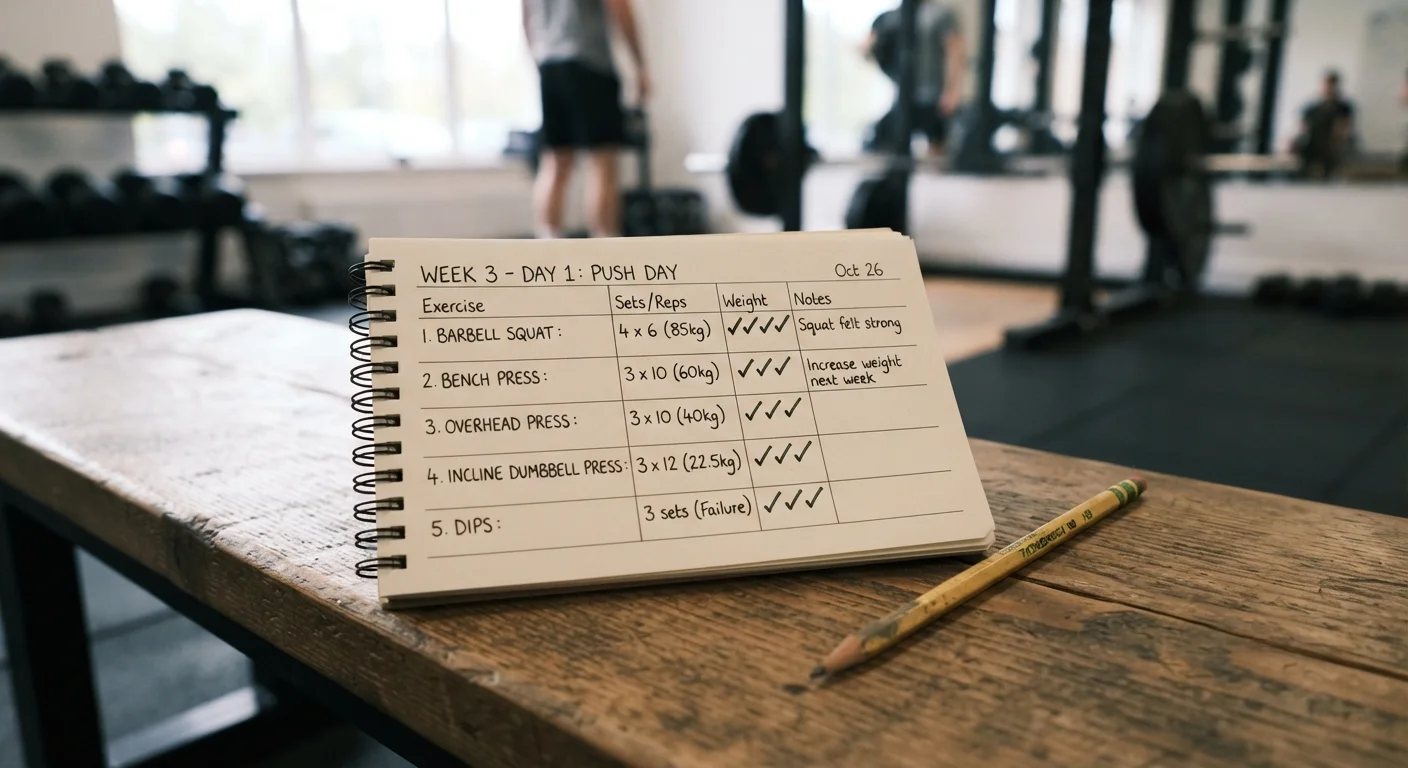
If you've ever glanced at a workout plan and seen something like 3×10 squats or 4×6 bench press, you're looking at a compact shorthand for three key variables: sets, reps, and — often implied — rest. Once you know how to read it, any program becomes far more approachable.
Reps (short for repetitions) are simply the number of times you perform a single movement without stopping. One squat down and back up equals one rep. Sets are groups of consecutive reps followed by a rest period. So 3×10 means three sets of ten reps — you do ten squats, rest, do ten more, rest again, then do a final ten.
The number that comes first is almost always the sets; the number after the multiplication sign is the reps. Some programs flip this or use a slash (3/10), so if you're unsure, check the program's legend or key — most well-designed plans define their notation upfront.
| Notation format | Sets × Reps (e.g., 3×10 = 3 sets of 10 reps) |
| Endurance rep range | 12–20+ reps per set (General exercise science guideline) |
| Hypertrophy rep range | 6–12 reps per set (General exercise science guideline) |
| Strength rep range | 1–5 reps per set (General exercise science guideline) |
| Rest for strength training | 2–5 minutes between sets |
| Rest for hypertrophy | 60–90 seconds between sets |
Why Rep and Set Ranges Are Tied to Your Goal
The specific numbers on a workout plan aren't arbitrary. Exercise science research consistently links rep ranges to training outcomes, though individual responses vary and these are general guidelines rather than rigid rules.
- Higher reps (12–20+), lighter load: Generally associated with muscular endurance — the ability of a muscle to sustain effort over time.
- Moderate reps (6–12), moderate load: Often linked to muscle hypertrophy (growth in muscle size), the range most common in bodybuilding-style programs.
- Lower reps (1–5), heavier load: Typically used for maximal strength development, common in powerlifting and strength-focused programs.
These ranges overlap considerably, and training adaptations depend on many factors including total weekly volume, exercise selection, and effort level. For a deeper look at how hard you should be pushing within any rep range, see understanding exercise intensity.
Rest Periods: The Most Overlooked Number on the Plan
Rest periods are the time you take between sets, and they're prescribed for a reason. Skipping or shortening rest changes the stimulus your body receives — sometimes productively, often not.
As a general framework used across many strength and conditioning programs:
- Shorter rest (30–60 seconds): Keeps the cardiovascular system working harder and can increase metabolic stress. Common in circuit and endurance-focused training.
- Moderate rest (60–90 seconds): A middle ground used frequently in hypertrophy programs, allowing partial but not full recovery between sets.
- Longer rest (2–5 minutes): Allows more complete neuromuscular recovery, supporting heavier loads in subsequent sets. Standard in strength and power training.
Rest periods directly affect recovery quality — and so does what happens after the workout entirely. For context on how your body rebuilds between sessions, post-workout recovery for beginners is a good follow-up read. You may also find it useful to understand why rest days are training days in disguise when planning your overall weekly schedule.
Putting It All Together in Your Weekly Plan
Understanding individual notation is step one; applying it across a full week of training is where results are built. Most beginner-to-intermediate programs prescribe total weekly volume — the sum of all sets and reps for a given muscle group — rather than expecting you to max out in a single session.
A practical approach: pick a program, follow its prescribed sets, reps, and rest times as written for at least four to six weeks before adjusting. Consistency with a given structure teaches you how your body responds and gives you a reliable baseline. If you're building your own schedule, building a workout schedule that fits real life offers a structured starting point.
Finally, the numbers only work when recovery does too. Understanding the phases of physical recovery helps you see why adequate rest between sessions is as important as the session itself.
This article is for general informational and educational purposes only and does not constitute medical or professional fitness advice. Consult a qualified healthcare provider or certified fitness professional before beginning any new exercise program, especially if you have an existing health condition or injury.