

Key Takeaways
- The immune system has two main branches: a fast innate response and a slower, targeted adaptive response.
- Vaccines train the adaptive immune system to recognize specific pathogens without causing disease.
- Sleep, nutrition, exercise, and stress management are the most evidence-backed pillars of everyday immune support.
- Certain medical conditions and medications can significantly reduce immune function, requiring specialist guidance.
- This article provides general health education — always consult a healthcare provider for personal medical questions.
Start here
What the Immune System Actually Does
Build on it
Two Lines of Defense: Innate and Adaptive Immunity
Apply it
How Vaccines Fit Into This Picture
Go deeper
What Can Weaken or Support Immune Function
Know your limits
When to Talk to a Doctor About Your Immune Health
What the Immune System Actually Does
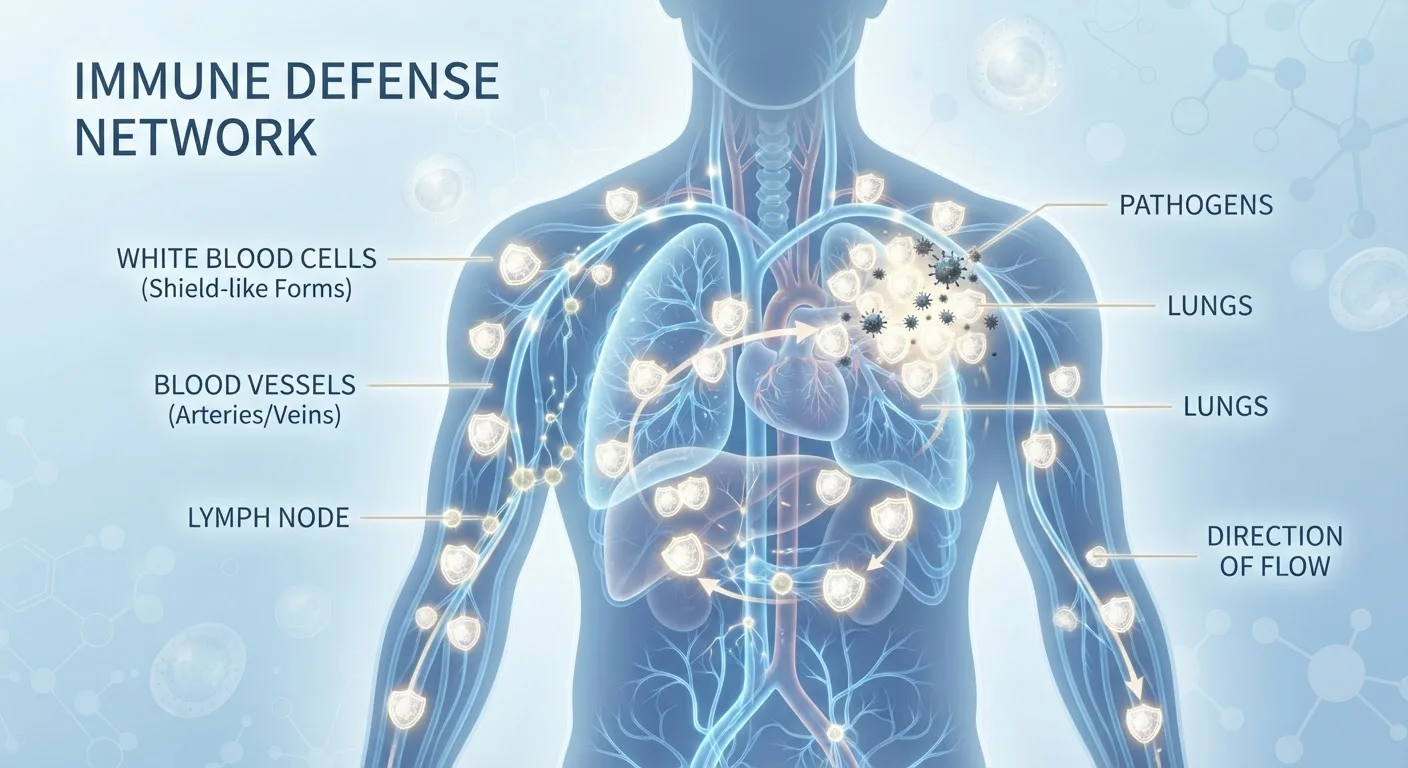
Think of the immune system as your body's standing security force — constantly patrolling for bacteria, viruses, fungi, parasites, and even abnormal cells that could cause harm. It doesn't sleep, and it operates across virtually every tissue in your body.
Its core jobs are straightforward: recognize what belongs in your body and what doesn't, respond proportionately to threats, and remember past invaders so it can react faster next time. When this system works well, most threats are neutralized before you feel a thing. When it misfires — attacking the body's own tissue, for example — the result is an autoimmune condition.
Pathogen
Any microorganism — such as a bacterium, virus, or fungus — that can cause disease in the body.
Antibody
A protein produced by the immune system that recognizes and binds to a specific pathogen, marking it for destruction.
Immunological memory
The immune system's ability to remember a past pathogen and mount a faster, stronger response if it encounters the same threat again.
Autoimmune condition
A group of disorders in which the immune system mistakenly attacks the body's own healthy tissues.
Cytokines
Signaling proteins released by immune cells that help coordinate and regulate the immune response.
Immunosenescence
The gradual decline and change in immune function that occurs naturally with aging.
Understanding the basics of how immunity works gives important context for decisions about vaccines, preventive care, and the everyday habits that influence your health over time.
Two Lines of Defense: Innate and Adaptive Immunity
Immunologists describe immunity in two broad layers that work together:
Innate Immunity: The Fast, General Response
This is your first line of defense. It activates within minutes to hours of detecting a foreign invader. Innate immune components — including skin, mucous membranes, fever responses, and certain white blood cells — don't target specific pathogens. Instead, they respond to general signs of invasion, buying time for the second layer to mobilize.
Adaptive Immunity: The Targeted, Remembered Response
The adaptive immune system is slower but far more precise. Specialized white blood cells called T cells and B cells identify specific pathogens and launch a tailored attack. Critically, adaptive immunity builds immunological memory — after clearing an infection, your immune system retains a blueprint so it can respond much more rapidly if that same pathogen appears again. This is the mechanism that makes vaccines possible.
How Vaccines Fit Into This Picture
Vaccines work by training the adaptive immune system without exposing you to a full-blown infection. Depending on the vaccine type, they may introduce an inactivated pathogen, a weakened live version, a specific protein fragment, or (in newer messenger RNA platforms) instructions for your cells to temporarily produce a recognizable protein.
In each case, the immune system mounts a response, forms memory cells, and is prepared to act quickly if the real pathogen appears. The result: reduced risk of severe illness, hospitalization, or death from preventable infections.
Keep a Personal Vaccination Record
Many adults aren't sure which vaccines they've received or when. Asking your doctor or pharmacist for a printed vaccination record — and storing it somewhere accessible — makes it much easier to follow recommended schedules and avoid unnecessary repeat doses.
Vaccine recommendations for adults are not one-size-fits-all. Factors such as age, occupation, travel plans, and underlying health conditions all affect which vaccines are appropriate and when. For a detailed look at the recommended schedule, see our guide on adult immunization schedules.
What Can Weaken or Support Immune Function
Immune function is influenced by a range of modifiable and non-modifiable factors. On the modifiable side, research consistently points to a core set of habits that support normal immune regulation:
- Sleep: During sleep, the body produces cytokines — proteins that help coordinate immune responses. Chronic sleep deprivation is associated with increased susceptibility to infection.
- Nutrition: Deficiencies in vitamins and minerals such as vitamin C, vitamin D, zinc, and iron can impair immune cell function. A varied diet emphasizing vegetables, fruits, whole grains, and lean proteins is generally associated with better immune health.
- Physical activity: Moderate, regular exercise supports immune surveillance. Extreme, sustained overexertion without adequate recovery may temporarily suppress immune function.
- Stress management: Chronic psychological stress elevates cortisol levels, which can blunt immune responses over time.
For a deeper look at the research behind these habits, our article on lifestyle habits that support healthy immune function separates what's evidence-backed from what's overhyped.
Non-modifiable factors — including age, genetics, and certain medical conditions — also play a meaningful role. Immune function gradually changes as we age, a process called immunosenescence, which is one reason vaccination recommendations shift across the lifespan.
When to Talk to a Doctor About Your Immune Health
This article provides general health education and is not a substitute for personalized medical advice. If you have questions about your immune health or vaccine history, a primary care provider is the right starting point.
Certain patterns are worth discussing with a clinician promptly: frequent or unusually severe infections, infections that are difficult to clear with standard treatment, unexplained fatigue or weight loss, or persistent swollen lymph nodes. These may point to an underlying immune condition requiring evaluation.
Adults with conditions such as cancer, HIV, autoimmune diseases, or those taking immunosuppressive medications face distinct considerations around vaccines and infection risk. Our overview on vaccination considerations for immunocompromised adults outlines general principles, but individual decisions in these situations always require direct physician guidance.
Immune health is also deeply connected to broader questions about healthy aging. For an accessible introduction to how researchers think about longevity and the body's long-term resilience, see Longevity Science From the Ground Up.
This article is for general informational and educational purposes only and does not constitute medical advice. Always consult a qualified healthcare professional for guidance specific to your health situation.