

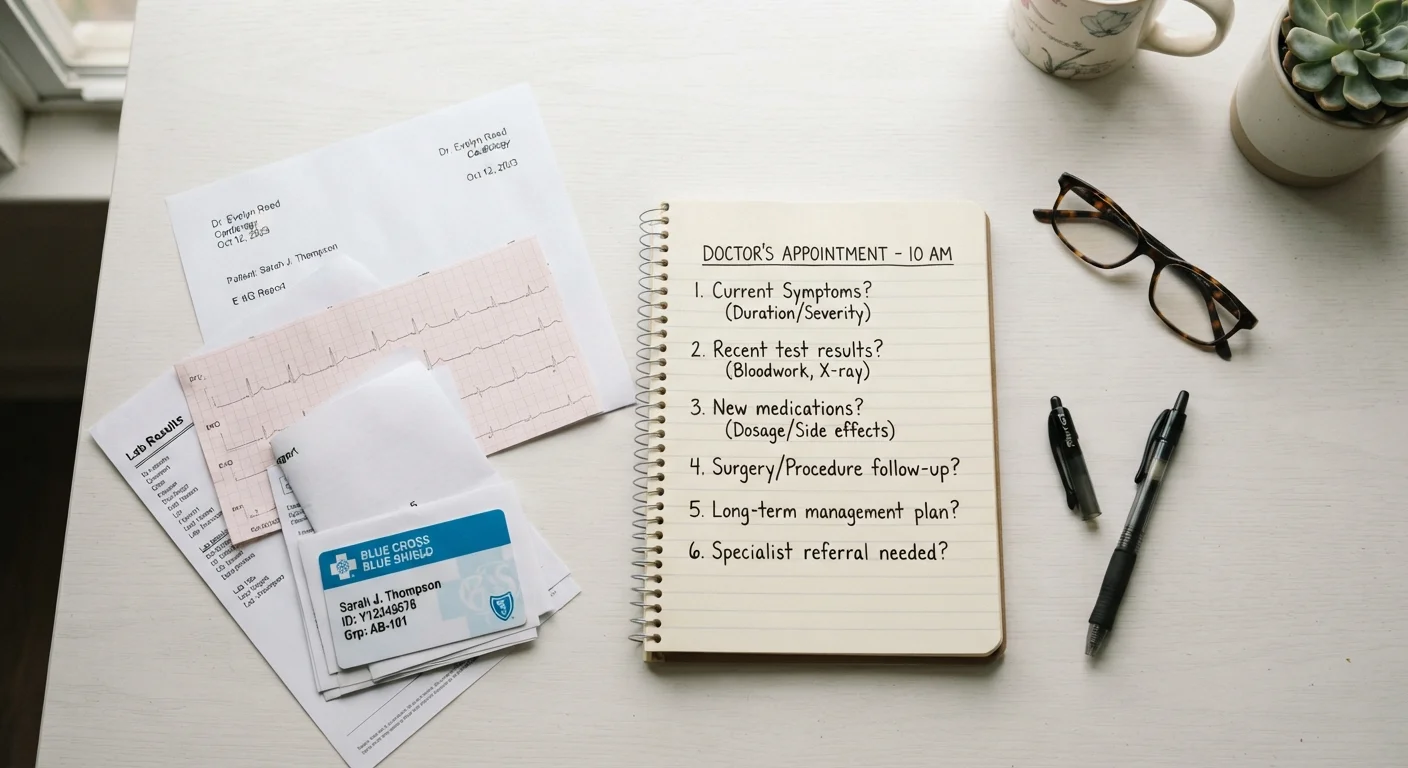
Key Takeaways
- Gathering your medical history and insurance information before your visit saves valuable appointment time.
- Writing down your questions in advance ensures you cover every concern without forgetting under pressure.
- Knowing which screenings apply to your age and health history helps you advocate for appropriate preventive care.
- Bringing a current medication list — including supplements — prevents dangerous prescribing errors.
- Following up on referrals and lab results is your responsibility as an engaged patient.
Summary
22 items · 30–60 minutes
Why Preparation Makes Preventive Appointments More Effective
A preventive checkup is one of the highest-value investments you can make in your long-term health — but only if you use the time well. The average primary care visit lasts roughly 18 minutes, and without preparation, much of that window can disappear in paperwork, memory lapses, and missed opportunities to discuss what actually matters to you.
Arriving organized signals to your provider that you're an active partner in your care. It also increases the likelihood that you'll leave with actionable next steps rather than vague reassurances. Whether this is your first annual physical in years or a routine follow-up, the checklist below gives you a clear framework for what to bring, what to ask, and what to do before and after the visit.
Not sure which screenings are relevant for your age group? Our guide to preventive screenings by age walks through what to expect at every life stage, so you can arrive already informed.
Preparation (Days Before)
Questions to Ask Your Provider
During the Appointment
After the Visit
What to Bring and What to Ask: Using This Checklist
Work through each group below in the days before your appointment — not the morning of. The preparation group in particular benefits from a few days of lead time, since tracking down immunization records or prior lab results can take longer than expected. If you're preparing for a vaccination visit rather than a general checkup, our vaccine appointment checklist covers immunization-specific steps.
Don't Skip Disclosure to Seem Healthier
Patients sometimes underreport alcohol use, tobacco habits, or medication non-adherence because they worry about judgment. Withholding this information doesn't protect you — it limits your provider's ability to catch risks early or adjust your care appropriately. Clinical conversations are confidential, and your provider's role is to help, not to lecture.
During your appointment, don't rely on memory. Bring your written question list and a pen to jot down answers, dosage instructions, or follow-up timelines your provider mentions. If you receive new diagnoses or screening recommendations, ask for written summaries or patient portal documentation before you leave.
After your visit, act on referrals promptly. Studies consistently show that patients who follow through on specialist referrals and lab orders within a short window are far more likely to detect and address issues early. If you've been skeptical about the value of routine checkups, our article on common myths about preventive checkups addresses the most frequent misconceptions — including concerns about cost and necessity for people who feel healthy.
Personal Health Record Folder
A physical or digital folder to store lab results, immunization records, specialist notes, and medication lists for easy retrieval at any appointment.
Patient Portal Account
Your provider's online portal lets you review visit summaries, receive lab results, request prescription refills, and message your care team securely.
Medication List Template
A simple written or printed template listing each medication, its dose, frequency, and prescribing provider helps prevent errors and saves time at check-in.
Notepad or Notes App
Use a notepad or smartphone notes app to write down questions before your visit and record key answers or instructions your provider gives during the appointment.
Blood Pressure Cuff (Home Monitor)
If your provider has asked you to track blood pressure between visits, bringing a recent log of home readings gives a more accurate picture than a single in-office measurement.
This article is for general informational purposes only and does not constitute medical advice. Always consult a qualified healthcare professional for guidance specific to your personal health situation, symptoms, or medical history.