

Key Takeaways
- Most American adults consume roughly half the daily fiber amount recommended by dietary guidelines.
- Soluble fiber helps lower LDL cholesterol and stabilize blood sugar levels after meals.
- Insoluble fiber supports digestive regularity and may reduce colorectal cancer risk.
- Gut microbiome health is closely linked to consistent fiber intake from varied plant sources.
- Whole foods — not supplements — are the most effective and well-studied way to meet fiber needs.
Dietary Fiber
Dietary fiber refers to the parts of plant foods that the human body cannot fully digest or absorb. Unlike fats, proteins, or carbohydrates that break down and enter the bloodstream, fiber passes relatively intact through the stomach, small intestine, and colon. This unique characteristic gives fiber its distinctive health effects, from regulating bowel movements to feeding beneficial gut bacteria.
Fiber is broadly classified as soluble (dissolves in water to form a gel-like substance) or insoluble (does not dissolve, adds bulk to stool). Both types contribute meaningfully to health, often acting through different physiological mechanisms.
Why Fiber Stands Out in Chronic Disease Prevention
Of all the nutritional factors studied in relation to chronic disease, dietary fiber has one of the most consistent evidence bases. Large-scale epidemiological studies and controlled clinical trials alike link adequate fiber consumption to reduced risk of cardiovascular disease, type 2 diabetes, colorectal cancer, and obesity-related conditions. Understanding why fiber has these effects — not just that it does — helps make sense of why it belongs at the center of any preventive nutrition strategy.
The core mechanism is physiological. Fiber is not a single compound but a family of complex carbohydrates and plant-based polymers that resist human digestive enzymes. This resistance is exactly what makes fiber useful: it slows the absorption of glucose into the bloodstream, binds to bile acids (which contain cholesterol) in the gut, and feeds the trillions of bacteria that make up the gut microbiome. For a broader look at the language used in preventive nutrition, see our preventive health glossary.
<10%
Adults meeting daily fiber recommendations
According to dietary intake data from the National Health and Nutrition Examination Survey (NHANES), fewer than 10% of American adults consume adequate fiber.
~15g
Average daily fiber intake for U.S. adults
This average falls significantly below the 25–38g range recommended by the Dietary Guidelines for Americans, reflecting a widespread and persistent dietary gap.
19–24%
Reduced cardiovascular disease risk with high fiber intake
A meta-analysis published in The Lancet found that higher dietary fiber intake was associated with a roughly 19–24% lower risk of coronary heart disease events.
Soluble vs. Insoluble Fiber: Two Pathways to Health
Soluble fiber dissolves in water and forms a viscous gel in the digestive tract. This gel slows gastric emptying, which blunts the rise in blood glucose after a meal — a meaningful benefit for blood sugar regulation and insulin sensitivity. Soluble fiber also binds to bile acids, prompting the liver to pull LDL cholesterol from the bloodstream to produce more bile. Oats, barley, psyllium, apples, and legumes are among the best soluble fiber sources.
Insoluble fiber does not dissolve in water. Instead, it adds physical bulk to stool, accelerates transit time through the colon, and dilutes potential carcinogens by reducing their contact time with the intestinal wall. Wheat bran, whole grain bread, vegetables, and the skins of fruits are rich in insoluble fiber. Most plant foods contain both types in varying ratios, which is one reason dietary variety matters more than tracking individual fiber fractions.
The gut microbiome connection deserves special mention. Specific fibers — called fermentable or prebiotic fibers — are metabolized by colonic bacteria into short-chain fatty acids (SCFAs) such as butyrate. SCFAs nourish the gut lining, support immune regulation, and are an active area of research in metabolic and inflammatory disease. Legumes, chicory, garlic, onions, and Jerusalem artichokes are particularly rich in prebiotic fiber.
The Fiber Gap in American Diets
Despite the well-documented benefits, dietary surveys consistently show that fewer than 10% of American adults meet the recommended daily fiber intake. The average adult consumes roughly 15 grams per day — about half the recommended amount. This gap is largely attributable to the displacement of whole plant foods by ultra-processed foods, which are engineered to be calorie-dense and fiber-poor.
The good news is that closing the fiber gap does not require expensive specialty products or rigid meal plans. It is primarily a matter of food pattern — prioritizing whole grains over refined ones, including legumes several times per week, eating vegetables at most meals, and choosing fruit over processed snacks. These shifts align naturally with broader healthy eating habits that support long-term wellbeing.
For those exploring how meal timing interacts with nutrient quality, our comparison of intermittent fasting and balanced meal patterns provides relevant context on how eating structure affects metabolic outcomes.
Practical Strategies for Increasing Daily Fiber Intake
Building consistent fiber intake is most sustainable when changes are gradual and embedded in existing routines rather than imposed as short-term rules. A few high-impact shifts that align with real eating patterns:
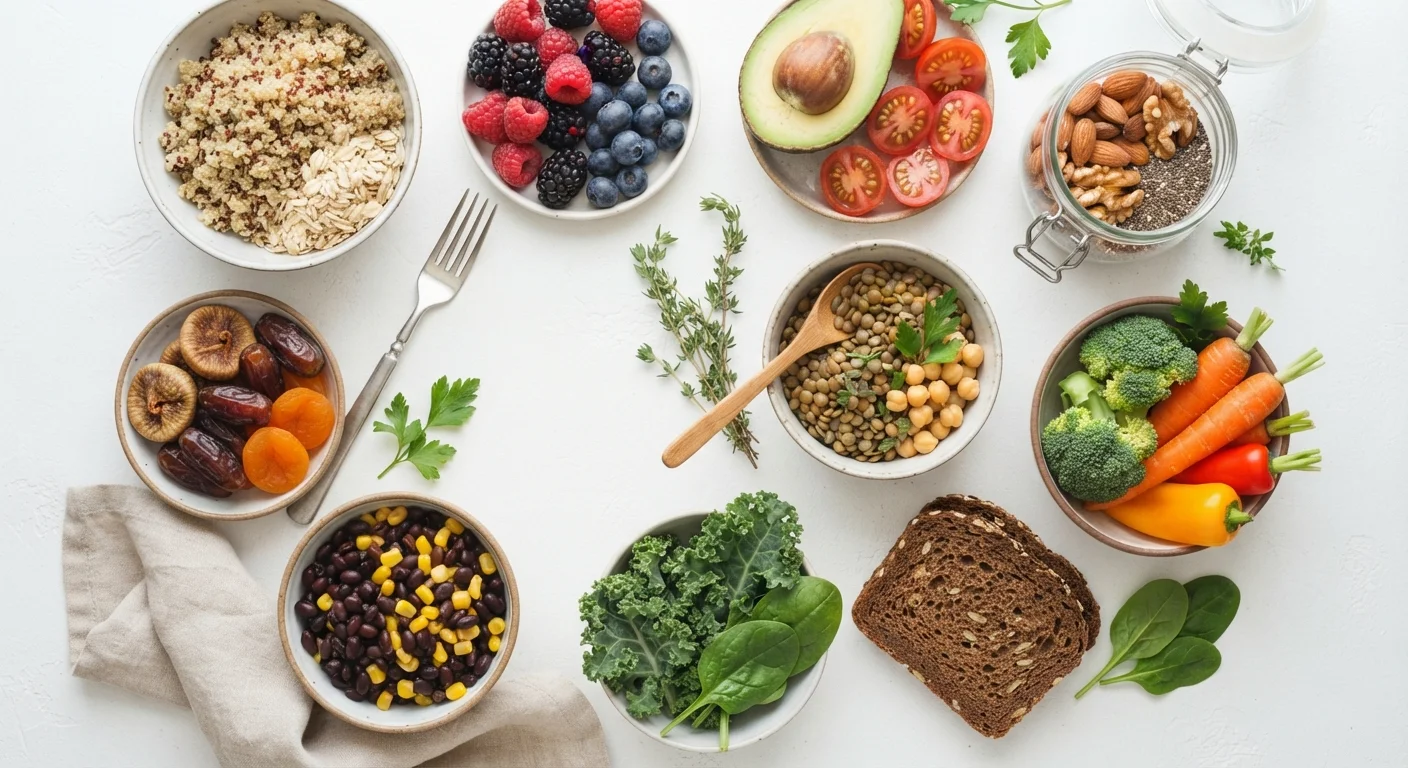
- Swap refined grains for whole grains. Choosing whole wheat bread, brown rice, or oatmeal instead of their refined counterparts can add several grams of fiber per meal with minimal effort.
- Add legumes to familiar dishes. Stirring canned lentils into soups, adding black beans to grain bowls, or using hummus as a snack dip are low-effort entries into legume-based fiber.
- Leave the skin on fruits and vegetables. Much of the fiber in apples, potatoes, cucumbers, and zucchini sits in or just below the skin.
- Front-load fiber early in the day. A high-fiber breakfast — oats, whole grain toast, or a smoothie with berries and ground flaxseed — makes it easier to meet daily targets without dramatic dinner-time overloads.
Increasing water intake alongside fiber is important. Fiber absorbs water as it moves through the digestive system, and inadequate hydration can cause the very discomfort many people associate with high-fiber eating. Fiber is also a central element of building sustainable preventive health routines across every life stage.
This article is for general informational and educational purposes only and does not constitute medical advice. Consult a qualified healthcare professional before making significant changes to your diet, especially if you have an existing health condition or are managing a chronic disease.