

Key Takeaways
- Complete proteins supply all nine essential amino acids your body cannot make on its own.
- Incomplete proteins lack or are low in one or more essential amino acids, but are still nutritious.
- Pairing complementary plant proteins throughout the day can fully meet your amino acid needs.
- Most animal foods are complete proteins; most plant foods are incomplete with notable exceptions.
- Soy, quinoa, buckwheat, and hemp seeds are plant-based complete proteins.
- Total daily protein intake and variety matter more than hitting completeness at every single meal.
Option A
Complete Proteins
The all-in-one amino acid package.
Best for: Anyone seeking a single food source that covers all essential amino acid requirements in adequate amounts.
Option B
Incomplete Proteins
Powerful building blocks that work best in combination.
Best for: Plant-based eaters and budget-conscious consumers who pair foods strategically throughout the day.
If you eat a mixed diet and want simplicity
Complete Proteins
Animal foods like eggs, chicken, fish, and dairy deliver all essential amino acids in one serving, requiring no additional planning around protein pairing.
If you follow a plant-based or vegan diet
Incomplete Proteins
A varied plant-food diet combining legumes, grains, vegetables, nuts, and seeds throughout the day reliably covers all essential amino acids without animal products.
If you want plant-based eating with minimum planning
Complete Proteins
Plant-based complete proteins like soy, quinoa, and buckwheat simplify amino acid coverage without needing to pair foods strategically.
What Are Essential Amino Acids — and Why Does 'Complete' Matter?
Proteins are made of building blocks called amino acids. Your body uses them to build muscle, produce enzymes, support immune function, and carry out countless other processes. Of the 20 amino acids involved in human biology, nine are classified as essential — meaning your body cannot synthesize them on its own and must obtain them from food. These nine are: histidine, isoleucine, leucine, lysine, methionine, phenylalanine, threonine, tryptophan, and valine.
A complete protein is any food source that provides all nine essential amino acids in amounts sufficient to support normal body function. An incomplete protein contains some but not all essential amino acids, or delivers certain ones in quantities too low to meet your body's needs on their own.
The distinction matters practically because a chronic shortfall in any single essential amino acid — particularly lysine or leucine, which are commonly limiting in plant foods — can impair muscle repair, immune response, and other core functions over time. However, it does not mean incomplete proteins are inferior foods; it simply means diet variety and smart pairing become important tools.
Complete vs. Incomplete Proteins: A Head-to-Head Look
Understanding where each type of protein comes from helps you make practical food choices, whether you eat animal products or not.
| Criterion | Complete Proteins | Incomplete Proteins |
|---|---|---|
| Essential amino acids | All 9 present in adequate amounts | Missing or low in 1 or more |
| Primary food sources | Meat, fish, eggs, dairy, soy, quinoa | Grains, legumes, nuts, seeds, vegetables |
| Plant-based options | Soy, quinoa, buckwheat, hemp seeds | Most other plant foods |
| Diet planning required | Minimal — one food covers all needs | Variety and pairing throughout the day |
| Typical cost | Varies; animal sources often pricier | Legumes and grains are budget-friendly |
| Nutrient density | High protein; may include saturated fat | High in fiber, minerals, phytonutrients |
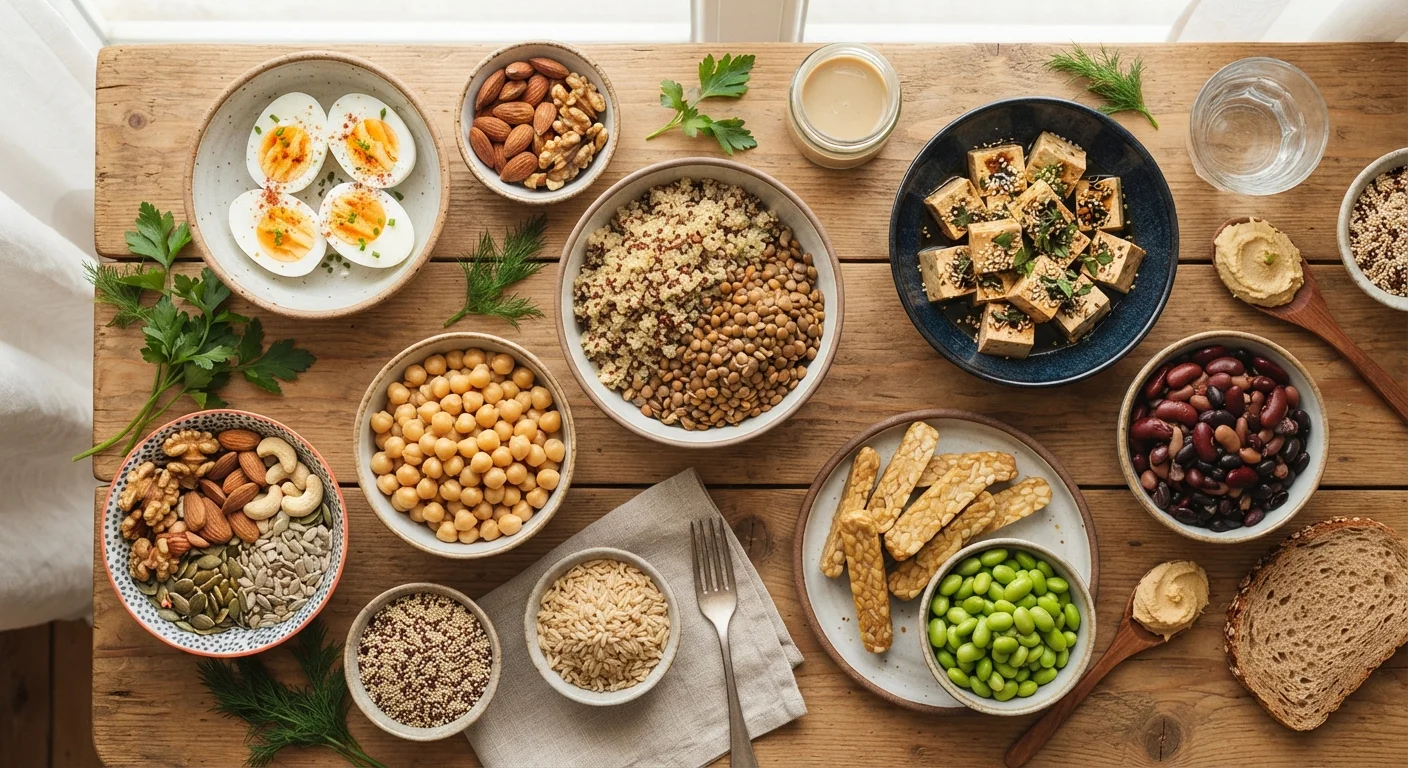
Animal-based foods — including eggs, dairy, meat, poultry, and fish — are almost universally complete proteins. Plant foods are the primary source of incomplete proteins, with a few notable exceptions. Soy products (tofu, tempeh, edamame), quinoa, buckwheat, and hemp seeds are plant-based foods that provide all nine essential amino acids in meaningful amounts.
How Plant-Based Eaters Can Meet All Amino Acid Needs
For decades, nutrition guidance suggested that plant-based eaters needed to combine complementary proteins at every meal — for example, rice and beans together. Current evidence from organizations including the Academy of Nutrition and Dietetics indicates this is not strictly necessary. What matters is consuming a sufficient variety of plant proteins across the day, so that all essential amino acids are represented in adequate amounts over time.
Common complementary pairings that together provide all essential amino acids include:
- Legumes + grains: lentil soup with whole-grain bread; black beans and rice
- Legumes + seeds: hummus (chickpeas and sesame tahini) on whole-grain crackers
- Grains + dairy or eggs: oatmeal with milk; whole-grain toast with eggs
For those eating entirely plant-based, focusing on lysine-rich foods is especially practical. Lysine is the amino acid most often insufficient in grain-heavy diets. Legumes — beans, lentils, chickpeas — are excellent lysine sources and pair naturally with most meals.
9
Essential amino acids humans must obtain from food
According to the National Institutes of Health, all nine essential amino acids must come from dietary sources because the body cannot synthesize them.
~10–35%
Recommended daily calorie range from protein
The USDA Dietary Guidelines for Americans suggest protein should account for 10–35% of total daily calorie intake for most adults.
Lysine
Most common limiting amino acid in plant-heavy diets
Nutrition researchers consistently identify lysine as the essential amino acid most likely to be insufficient in diets centered on grains rather than legumes.
This article is for informational purposes only and is not a substitute for personalized advice from a registered dietitian or qualified healthcare professional. Individual protein needs vary based on age, health status, activity level, and other factors.