

Key Takeaways
- Many foods — especially fruits and vegetables — contribute significantly to your daily fluid intake.
- Thirst and hunger signals can overlap, making mild dehydration easy to misread as appetite.
- Adequate hydration supports digestion by aiding nutrient absorption and bowel regularity.
- Drinking water before or with meals may help moderate portion sizes for some people.
- High-sodium and high-sugar diets increase the body's fluid demands.
- Consistent hydration habits and a varied diet work together to support overall wellness.
Hydration and Food Interaction
Hydration and food interaction refers to the ways that water intake and eating habits influence each other. The foods you eat can supply meaningful amounts of fluid, while your hydration status shapes hunger signals, digestion, and nutrient absorption. Understanding this relationship helps you make smarter daily choices about both what you eat and how much you drink.
Water participates in nearly every metabolic process, including the enzymatic reactions that break down macronutrients and the transport of nutrients across intestinal walls.
Food Is a Fluid Source — Just Not the Only One
Most Americans think of hydration as a drinking problem — drink more water, done. But roughly 20% of daily fluid intake typically comes from the foods we eat, according to established nutrition research. That's not a minor footnote; it's a meaningful part of the picture.
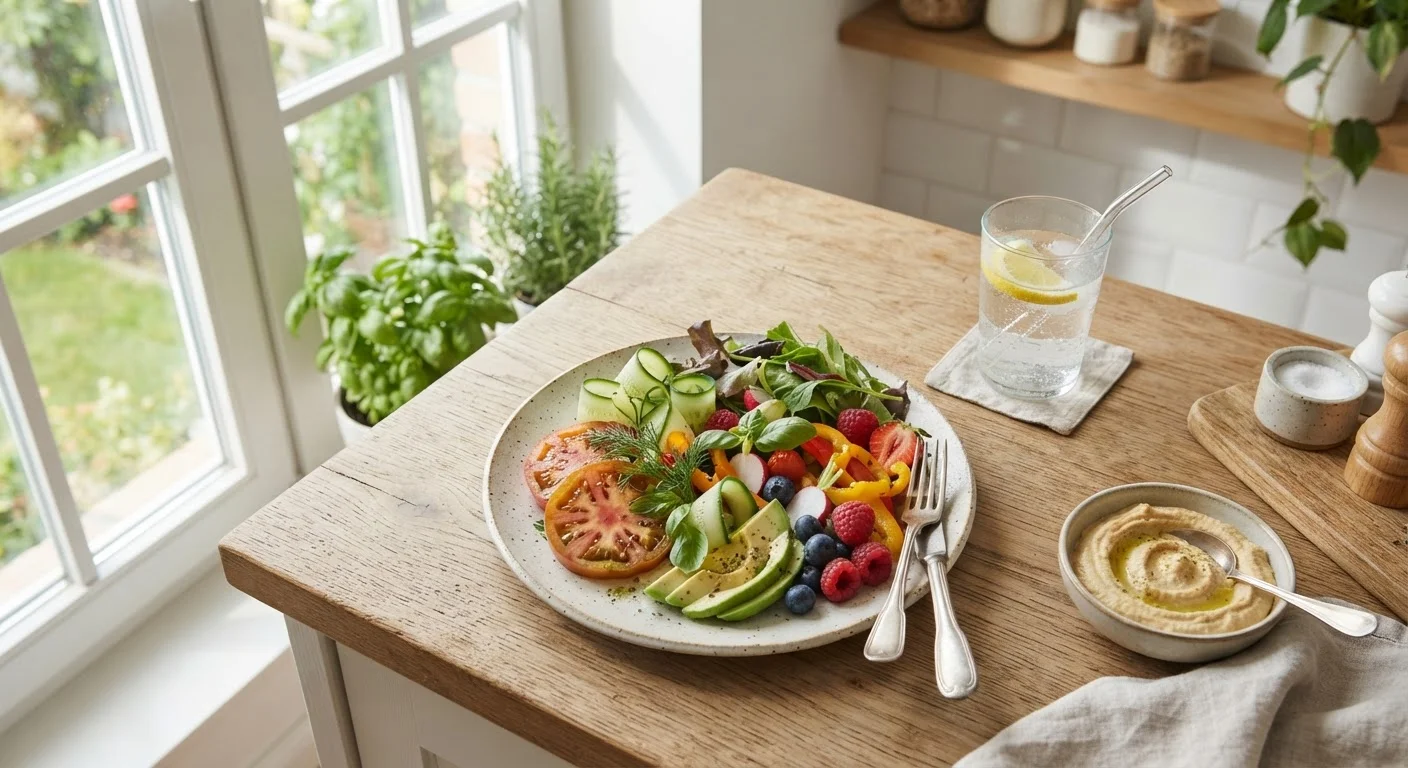
Fruits and vegetables are the biggest food contributors to fluid intake. Cucumbers, celery, lettuce, watermelon, oranges, and strawberries are all more than 90% water by weight. Soups, stews, yogurt, and oatmeal also deliver significant fluid. On the other end, dry, processed, or high-sodium snacks add almost no water and may actually increase your fluid needs.
This matters because your overall dietary pattern — not just your water glass — shapes your hydration status throughout the day. A diet rich in whole fruits and vegetables quietly supports fluid balance, while a diet heavy in packaged foods works against it. See our common hydration missteps guide for a closer look at where fluid balance breaks down.
Thirst, Hunger, and the Signals We Misread
The hypothalamus — the brain region that regulates both hunger and thirst — doesn't always send cleanly distinct signals. Mild dehydration can produce sensations that feel like low-grade hunger: restlessness, difficulty concentrating, a vague desire to eat something. This overlap is a well-recognized challenge in appetite research.
This doesn't mean thirst and hunger are the same thing, or that drinking water is a substitute for eating. But it does mean that if you notice a snack craving between meals — particularly in the mid-afternoon when dehydration tends to accumulate — drinking a glass of water first and waiting 10 to 15 minutes is a reasonable way to test whether the signal is true appetite or something else.
Understanding this overlap is especially relevant for people who eat out of habit or environmental cues rather than physical need. The hunger signals vs. habit eating guide covers this pattern in greater depth.
A Simple Way to Test Hunger vs. Thirst
When a craving hits between meals, drink a full glass of water and wait 10–15 minutes before eating. If the sensation passes or diminishes, it was likely a hydration cue rather than true hunger. This simple check is especially useful in the mid-afternoon, when dehydration tends to accumulate and snack cravings peak.
How Hydration Shapes Digestion and Nutrient Absorption
Water is not passive in digestion — it's an active participant. Saliva, stomach acid, bile, and pancreatic fluid are all water-based, and they work together to break food down into forms the body can absorb. Inadequate hydration can slow this process and make digestion feel sluggish.
Fiber is a particularly clear example of the food-hydration connection. Dietary fiber — the indigestible carbohydrate in vegetables, legumes, whole grains, and fruit — absorbs water as it moves through the gut. That water absorption is what gives fiber its beneficial effects on bowel regularity. Without adequate fluid intake, a high-fiber diet can actually worsen constipation rather than relieve it.
Sodium intake is the flip side of this equation. High-sodium diets — common in processed and restaurant foods — increase the amount of water the kidneys need to excrete waste products. The body also retains fluid in response to excess sodium, which can cause bloating and put strain on blood pressure regulation over time. Your food choices, in short, directly set your hydration needs.
~20%
Daily fluid intake from food
According to established nutrition research cited by the Institute of Medicine, roughly 20% of daily water intake comes from food for many adults.
90%+
Water content of top hydrating vegetables
Cucumbers, celery, and lettuce are more than 90% water by weight, making them among the most hydrating foods in a typical diet.
3,400 mg
Average daily sodium intake, U.S. adults
The CDC reports that American adults consume an average of about 3,400 mg of sodium per day — well above the 2,300 mg limit recommended in U.S. Dietary Guidelines — increasing fluid demands.
Practical Habits That Work in Real American Life
Hydration and diet improvement don't require an overhaul. A few consistent adjustments make a real difference over time.
- Start meals with water. Drinking water before or at the beginning of a meal is associated with more moderate intake in research settings and costs nothing to try.
- Prioritize water-rich foods. Adding a serving of fruit or raw vegetables to meals is one of the easiest ways to increase fluid intake without thinking about it.
- Watch sodium patterns. If your diet leans heavily on canned soups, deli meats, or restaurant meals, your fluid needs are higher than average. Being aware of this helps you stay ahead of dehydration.
- Pair hydration with existing routines. Morning hydration in particular is an easy win. See how the first 30 minutes after waking shapes your day for a simple framework.
- Reconsider exercise recovery. After workouts, both fluids and macronutrients matter for recovery. Our nutrition and recovery guide explains how to approach both together.
This article is for general informational and educational purposes only and is not a substitute for professional medical advice. If you have specific health conditions or concerns about your hydration or dietary needs, consult a qualified healthcare provider.