

Key Takeaways
- Anxiety and insomnia have a bidirectional relationship — each condition can trigger and worsen the other.
- Hyperarousal, driven by anxiety, keeps the nervous system too activated for restful sleep.
- Poor sleep reduces emotional regulation capacity, making anxious thoughts harder to manage.
- Cognitive Behavioral Therapy for Insomnia (CBT-I) is among the most evidence-supported treatments for this cycle.
- Behavioral sleep habits — sometimes called sleep hygiene — can meaningfully reduce anxiety-driven sleep disruption.
- Consulting a qualified healthcare professional is important for persistent or severe symptoms.
Anxiety-Insomnia Cycle
The anxiety-insomnia cycle describes a bidirectional relationship in which anxiety makes it harder to fall or stay asleep, and poor sleep in turn amplifies anxious thinking and emotional reactivity. Each condition worsens the other, creating a self-reinforcing loop. This pattern is well-documented in clinical research and affects millions of Americans.
In research literature, this relationship is sometimes described as "comorbid anxiety and insomnia" — conditions that co-occur and share overlapping neurobiological pathways, particularly involving the hypothalamic-pituitary-adrenal (HPA) axis and hyperarousal.
How Anxiety Disrupts Sleep
When you experience anxiety, your brain activates the body's stress response — releasing hormones like cortisol and adrenaline that prepare you to react to a perceived threat. This state of physiological hyperarousal is fundamentally incompatible with the relaxed, low-alert state your nervous system needs to initiate and sustain sleep.
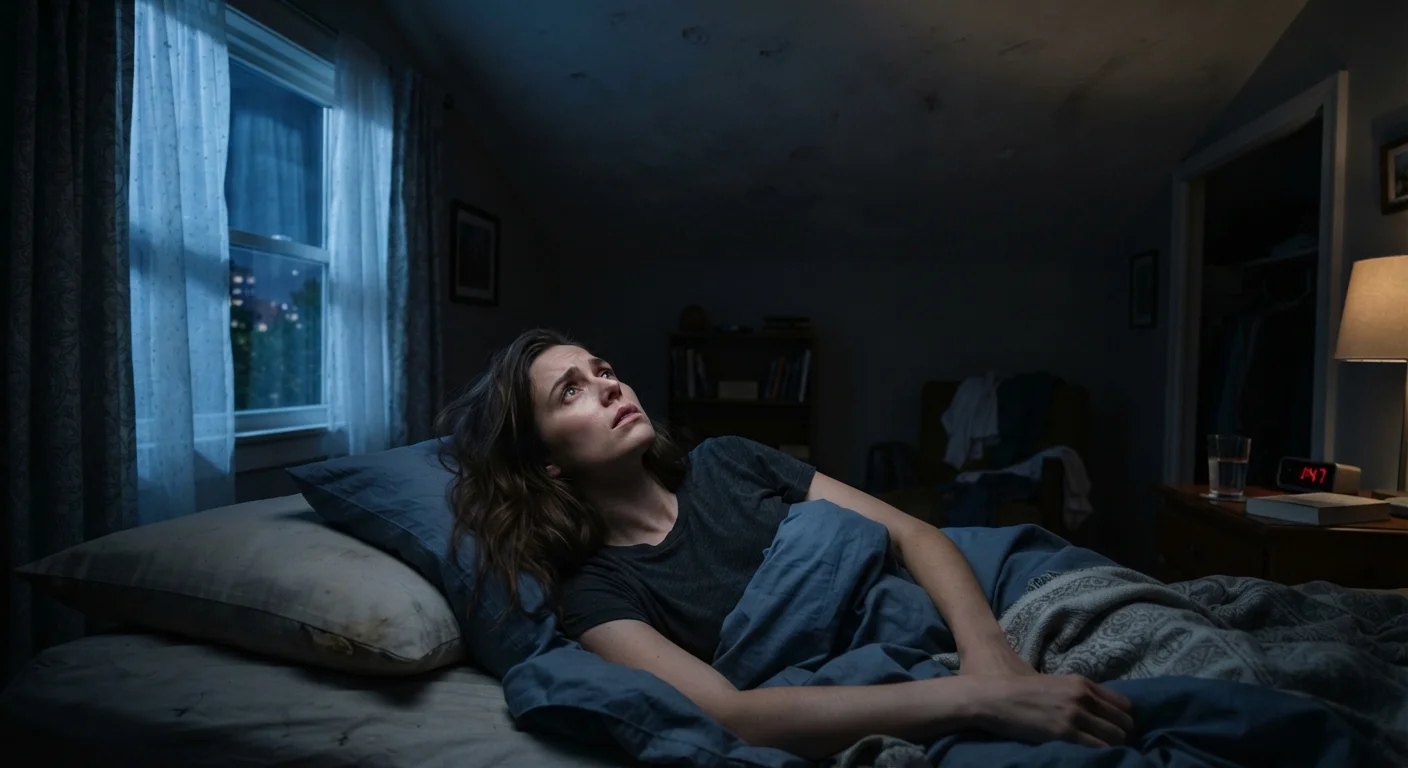
Anxious thoughts tend to intensify at night, partly because external distractions disappear. Without the buffer of daytime activity, the mind tends to revisit worries, rehearse worst-case scenarios, or fixate on unresolved concerns. This mental activity keeps the brain in a waking state even when the body is exhausted.
Research consistently links anxiety to difficulty falling asleep (sleep onset insomnia), frequent nighttime awakenings, and reduced slow-wave — or deep, restorative — sleep. Over time, even when the original anxiety trigger fades, the brain may have learned to associate bedtime with wakefulness, a pattern sometimes called conditioned arousal.
Notice the Bedtime Worry Pattern
If you find your mind racing the moment your head hits the pillow, that's a signal — not a character flaw. Try keeping a brief worry journal earlier in the evening to externalize anxious thoughts before bed. This technique, sometimes called "scheduled worry time," has research support as a way to reduce nighttime rumination without suppressing thoughts, which often backfires.
How Poor Sleep Amplifies Anxiety
The relationship doesn't stop there. Sleep deprivation actively raises anxiety. Studies using neuroimaging have shown that sleep-deprived brains display heightened reactivity in the amygdala — the region central to processing fear and threat — while showing reduced activity in prefrontal areas responsible for rational regulation of those responses.
In plain terms: when you're sleep-deprived, your brain becomes more alarmed by potential threats and less capable of talking itself down. This is why anxious thoughts can feel genuinely unmanageable after a poor night of sleep, not merely unpleasant.
This bidirectional dynamic is explored in depth in our related piece on the role sleep plays in stress and anxiety. Additionally, emotional regulation depends heavily on sufficient sleep, meaning the consequences of poor sleep reach well beyond tiredness.
~40%
Adults with insomnia who also have an anxiety disorder
Research published in sleep and psychiatric epidemiology literature consistently finds anxiety disorders among the most common comorbidities in people with chronic insomnia.
30–35%
U.S. adults experiencing insomnia symptoms
According to the American Academy of Sleep Medicine, roughly a third of American adults report insomnia symptoms at some point, with a significant subset meeting criteria for chronic insomnia disorder.
70–80%
CBT-I success rate in clinical trials
Multiple randomized controlled trials have found that Cognitive Behavioral Therapy for Insomnia produces meaningful improvement in sleep outcomes in the majority of participants.
Evidence-Based Approaches to Breaking the Cycle
Understanding the loop is useful, but the more pressing question is: what can actually interrupt it?
Cognitive Behavioral Therapy for Insomnia (CBT-I) is currently considered one of the most effective interventions by sleep medicine clinicians. It works by identifying and restructuring the thoughts and behaviors that maintain poor sleep — including anxiety-driven sleep-related worry — and uses techniques like stimulus control and sleep restriction to rebuild healthy associations with bed and sleep.
Behavioral practices often grouped under sleep hygiene also support this process. Maintaining consistent sleep and wake times, limiting stimulating content before bed, and creating a cool, dark sleep environment are all supported by research as useful practices — though they work best as part of a broader behavioral approach rather than standalone fixes. Physical activity also plays a documented role; our explainer on the sleep-exercise loop outlines how regular movement can meaningfully improve sleep quality.
For people dealing with persistent or severe symptoms, working with a licensed mental health professional or sleep specialist is strongly encouraged. Both anxiety and insomnia respond well to professional care, and the combination of behavioral and clinical support tends to produce better outcomes than either alone.
It's also worth noting that sleep has broader health implications beyond mood — including effects on immune function — making addressing this cycle a meaningful investment in overall well-being.
This article is for general informational and educational purposes only and does not constitute medical advice. If you are experiencing persistent anxiety, insomnia, or related symptoms, please consult a qualified healthcare professional for personalized guidance.