

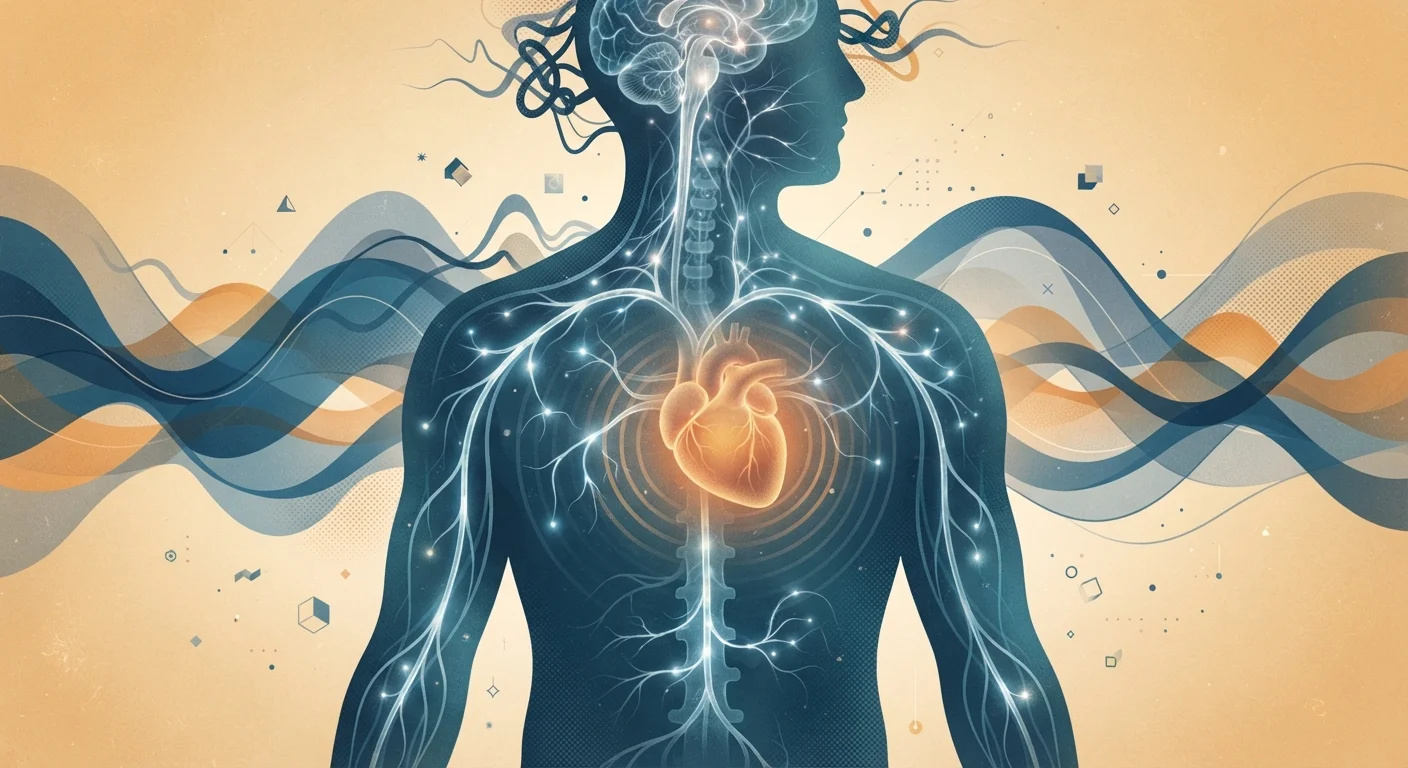
Key Takeaways
- Stress triggers an immediate hormonal cascade that affects nearly every organ system.
- Cortisol and adrenaline are the primary drivers of the physical stress response.
- Short-term stress can be useful; chronic stress is linked to serious health consequences.
- Muscle tension, digestive disruption, and immune suppression are common physical effects.
- Understanding the stress response helps you choose more effective coping strategies.
- Lifestyle habits like exercise and sleep directly influence how your body handles stress.
The Stress Response
The stress response is your body's automatic, built-in reaction to any perceived threat or demand. It triggers a cascade of hormonal and physical changes — including a faster heart rate, tensed muscles, and sharper alertness — designed to help you cope with the challenge at hand. This system is protective in short bursts but can become harmful when activated chronically.
Physiologically, the stress response is coordinated by the hypothalamic-pituitary-adrenal (HPA) axis and the sympathetic nervous system, both of which regulate the release of hormones like adrenaline (epinephrine) and cortisol.
The Alarm System Your Body Never Turns Off
Every time you feel stressed — whether it's a tight work deadline, a heated argument, or a near-miss in traffic — your brain fires an alarm. Within milliseconds, the hypothalamus, a small structure at the brain's base, signals the adrenal glands to flood your bloodstream with adrenaline (epinephrine) and cortisol. This is your fight-or-flight response, and it's extraordinarily efficient.
Adrenaline acts fast: your heart pumps harder, blood pressure rises, airways widen, and your senses sharpen. Blood is redirected away from your digestive system and toward your large muscles, priming you for rapid movement. Simultaneously, cortisol raises blood glucose to give your muscles and brain a quick energy supply.
This response evolved for survival — and it works beautifully for short-term threats. The problem is that modern stressors, like financial pressure or relationship conflict, don't go away in minutes. When the alarm system stays on, the same biological machinery that protects you begins to work against you. For a deeper look at why stress feels so physical, the mechanics of your nervous system tell the full story.
What Cortisol Does — and What Happens When It Stays Elevated
Cortisol is often described simply as "the stress hormone," but that undersells its complexity. In acute situations, cortisol is genuinely helpful: it suppresses inflammation temporarily, sharpens alertness, and mobilizes energy stores. Once the stressor passes, cortisol levels are supposed to drop — and your body returns to a calm, restorative state called homeostasis.
Chronic stress disrupts this cycle. When cortisol remains elevated over days or weeks, research shows it begins interfering with several key systems:
- Immune function: Prolonged cortisol exposure can suppress immune responses, making the body more vulnerable to infection.
- Sleep quality: High cortisol in the evening disrupts the hormonal drop that initiates deep sleep.
- Digestive health: The gut is highly sensitive to stress hormones; chronic activation is associated with discomfort, bloating, and altered gut motility.
- Physical recovery: Elevated cortisol impairs muscle repair and protein synthesis after exercise. Our related article on cortisol and physical recovery explores this in detail.
77%
Adults reporting physical stress symptoms
According to the American Psychological Association's Stress in America survey, a large majority of American adults regularly experience physical symptoms they associate with stress.
2–3×
Elevated cardiovascular risk from chronic stress
Research published in peer-reviewed cardiology literature suggests people with high chronic stress levels may face significantly elevated risk for cardiovascular events compared to low-stress counterparts.
Up to 50%
Reduction in immune cell activity under chronic stress
Studies in psychoneuroimmunology have found that sustained psychological stress can reduce certain markers of immune function by measurable amounts, though individual variation is significant.
Stress in the Muscles, Heart, and Beyond
The physical effects of stress are not limited to hormones. Here's what's happening across your body during a stress response:
- Cardiovascular system
- Heart rate and blood pressure increase immediately. Over time, chronic stress is associated with sustained elevations in blood pressure, which is a recognized risk factor for cardiovascular disease.
- Musculoskeletal system
- Muscles contract during the stress response and remain tense until the stressor resolves. Persistent tension contributes to common complaints like tension headaches, jaw clenching (bruxism), and neck or back pain.
- Respiratory system
- Breathing becomes faster and shallower, which can trigger or worsen anxiety in some people — creating a feedback loop where the physical response amplifies the psychological one.
- Endocrine system
- Stress hormones interact with thyroid hormones, reproductive hormones, and insulin, meaning chronic stress can subtly affect metabolism, menstrual cycles, and blood sugar regulation.
Understanding this full-body picture is what makes stress management a genuine health priority — not simply a mental wellness concern.
Duration Is Everything: Acute vs. Chronic Stress
Not all stress is created equal. A single stressful event — a job interview, a difficult conversation — activates the response and then allows recovery. This acute stress is a normal, healthy part of life and rarely causes lasting harm in otherwise healthy adults.
Chronic stress, by contrast, means the system never fully deactivates. Research consistently links chronic stress to outcomes including elevated cardiovascular risk, disrupted metabolic function, impaired cognitive performance, and reduced immune efficiency. The distinction matters enormously when deciding how to respond. Our explainer on acute vs. chronic stress breaks down how the type of stress you're experiencing should shape your approach to managing it.
Recognizing which kind of stress you're dealing with is the foundation of any practical stress management strategy — and it starts with understanding exactly what your body is doing under pressure. For additional strategies on the stress and anxiety spectrum, practical guidance is available to complement what you learn here.
This article is for general informational purposes only and is not a substitute for professional medical advice, diagnosis, or treatment. If you are experiencing significant or persistent stress-related symptoms, please consult a qualified healthcare professional.