

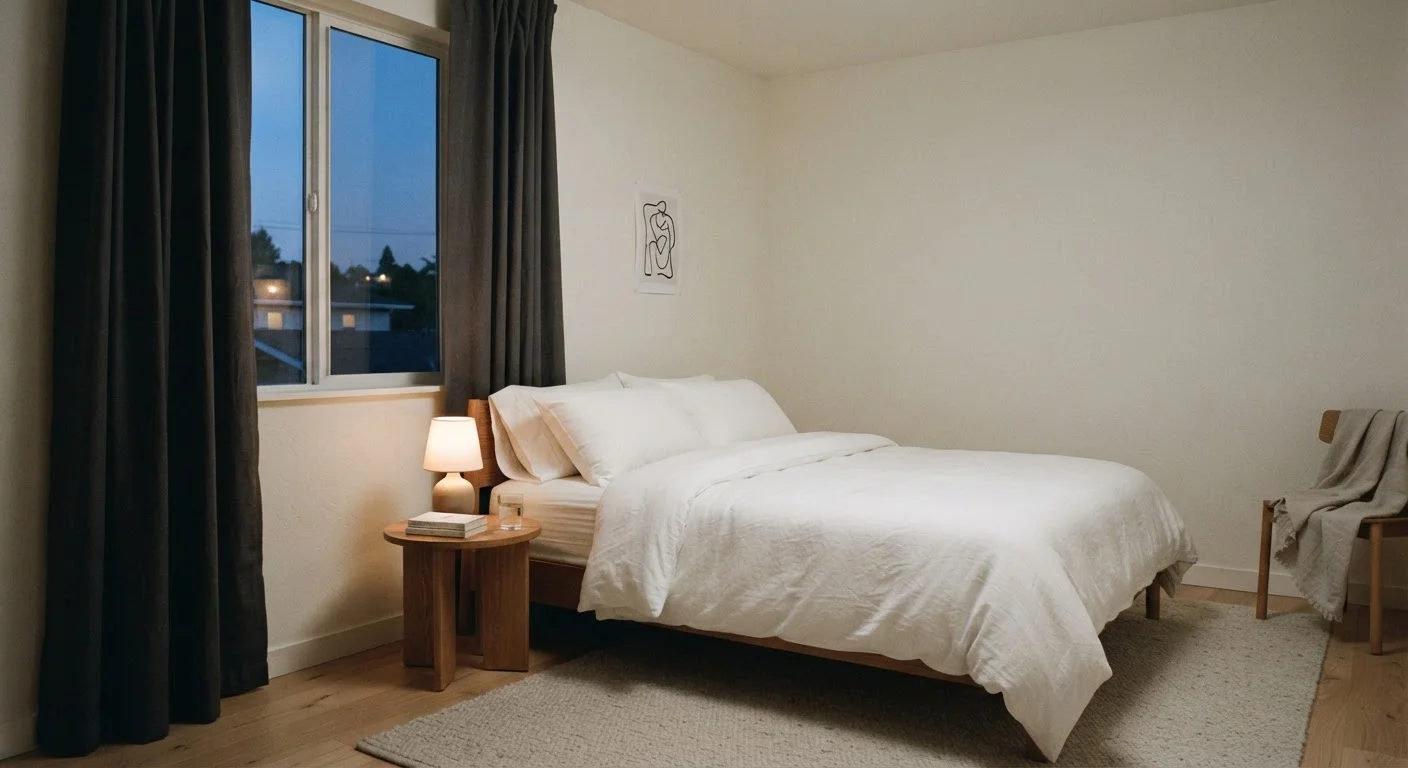
Key Takeaways
- Light exposure — especially blue light — suppresses melatonin and delays sleep onset even at low levels.
- Sleep researchers generally recommend bedroom temperatures between 65–68°F for most adults.
- Chronic noise at night elevates stress hormones and fragments sleep architecture, even without full awakening.
- Mattress and pillow age, firmness, and alignment directly affect sleep quality and morning pain.
- A bedroom audit takes under an hour and can reveal low-effort, high-impact changes to your sleep environment.
Summary
22 items · 20–40 minutes
Why Your Bedroom Environment Matters More Than You Think
Most people troubleshoot poor sleep by examining their habits — what they eat, how much caffeine they consume, or when they put down their phone. These factors matter, but your physical sleep environment operates as a constant background variable every single night. Even small environmental mismatches can erode sleep quality gradually and invisibly.
Sleep science is clear that the brain begins preparing for sleep well before you lie down, and environmental cues — light levels, temperature, sound, and tactile comfort — signal whether rest is safe and appropriate. When those cues are misaligned, your nervous system stays subtly activated, shortening the time you spend in restorative deep and REM sleep stages.
This checklist walks you through a structured audit of the four core environmental categories. Work through it in your actual bedroom — not from memory — so you can observe conditions as they exist during your typical sleep hours. Pair these findings with the habits examined in your complete evening routine audit for the most complete picture.
Don't Ignore Persistent Sleep Problems
A bedroom audit can address environmental barriers, but it cannot resolve underlying medical conditions such as sleep apnea, restless legs syndrome, or insomnia disorder. If you consistently struggle to fall or stay asleep despite a well-optimized environment, speak with a healthcare provider. Do not delay seeking professional evaluation in favor of environmental troubleshooting alone.
Special Populations: Consult a Professional
Guidance in this checklist reflects general adult sleep health principles. If you are pregnant, caring for an infant or young child, managing a chronic condition, or taking medications that affect sleep, consult a qualified healthcare professional before making significant changes to your sleep environment or routine.
How to Conduct Your Audit
Set aside time in the early evening — ideally 30 to 60 minutes before you normally go to bed — so you can evaluate the room under realistic conditions. Bring a notepad or open a notes app to record observations. For each item, mark whether it currently meets the target standard, needs adjustment, or requires further investigation.
You do not need to make any changes during the audit itself. The goal is an honest snapshot. If you notice stress building as you work through this list, that mental load is worth noting too — managing it is part of the bigger picture covered in your personal stress-management audit.
Light Control
Temperature Regulation
Sound Management
Sleep Surface and Comfort
Clutter and Sensory Distraction
Reading Your Results and Next Steps
After completing the audit, review your marked items. Prioritize any must items you flagged as unmet — these have the strongest evidence base for affecting sleep quality. A single unaddressed must-level issue, like a room that runs too warm or light leaking directly onto your face, can undermine otherwise solid sleep habits.
Should-level items are your second tier; address them after the essentials are resolved. Nice-to-have enhancements can be layered in incrementally as your budget and bandwidth allow.
Keep in mind that environmental fixes address only one dimension of sleep health. If you continue to experience persistent difficulty falling asleep, frequent nighttime waking, or significant daytime fatigue after improving your environment, it is worth reflecting on the psychological side as well — a pre-sleep mental health check can help you identify whether thought patterns or mood signals may be contributing. And if problems persist, consult a qualified healthcare provider — ongoing sleep difficulties can have underlying medical causes that no environmental adjustment will resolve.
This article is for general informational and educational purposes only and is not a substitute for professional medical advice, diagnosis, or treatment. Always consult a qualified healthcare professional regarding any sleep concerns or health conditions.